Home
» New Trends
»
Wearable Health Monitoring: What Smart Medical Devices Can—and Cannot—Do to Prevent Critical Illness
Wearable Health Monitoring: What Smart Medical Devices Can—and Cannot—Do to Prevent Critical Illness
Wearable health monitoring is getting better at noticing changes that people may not feel yet—but “prevention” needs a careful definition. A smartwatch, continuous glucose monitor, cardiac patch, or other connected sensor usually does not prevent a heart attack, stroke, severe hypoglycemia, or heart-failure crisis by itself. Its value comes from a chain of events: the device measures a signal, identifies a concerning pattern, delivers an alert, and prompts a person or care team to act in time.
That distinction became especially relevant on January 6, 2026, when the U.S. Food and Drug Administration reissued its final General Wellness: Policy for Low Risk Devices guidance. The guidance clarifies that some low-risk products that encourage a healthy lifestyle are not regulated as medical devices, while products intended to diagnose, treat, mitigate, cure, or prevent disease can fall under medical-device rules. For readers, the practical lesson is simple: do not assume that every health feature on a watch or ring has been reviewed for medical decision-making.
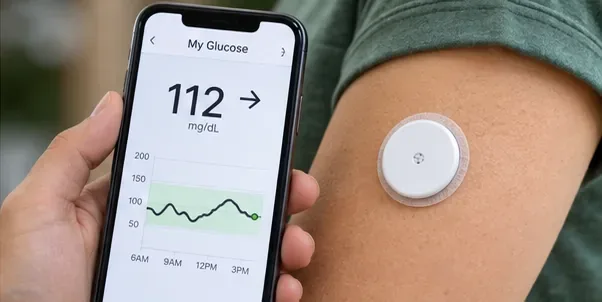
A wearable glucose sensor can provide repeated measurements and trend information, but the meaning of a reading and the appropriate response depend on the specific authorized device, the user’s condition, and the care plan.
What wearable health monitoring is actually good at
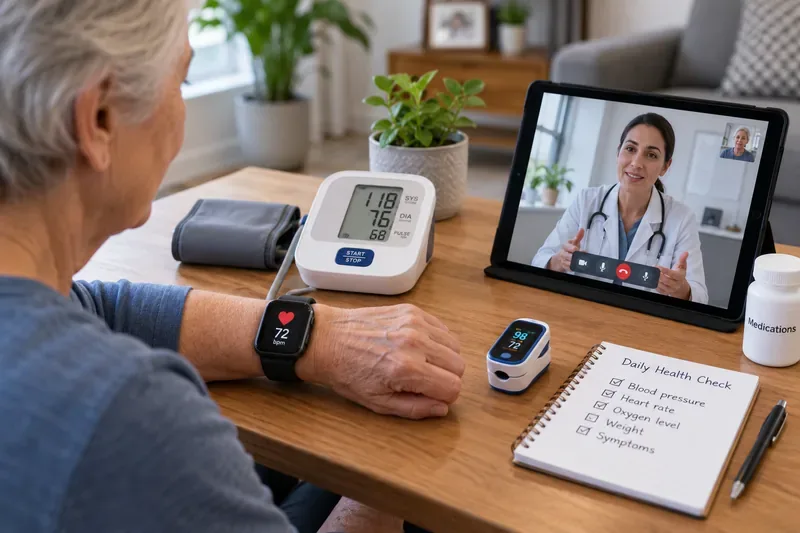
Modern digital health technologies can collect physiological information frequently or continuously outside a clinic. The FDA’s guidance on digital health technologies for remote data acquisition recognizes the ability of connected sensors and software to capture data remotely and repeatedly. That capability is important because many dangerous conditions are intermittent: an abnormal rhythm may come and go, glucose can fall rapidly overnight, and fluid status in heart failure can worsen between office visits.
What is verified: wearables can extend observation beyond the short snapshot of a clinic appointment. What depends on context: whether that extra data changes an outcome. What to do: choose a device for a defined clinical question rather than for the largest possible number of metrics.
Myth: “A smartwatch alert is a diagnosis”
It is not. Consumer wearables may use optical pulse sensing, single-lead electrocardiography, motion sensors, temperature sensors, or other signals to identify patterns that deserve attention. A notification can be useful for screening, but a clinician may still need a diagnostic-quality ECG, laboratory test, imaging study, or other confirmation.
A 2026 randomized controlled trial offers a good example. In 437 adults age 65 or older who had elevated stroke risk, six months of smartwatch monitoring using photoplethysmography and single-lead ECG detected new atrial fibrillation in 9.6% of participants, compared with 2.3% under standard care. The study shows that smartwatch-based screening can increase detection of atrial fibrillation in a selected high-risk population. It does not prove that wearing a watch by itself prevents stroke. The original trial is available through PubMed.
Action: if a wearable repeatedly reports an irregular rhythm, save the recordings and timestamps and discuss them with a health professional. If you already have known atrial fibrillation, follow the monitoring and treatment plan your clinician has given you rather than changing medication because of a watch alert.
Continuous glucose monitors can provide actionable early warnings
Continuous glucose monitors, or CGMs, are one of the clearest examples of a wearable medical technology that can warn about a dangerous change before symptoms become severe. Authorized CGM systems can provide current glucose values, trends, and alerts for high or low glucose. For people who depend on insulin or other glucose-lowering therapies, timely warnings may create a chance to take corrective action before severe hypoglycemia, severe hyperglycemia, or diabetic ketoacidosis develops.
But alerts only help when they are delivered and noticed. In February 2025, the FDA issued a safety communication about diabetes-device smartphone alerts after reports that some users did not receive or hear alerts. The agency warned that missed alerts can contribute to serious harm, including severe hypoglycemia, severe hyperglycemia, diabetic ketoacidosis, and death.
Action: if you use a CGM or connected insulin device, recheck notification permissions, Bluetooth status, sound settings, focus/do-not-disturb modes, and compatibility after a phone or operating-system change. Use the manufacturer’s current instructions for your exact device.
Myth: “Any watch or ring that shows glucose is a medical glucose monitor”
This is false. The FDA warned in February 2024 that it had not authorized, cleared, or approved any smartwatch or smart ring intended to measure or estimate blood glucose on its own without piercing the skin. The warning distinguishes those products from watches or phones that merely display data coming from an authorized CGM sensor.
Heart-failure wearables show why the care pathway matters
Remote heart-failure monitoring illustrates both the promise and the limits of smart medical devices. A 2024 study of a wearable sensor system in people recently hospitalized for heart failure reported a 38% lower 90-day heart-failure hospitalization rate when wearable data were actively used to guide treatment. The study enrolled more than 500 participants, but it was funded by the device manufacturer, and its findings apply to a specific system and care protocol. The original report can be reviewed on PubMed.
Other remote-monitoring programs have not shown the same benefit. A randomized trial of 552 people previously hospitalized for heart failure found no statistically significant reduction in the combined outcome of readmission or death from a year-long remote monitoring program, despite good adherence. The study is available on PubMed.
What this means: collecting data is not enough. Outcomes depend on which signal is measured, how reliably deterioration is detected, who receives the alert, how quickly someone reviews it, and whether there is an effective treatment response. Action: if a clinician recommends remote monitoring for heart failure, ask who monitors the data, what thresholds trigger contact, and what you should do if symptoms worsen before anyone calls.
Pulse oximetry is useful, but a single number can mislead
Pulse oximeters estimate blood oxygen saturation and pulse rate. They can be valuable for monitoring trends in certain illnesses, but the FDA cautions that readings can be affected by poor circulation, skin pigmentation, skin thickness, skin temperature, tobacco use, and fingernail polish. In January 2025, the agency issued draft recommendations intended to improve the performance evaluation of medical-purpose pulse oximeters across skin tones.
The most important misconception is that an apparently normal number rules out a serious problem. It does not. The FDA advises users to consider pulse-oximeter readings together with symptoms and other information, and notes that only a health care provider can diagnose hypoxia. See the FDA’s Pulse Oximeter Basics.
Action: if you are using pulse oximetry at home, focus on the trend and your symptoms rather than one isolated reading. If you have severe or worsening symptoms, seek medical care instead of waiting for the wearable to confirm that something is wrong.
How smart medical devices can help prevent a crisis
Monitoring approach
What it can detect or track
Where prevention can happen
Main limitation
Smartwatch rhythm monitoring
Irregular pulse patterns or single-lead ECG recordings
Earlier evaluation of possible atrial fibrillation may lead to diagnosis and treatment
Screening alerts are not definitive diagnoses
Continuous glucose monitoring
Glucose level, direction, rate of change, high/low alerts
Earlier treatment of dangerous glucose changes
Alerts can be missed, and devices have specific use instructions
Wearable heart-failure sensors
Selected physiological changes associated with decompensation
Care teams may adjust treatment before hospitalization becomes necessary
Benefits vary by device and response workflow
Pulse oximetry
Estimated oxygen saturation and pulse
Can help identify a concerning trend that needs evaluation
Accuracy is affected by multiple biological and technical factors
Activity and sleep tracking
Movement, exercise patterns, sleep estimates
Can support behavior change and sometimes reveal a change worth discussing
Many features are wellness tools, not disease-diagnostic functions
Myth: “More health data always means safer care”
More data can also create false alarms, anxiety, alert fatigue, missing data, or a flood of measurements that nobody is responsible for reviewing. A clinically useful monitoring program needs a validated measurement, a meaningful threshold, a reliable alert channel, and a defined next action. Without that chain, continuous tracking may produce information without prevention.
Action: before enabling every available alert, decide which alerts matter, who should receive them, and what action each one should trigger. For a medically important device, follow the manufacturer’s instructions and your clinician’s settings rather than copying thresholds from another person.
What remains uncertain
Wearable technology is advancing faster than long-term outcome evidence. It is well established that some devices can measure or flag specific physiological changes, and some trials show improved detection or fewer hospitalizations in selected populations. It is not yet established that consumer wearables broadly reduce mortality or prevent major events across the general population. Benefits may be greatest when monitoring is targeted to a defined risk and connected to a care team that can respond.
There are also unresolved questions about false positives, performance across diverse populations, long-term adherence, interoperability, privacy, and how automated algorithms should be updated over time. FDA guidance continues to emphasize fit-for-purpose validation and appropriate interpretation of digitally derived measures.
Action: treat a wearable as one component of a prevention plan—not as a substitute for established screening, medication, vaccination, emergency care, or regular medical follow-up.
A practical way to judge a wearable before relying on it
Define the purpose. Are you tracking wellness, screening for a condition, or managing a diagnosed disease?
Check the regulatory status for the intended use. A device may have both wellness functions and separately authorized medical functions.
Ask what happens after an alert. A useful warning should lead to a clear next step.
Know the failure modes. Battery depletion, loose contact, connectivity problems, software settings, and sensor limitations can interrupt monitoring.
Keep symptoms in charge. A normal-looking dashboard should never override severe, new, or rapidly worsening symptoms.
Wearable health monitoring can be genuinely preventive when it gives the right person useful information early enough to act. The strongest examples are not devices that simply collect the most data; they are systems in which validated measurements, timely alerts, informed users, and clinical response work together.