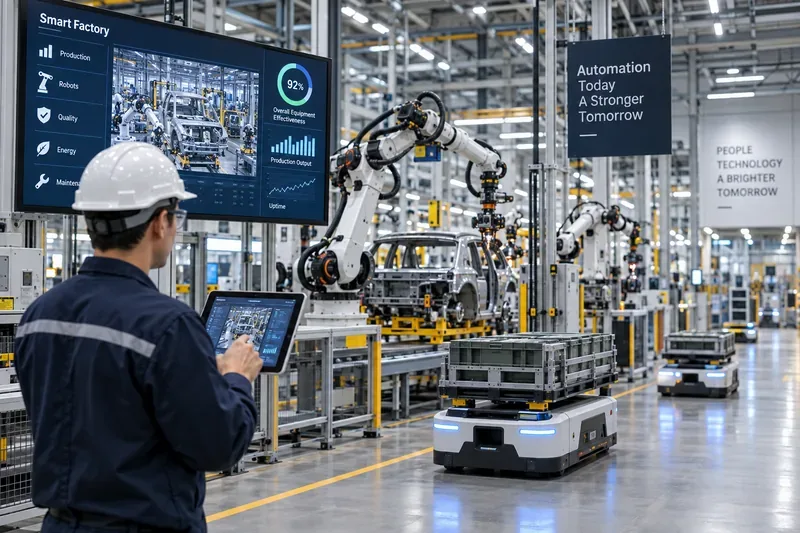
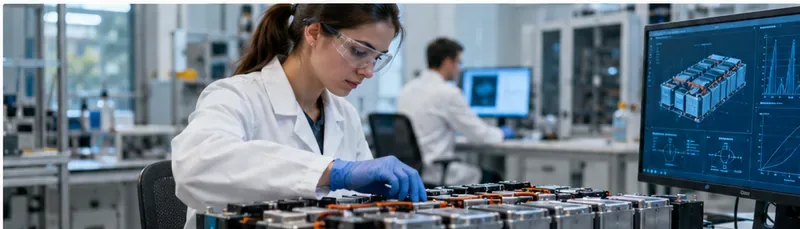
Biomanufacturing is moving from a simple question—how can we make more product?—to a harder one: how can we make complex therapeutics faster without losing control of quality, consistency, or supply? As of September 2026, one of the most meaningful changes is regulatory rather than purely mechanical. The U.S. Food and Drug Administration has formalized pathways for advanced manufacturing technologies and, in May 2026, issued final guidance describing chemistry, manufacturing, and controls flexibilities for human cell and gene therapy products. These changes do not lower the bar for product quality. They make earlier discussion of novel manufacturing approaches more practical and give developers clearer ways to justify how a process will remain controlled as it evolves.
That matters because the next generation of medicines is unusually diverse. Monoclonal antibodies, recombinant proteins, mRNA products, viral-vector gene therapies, and patient-specific cell therapies do not share one ideal factory design. The most useful “breakthrough” is therefore not a single bioreactor, sensor, or algorithm. It is a manufacturing strategy that matches the biology of the product, measures what matters, scales at the right point, and can be validated well enough to supply patients reliably.
What problem does a biomanufacturing breakthrough need to solve?
It must improve more than speed. A faster process is valuable only if it also preserves the product’s critical quality attributes—the measurable properties that must stay within appropriate limits for the therapy to perform as intended. Depending on the modality, those attributes can include identity, purity, potency, structural integrity, particle characteristics, or levels of process-related impurities.
This is why FDA describes advanced manufacturing in terms of a more robust, agile, and flexible manufacturing sector, with fewer production interruptions and product failures. The agency’s CBER Advanced Technologies Program is designed around that broader outcome rather than novelty for its own sake.
Before adopting a new platform, a development team should ask four questions:
- Which constraint is limiting patient supply today: cell growth, purification, analytics, release testing, facility capacity, raw materials, or logistics?
- Which product attributes become harder to control when throughput increases?
- Can the new process generate evidence that is at least as interpretable as the process it replaces?
- Will the change reduce total cycle time, or merely shift delay from manufacturing into testing, validation, or tech transfer?
Those questions prevent a common mistake: optimizing one unit operation while leaving the true bottleneck untouched.
Which manufacturing advances are most likely to shorten production cycles?
Continuous and increasingly integrated processing are among the most important. In traditional batch production, material often moves through discrete stages with holds, transfers, and separate pieces of equipment. Continuous manufacturing links operations so material can move through a controlled process over time. FDA describes continuous manufacturing as an approach that integrates traditional stepwise processes with modern monitoring and control, which can improve responsiveness and reduce the physical footprint of some production systems. The agency continues to study how continuous concepts apply to biologics, including viral clearance and chromatography.
For biologics, continuous does not mean “run forever.” It means designing the process around a defined state of control, residence time, monitoring strategy, and diversion or shutdown logic. The business case is strongest when smaller equipment, fewer intermediate holds, and faster feedback genuinely improve the end-to-end process. It is weaker when the product is made in very small numbers, the upstream biology is highly variable, or downstream release testing still dominates the schedule.
FDA’s Advanced Manufacturing Technologies Designation Program, finalized in December 2024, is relevant here because it gives qualifying technologies a framework for early engagement when they may improve manufacturing reliability, product quality, development time, or supply of critical medicines.
Are single-use and modular systems always the better choice?
No. They are valuable because they can reduce some cleaning and changeover burdens, support flexible facility layouts, and make it easier to reconfigure capacity. But the tradeoffs are real: disposable components create dependence on specialized supply chains, introduce extractables and leachables questions, generate solid waste, and may become less attractive at very large scale.
The decision should be based on product volume and changeover frequency rather than fashion. A multiproduct facility that frequently switches between therapies may benefit more from disposable flow paths and closed assemblies than a high-volume site producing one mature product for years. Conversely, stainless-steel infrastructure may make more economic and operational sense when campaigns are long, volumes are large, and cleaning validation is already well understood.
The practical question is not “single-use or stainless steel?” It is “where does flexibility create measurable value, and where does durability and scale matter more?” Hybrid facilities are often the logical answer.
Why are analytics becoming as important as the bioreactor?
Because manufacturing speed is limited by what a company can measure with confidence. Process analytical technology, often abbreviated PAT, refers to tools and strategies that measure and understand a process during manufacturing rather than relying only on end-point testing. Better sensors, spectroscopy, multivariate models, automated sampling, and rapid assays can reveal drift earlier and support tighter process control.
This is also where measurement standards become strategic infrastructure. The National Institute of Standards and Technology develops reference materials and interlaboratory studies that help laboratories compare methods and understand analytical variability. Its Biomanufacturing Program includes the NIST monoclonal antibody reference material and research-grade test materials for emerging modalities.
One recent example is especially relevant to mRNA production. In July 2025, NIST released an mRNA research-grade test material intended for evaluation across laboratories. The work focuses on measurements such as sequence identity, concentration, intactness, capping efficiency, poly(A) tail length, and product- or process-related impurities. The NIST mRNA test-material announcement illustrates a crucial point: faster manufacturing only becomes dependable when different laboratories can measure the same quality attributes consistently.
Where are the hardest bottlenecks in cell and gene therapy manufacturing?
They often sit at the intersection of biological variability, small production scale, demanding release tests, and expensive materials. Viral-vector manufacturing must control attributes of the vector as well as impurities from host cells and process inputs. Cell therapies add another layer because the starting material may come from donors or from the individual patient, making logistics and variability part of the manufacturing problem.
FDA’s current research agenda shows where regulators see unresolved technical needs. The CBER Advanced Technologies Program research portfolio has included projects on continuous AAV production, end-to-end gene therapy manufacturing, continuous upstream processing, data-enabled automation for mesenchymal stromal cell manufacturing, and advanced analytics for continuous viral-vector processes.
For developers, this suggests a useful priority order. First stabilize the biological input and define a meaningful potency strategy. Next reduce open handling and manual variation where possible. Then automate data capture and process decisions. Scaling equipment before those foundations are stable can magnify variability instead of solving it.
Do the 2026 FDA changes make cell and gene therapies easier to manufacture?
They make the development path more adaptable, but they do not make manufacturing intrinsically easy. FDA’s May 2026 final guidance on CMC flexibilities for cell and gene therapies explains how the agency applies a flexible, lifecycle-based approach to CMC requirements for products being developed toward biologics license applications.
The distinction is important. Flexibility can allow specifications, validation strategies, and process understanding to mature with the development stage. It does not remove the need to establish identity, strength, quality, purity, and appropriate control of the final licensed process. Teams should therefore use regulatory flexibility to sequence evidence intelligently—not as a reason to postpone fundamental process understanding.
Can AI and digital twins materially accelerate biomanufacturing?
Yes, when they solve a defined control or decision problem and are built on trustworthy data. They are much less useful when they are treated as a layer of prediction added to inconsistent measurements.
In manufacturing, artificial intelligence can help with anomaly detection, predictive maintenance, multivariate monitoring, optimization, and interpretation of large process datasets. A digital twin is a computational representation of a physical process or system that can be updated using real or simulated data. In principle, it can help teams test operating strategies without repeatedly disturbing the physical process.
FDA has identified artificial intelligence in manufacturing as one of the priority technology areas in its Framework for Regulatory Advanced Manufacturing Evaluation, alongside end-to-end continuous manufacturing, distributed manufacturing, and point-of-care manufacturing. The agency summarizes those priorities on its Advancing Product Quality page.
The limitation is validation. A model must have a clearly defined use, input data with known quality, controls for drift, and a way to handle conditions outside its training or modeling range. For high-impact decisions, teams should be able to explain what the model is allowed to do, what triggers human review, and what evidence shows it performs acceptably over time.
Does faster manufacturing automatically mean faster patient access?
No. Manufacturing is one part of a therapeutic development system. A process can be technically fast yet still be delayed by release testing, comparability work, site qualification, cold-chain logistics, raw-material shortages, or regulatory questions after a major process change.
This is why the best acceleration projects start with an end-to-end value-stream view. If sterility or potency testing takes longer than production, shortening bioreactor time may have little effect on release. If the most fragile step is international shipment of patient cells, adding reactor capacity may not increase the number of patients treated. If a raw material is single-sourced, a high-throughput process can remain vulnerable to supply disruption.
A useful performance dashboard should therefore track more than batch duration. It can include right-first-time rate, deviation frequency, release-test cycle time, yield, capacity utilization, raw-material availability, and time from manufacturing start to releasable product.
What should a company evaluate before investing in a new manufacturing platform?
| Decision area | Question to answer | Why it matters |
|---|
| Product biology | Which attributes are sensitive to process conditions or hold times? | Defines what must be monitored and controlled. |
| Scale | Is demand best served by larger batches, more parallel units, or continuous output? | Prevents equipment scale from becoming the strategy by default. |
| Analytics | Can critical attributes be measured fast enough to support the desired cycle time? | A slow assay can erase gains from a fast process. |
| Automation | Which manual decisions create repeatability or data-integrity risk? | Targets automation where it has operational value. |
| Supply chain | Which consumables, media, resins, vectors, or raw materials are single-source dependencies? | High throughput is fragile without material continuity. |
| Facility strategy | How often will products or campaigns change? | Helps determine the value of modular or single-use infrastructure. |
| Regulatory evidence | What data will demonstrate comparability, control, and validation? | A technically attractive process must still be supportable in a filing. |
| Workforce | Can operators, engineers, and quality teams maintain the new technology? | Complex platforms fail when expertise is too concentrated. |
How should success be judged after a new technology is introduced?
Judge it by manufacturing performance and patient-relevant supply outcomes, not by the sophistication of the equipment. A good implementation should create a measurable improvement in one or more of the constraints identified before the project began, while keeping product quality at least as well controlled as before.
- Cycle time falls without an increase in deviations or unresolved quality events.
- Scale-up or tech transfer becomes more predictable.
- Process data detect drift early enough for corrective action.
- Release testing becomes faster or more informative rather than simply adding more assays.
- Production can respond to changes in demand with fewer major facility changes.
- The process remains understandable to operators, quality teams, and regulators.
If those improvements do not appear, the team should revisit the original bottleneck. It may be necessary to change the analytical strategy, reduce process complexity, redesign the supply chain, or stop scaling a technology that is not improving the full system.
What will define the next phase of biomanufacturing?
The strongest direction is convergence. Continuous or intensified processing, closed and modular equipment, rapid analytics, automation, reference standards, and computational models become more powerful when they are designed together. The goal is not a fully autonomous factory for every therapy. It is a process that learns faster, exposes problems earlier, and can add capacity without recreating uncertainty each time.
For conventional biologics, that may mean more integrated processing and better real-time control. For mRNA, it may mean stronger analytical standardization and more transferable platform knowledge. For cell and gene therapies, it may mean closed manufacturing, better vector production, more automated handling, and a lifecycle regulatory strategy that lets process understanding mature without losing sight of the final commercial standard.
The durable lesson is straightforward: biomanufacturing breakthroughs matter when they convert scientific possibility into repeatable patient supply. The technologies that endure will be the ones that shorten the path to a releasable dose, preserve control of critical quality attributes, and make the manufacturing system more resilient—not merely more advanced on paper.