Home
» New Trends
»
The Future of Geriatric Healthcare: Integrating Robotics and Smart Monitoring
The Future of Geriatric Healthcare: Integrating Robotics and Smart Monitoring
The most realistic future of geriatric healthcare is not a robot replacing a nurse or family caregiver. It is a coordinated system in which smart monitoring detects meaningful changes, assistive technology handles selected physical or social tasks, and a human care team decides what those signals mean and what should happen next.
That distinction matters because “robotics” and “smart monitoring” cover very different levels of maturity. Connected blood-pressure cuffs and other remote patient monitoring devices already fit established clinical workflows. Ambient home sensors can provide useful activity patterns but still produce ambiguous alerts. Rehabilitation robots can deliver intensive, repeatable training in specific conditions. Socially assistive robots show encouraging results in some dementia studies, but the evidence is still narrower than the marketing language around “robot caregivers” often suggests.
Several 2025-2026 changes also make implementation more concrete. The World Health Organization released the second edition of its Integrated Care for Older People guidance in September 2025, emphasizing person-centered assessment, personalized care plans, community support, and ongoing monitoring. In the United States, CMS updated its Remote Patient Monitoring guidance in May 2026, while FDA's Quality Management System Regulation took effect on February 2, 2026 and FDA issued updated medical-device cybersecurity guidance that same month. In other words, the future is becoming less about isolated gadgets and more about how technology fits into a complete care pathway.
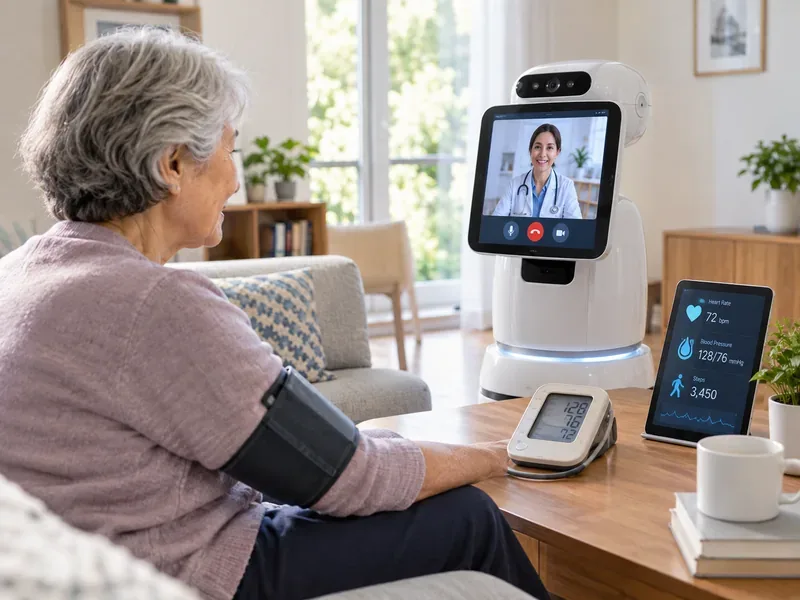
An older adult uses connected monitoring during a remote visit while a mobile robot provides a telepresence interface. The useful model for geriatric care is coordinated support: devices collect data, technology assists with defined tasks, and people remain responsible for clinical decisions.
What problem should robotics or monitoring solve first?
Start with a geriatric need, not a device category. Older adults may need help with very different domains: mobility, cognition, medication routines, chronic disease management, falls, social isolation, rehabilitation, transportation, personal care, or caregiver burden. A technology that is excellent for one problem can be irrelevant to another.
The WHO's 2025 second edition of Integrated Care for Older People, or ICOPE, is a useful framework because it organizes care around changes in intrinsic capacity—including cognition, mobility, vitality, vision, hearing, and psychological capacity—alongside social support and personalized care planning. See the WHO ICOPE guidance, second edition.
Before evaluating a robot or monitoring platform, write one sentence describing the intended outcome. Examples include “identify clinically relevant blood-pressure trends between visits,” “increase repetitions during post-stroke gait training,” “reduce time staff spend transporting supplies,” or “help a family notice a meaningful change in daily activity.” If the goal cannot be stated clearly, the technology will be difficult to evaluate.
Which kinds of robots have the strongest role in geriatric care?
Robot category
Most realistic role
Evidence maturity
Main limitation
Rehabilitation robots and exoskeletons
High-repetition gait or limb training under clinical supervision
Condition-specific randomized trials exist
Benefits do not generalize automatically across diagnoses or patient abilities
Socially assistive robots
Structured engagement, companionship activities, cognitive or mood support
Promising but mixed; many studies are small or setting-specific
Not a substitute for human relationships, supervision, or dementia care
Telepresence robots
Remote clinician or family interaction, room-to-room presence
Operationally plausible; outcome evidence depends on workflow
Connectivity, navigation, privacy, and staffing still matter
Logistics/service robots
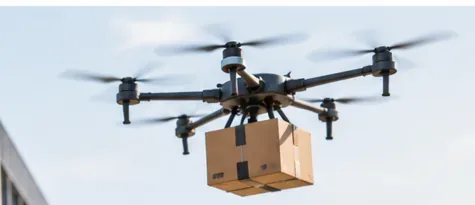
Transporting supplies, meals, linens, or equipment in facilities
Mature in some structured environments
Primarily improves operations rather than directly treating a patient
Physical assistance robots
Future support for reaching, carrying, transfers, or household tasks
More experimental for general eldercare
Safety, reliability, cost, and unpredictable home environments
Can robots improve rehabilitation for older adults?
Yes in selected rehabilitation tasks, but the result depends on the condition and therapy design. Rehabilitation robots can deliver repetitive, measurable movement practice and can adjust assistance while a therapist supervises the session. That is different from an autonomous household robot.
For example, a 2026 randomized controlled trial of 60 people with chronic stroke compared lower-limb exoskeleton-assisted gait training with conventional therapist-assisted gait training, with both groups also receiving routine physical and occupational therapy. The robot group had greater improvements in lower-extremity motor function and activities of daily living in that study. See the original 2026 exoskeleton rehabilitation trial.
This does not mean every older adult with mobility problems should receive an exoskeleton. Stroke stage, balance, cognition, cardiovascular status, musculoskeletal limitations, ability to follow instructions, and the specific robot all affect suitability. The practical question is whether the robotic therapy adds useful intensity or feedback to an evidence-based rehabilitation plan under qualified supervision.
Do socially assistive robots actually help with dementia care?
They may help with selected behavioral and emotional outcomes, but the evidence does not justify treating them as replacements for caregivers. Social robots can provide structured interaction, music, prompts, games, or responsive companionship. Their appeal is greatest when the task is engagement rather than clinical judgment.
A 2024 pilot randomized trial involving 38 hospitalized older adults with dementia compared interactions with the PARO robotic seal with human visits. The robot group had fewer psychotropic medications and fewer instances of delirium, but the sample was small and the study was explicitly a pilot. See the original pilot randomized trial.
A larger 2026 cluster-randomized study of 85 people with dementia in group homes found that more frequent self-directed PARO use significantly reduced caregiver-burden scores. Improvement in behavioral and psychological symptom severity was clinically meaningful in direction but did not reach statistical significance in the reported comparison. See the 2026 randomized PARO study.
Those results are encouraging, but they support a narrow conclusion: a socially assistive robot can be a therapeutic activity or support tool for some people. They do not establish that a robot can recognize medical deterioration, prevent wandering, handle toileting, resolve agitation safely in every case, or provide the judgment of experienced dementia-care staff.
What smart monitoring data is actually useful?
The best monitoring data has three characteristics: it can be measured reliably, it changes a meaningful decision, and somebody is responsible for reviewing it.
Connected physiologic measurements
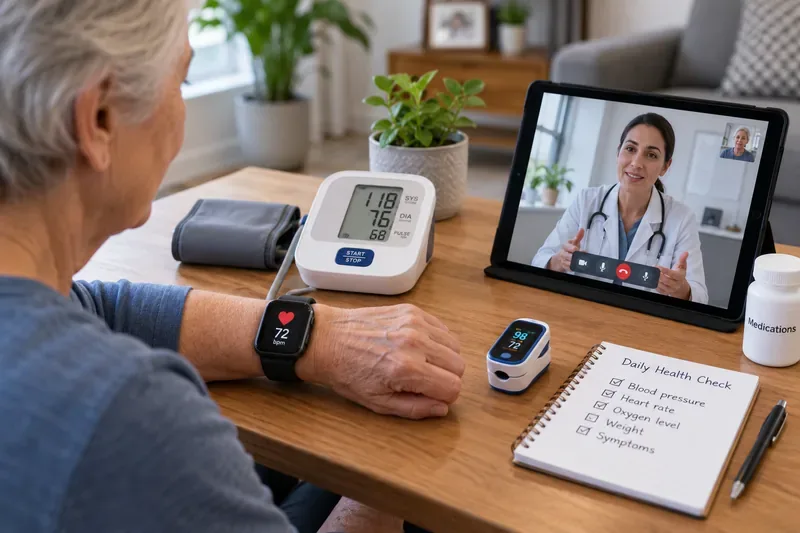
Remote patient monitoring is the most clinically defined form. CMS describes RPM as a patient using a connected medical device to collect health data such as blood pressure, weight, or glucose, with the device automatically transmitting the data to the provider for management of the patient's condition. CMS updated its RPM page on May 13, 2026. See the current CMS Remote Patient Monitoring guidance.
For geriatric care, the value is not the dashboard. It is the action pathway. If weight is being monitored because rapid gain may be relevant to a heart-failure plan, the team needs thresholds, a review schedule, contact procedures, and instructions for urgent versus routine findings. Without that, monitoring simply creates more numbers.
Ambient activity and smart-home sensing
Motion sensors, door sensors, smart plugs, bed sensors, and similar technologies can create a pattern of daily activity without asking an older adult to perform a measurement each time. They can potentially flag unusual inactivity, altered routines, sleep changes, or changes in mobility.
A July 2026 mixed-methods study followed 91 older adults using a connected-care system for about six months. Ease of use and facilitating conditions such as setup support were significant predictors of intention to use the system. Participants valued passive monitoring, independence, caregiver reassurance, and peace of mind, while setup confidence and reliability concerns were important barriers. See the original 2026 smart-home adoption study.
That is an important implementation lesson: a sensor can be technically accurate and still fail as geriatric technology if installation, passwords, Wi-Fi, charging, troubleshooting, or caregiver notifications are too difficult.
How should robotics and monitoring work together?
The strongest model is a layered workflow rather than one autonomous machine doing everything.
Imagine an older adult living at home. A connected blood-pressure cuff sends scheduled readings to a clinical service. Passive motion sensors notice that the person's normal morning activity has not occurred. A wearable fall detector has not triggered, so the system does not automatically conclude that a fall happened. Instead, the activity change creates a lower-priority check. A family member or monitoring service calls. If the person does not answer and the care plan supports it, a telepresence device or mobile robot could provide another channel for contact before escalation.
In that scenario, each technology does what it is good at:
the medical device measures a defined physiologic variable;
ambient sensors provide context about routine;
software prioritizes signals;
a telepresence robot provides communication or mobility for the remote person;
a human decides whether the situation requires reassurance, a clinical call, an in-person visit, or emergency help.
The system should never infer “no movement equals stroke” or “robot did not get a response equals emergency” without a carefully designed escalation policy. Smart monitoring is strongest as decision support, not as unsupervised diagnosis.
Who is responsible when the system sends an alert?
This question should be answered before installation. A geriatric technology program needs an explicit alert owner.
For every alert type, document:
what event creates the alert;
whether it is informational, clinical, or urgent;
who receives it first;
how quickly they are expected to respond;
what happens when the first contact does not respond;
when the older adult, family, clinician, facility staff, or emergency services should be contacted;
how false alarms and missed events are reviewed.
A system that generates many alerts can increase workload instead of reducing it. In geriatric care, sensitivity must be balanced against alarm fatigue, especially when multiple chronic conditions, atypical routines, and frequent care transitions make “normal” behavior highly individual.
What should never be delegated blindly to a robot or algorithm?
High-consequence decisions require human accountability. Current technology should not be treated as an autonomous replacement for a clinician deciding whether to change medication, diagnosing delirium from behavior alone, determining capacity or consent, deciding that a fall caused no injury, or performing an unsafe physical transfer because an algorithm predicted that assistance was sufficient.
Robots can also create a false sense of presence. A telepresence robot may allow a nurse or family member to see and talk to someone, but it cannot necessarily palpate an injury, help a person off the floor, assess subtle respiratory distress, or respond if its network connection fails.
The same principle applies to cognitive impairment. A person with dementia may respond warmly to a social robot but still need human supervision for wandering, nutrition, medication, hygiene, behavioral symptoms, and changing medical conditions.
How important are privacy and cybersecurity?
They are patient-safety issues, not optional IT features. Geriatric systems may combine cameras, microphones, home sensors, medical devices, caregiver apps, cloud services, and hospital networks. Older adults may also rely on family members or paid caregivers who need some access but not unlimited access.
NIST finalized Cybersecurity White Paper 34 in December 2025 on telehealth and smart-home integration. It warns that Hospital-at-Home and related connected-care models move medical-grade equipment into homes that also contain consumer IoT devices outside the hospital's direct control. NIST recommends controls including access control, authentication, continuous monitoring, data security, governance, and network segmentation. See the NIST telehealth smart-home cybersecurity guidance.
The FDA also issued updated final guidance in February 2026 on cybersecurity in medical devices, addressing device design, labeling, premarket documentation, and statutory requirements for cyber devices. See the FDA's February 2026 medical-device cybersecurity guidance.
For a buyer, practical questions include: How long will the device receive security updates? Can accounts use strong authentication? Who owns the data? Can family access be revoked? Does video leave the home? What happens when the vendor stops supporting the hardware? Can the device function safely during an outage?
Does the 2026 FDA quality-system change matter?
If the robot, sensor, software, or connected product is regulated as a medical device, manufacturer quality systems matter. FDA's Quality Management System Regulation became effective February 2, 2026 and incorporates ISO 13485:2016 into U.S. medical-device quality requirements. FDA also replaced its previous QSIT inspection process with a new process aligned to QMSR. See the FDA QMSR overview.
This does not make every eldercare robot a medical device. A social companion, logistics robot, or consumer smart-home sensor may fall under different rules depending on its intended use. Procurement teams should therefore avoid assuming that “healthcare robot” or “AI monitoring” automatically means FDA-regulated. Verify the product's intended use, labeling, authorization status where applicable, and the vendor's quality and support obligations.
How do you know whether older adults will actually use the technology?
Usability needs to be tested with the people who will live with the system, not just with the staff buying it. Vision, hearing, dexterity, mobility, cognition, language, fatigue, technology confidence, and caregiver support can all affect adoption.
The 2026 connected-care study is especially useful here because it evaluated real-world use rather than a brief lab exposure. Participants often valued peace of mind and caregiver reassurance more than conventional ideas of productivity. Family involvement was part of the adoption process. That suggests a geriatric system should be evaluated as a relationship between the older adult, caregivers, technology, and care team—not only as a user interface.
Good design usually means fewer required interactions, clear physical controls, large readable information, understandable alerts, minimal charging and pairing, easy recovery after failure, and an option to reach a person when automation is confusing.
What should a health system or family evaluate before adopting robotics and monitoring?
Decision question
What a strong answer looks like
What outcome are we improving?
A specific goal such as gait training intensity, blood-pressure management, engagement, or faster detection of routine changes
Who is the intended user?
Defined cognitive, sensory, mobility, language, and caregiver-support needs
Who responds to data or alerts?
A named person or service with escalation rules and response times
What happens when technology fails?
Manual controls, backup communication, offline safety behavior, and a human fallback
Is the evidence relevant?
Research in a similar population, condition, setting, and outcome—not only a vendor demonstration
How intrusive is monitoring?
The least invasive sensor that can answer the care question
Can the system scale?
Manageable alert volume, maintenance, training, support, integration, and recurring costs
Is the product appropriately regulated?
Its intended use and medical-device status are verified rather than assumed
A practical pilot checklist
Pick one use case. Do not begin with a goal to “digitize eldercare.”
Establish a baseline. Measure current falls, therapy time, staff workload, alert response, hospital use, or caregiver burden before adding technology.
Include older adults and caregivers in selection. Test setup, daily use, charging, cleaning, voice controls, screen readability, and comfort with sensors or cameras.
Run failure drills. Disconnect Wi-Fi, let a battery run low, generate a false alert, and test what happens when the primary caregiver does not answer.
Track interventions, not just alerts. Count how many alerts changed care and how many created unnecessary work.
Measure robot rescue rate. Record how often staff must reposition, reset, teleoperate, or physically assist the robot.
Review privacy access. Remove former caregivers, rotate credentials where appropriate, and verify what is recorded or retained.
Reassess after health changes. A system suitable for an independent 75-year-old may be inappropriate after a stroke, cognitive decline, or repeated falls.
Will robotics reduce the need for geriatric professionals?
The more realistic outcome is a change in how professional time is used. Rehabilitation robots may let therapists supervise intensive repetitions while focusing on movement quality and progression. Ambient monitoring may allow a care team to notice deterioration between visits. Logistics robots may reduce nonclinical walking and transport tasks. Telepresence may make specialist input easier to access.
But technology can also create new work: device setup, cleaning, charging, troubleshooting, alert review, cybersecurity updates, consent management, documentation, and explaining results to patients and families. Any business case that counts labor saved without counting this new labor is incomplete.
The future is integrated, but it still needs human judgment
The strongest direction for geriatric healthcare is not a single “eldercare robot.” It is a care architecture that combines the right technologies for the right needs. Medical devices can capture defined physiologic measurements. Smart-home sensors can add context about daily activity. Rehabilitation robots can deliver repeatable training. Social robots can provide structured engagement. Telepresence can extend human contact. AI can help prioritize signals and organize information.
WHO's current person-centered approach provides the right test for all of them: does the technology help detect meaningful decline, support a personalized care plan, preserve function and independence, reduce avoidable burden, and fit the older person's priorities?
If the answer is yes—and the system has a responsible human response pathway, evidence appropriate to the use case, accessible design, and safe failure modes—robotics and smart monitoring can become useful extensions of geriatric care. If those conditions are missing, adding more automation may produce more data and more equipment without producing better care.
Clinical studies, regulatory information, and technology guidance in this article were checked on September 12, 2026. Evidence for geriatric robotics remains highly dependent on the specific device, condition, population, and setting. Regulatory status, Medicare rules, product capabilities, and cybersecurity guidance can change; verify current official information before making clinical, procurement, or care decisions.