Home
» How To
»
What to Plant in London in October 2026: Vegetables, Herbs, and Flowers
What to Plant in London in October 2026: Vegetables, Herbs, and Flowers
October is a good month in Greater London to plant garlic, overwintering onion sets, spring cabbage starts, hardy salad leaves, and spring-flowering bulbs. You can also sow some hardy annual flowers outdoors. Broad beans and overwintering peas are options only in mild, sheltered gardens; indoor sowing is most useful for small batches of salad leaves or pea shoots, not heat-loving summer vegetables.
These are seasonal choices, not guaranteed results for every London garden. Local shade, wind, paving, soil drainage, container size, and the actual forecast all matter. This guide is checked for October 2026 and separates long-term climate averages from the live forecast available on September 29, 2026.
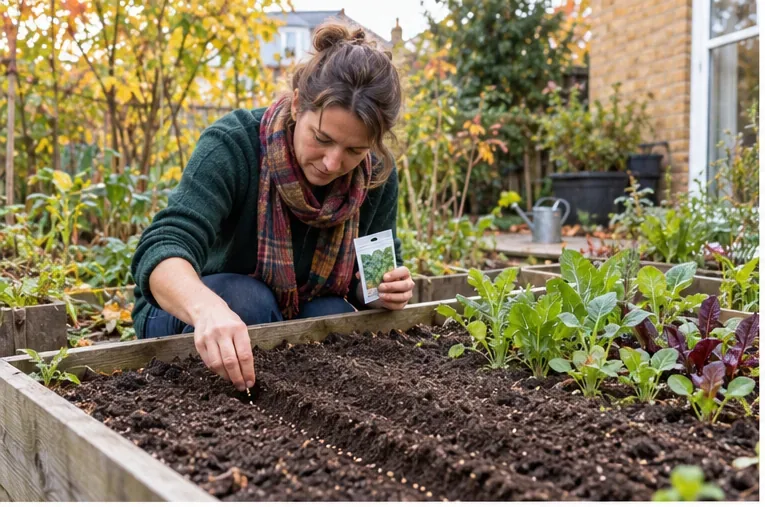
A gardener sowing seeds directly into a prepared outdoor bed for an fall crop.
What is verified about London’s October weather, and what is still uncertain?
The Met Office’s 1991–2020 climate averages for Heathrow, a useful but imperfect reference point for Greater London, show an October average daily maximum of 15.81°C (about 60.5°F), an average minimum of 8.78°C (about 47.8°F), and 0.33 days of air frost per October. These are 30-year station averages, not a prediction for October 2026 and not a guarantee that an individual garden will avoid frost.
Greater London has different exposures: a sheltered courtyard, a south-facing wall, an exposed balcony, and a garden on the city’s edge can behave differently. Hard surfaces and walls can store daytime warmth, while open, low, or wind-exposed sites may cool faster. Treat “London is mild” as a broad tendency, not a planting rule. Check the Met Office’s local London forecast before moving tender plants or covering seedlings. On September 29, the detailed local forecast was a seven-day product; it cannot tell you the exact frost or heat conditions for the entire month. The Met Office forecast guide explains its short and medium forecast ranges.
Which vegetables can I sow directly outdoors?
Direct sowing means placing seeds where the plants will grow, rather than starting them in a tray and moving them later. In early October, try small rows or containers of corn salad (also called lamb’s lettuce), land cress, rocket, and hardy oriental leaves such as mizuna, mibuna, and mustard greens. The Royal Horticultural Society (RHS) lists these as late-summer and fall sowings for fall and winter leaves; a cloche, which is a low protective cover, can extend picking in colder weather.
Overwintering broad beans and peas are more conditional. RHS guidance says to sow overwintering broad beans in mild areas and overwintering pea varieties only in mild areas. Choose a sheltered, well-drained spot and follow the seed packet’s timing and spacing. A warm wall can help, but it does not cancel waterlogged soil, persistent shade, or a sudden cold spell. If your site is exposed or your soil stays wet, skip the gamble and grow salad leaves under cover instead.
It is a mistake to assume every vegetable seed can still be started for a reliable winter harvest. October’s shorter days and cooler soil slow establishment, so prioritize crops and varieties specifically sold or recommended for overwintering. Make one small test sowing rather than filling a bed with a crop that needs a long, warm growing season.
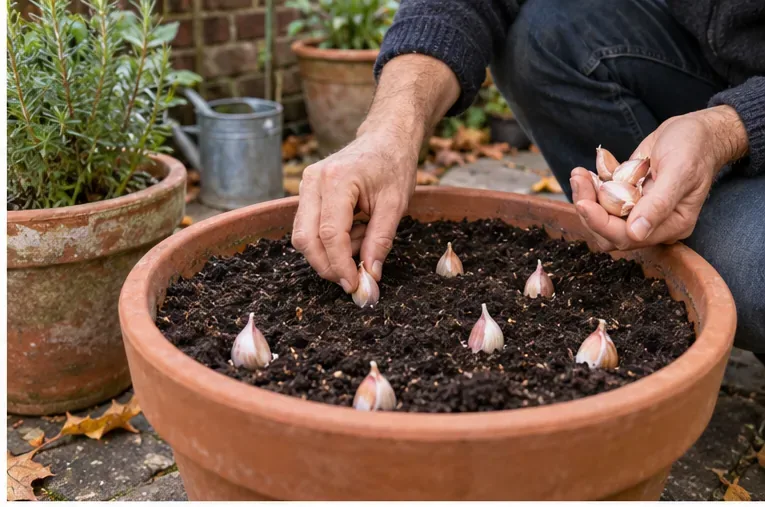
Planting garlic cloves in a container with free-draining compost.
What should I plant or transplant rather than sow?
October is a useful time to plant garlic cloves in a sunny, free-draining bed or a deep container. The RHS says garlic is best planted in October for a good crop. Finish planting suitable overwintering onion sets, which are small dormant bulbs, for an early- to mid-summer crop next year. Avoid a container that holds rainwater around the roots; cold, soggy compost is a poor start.
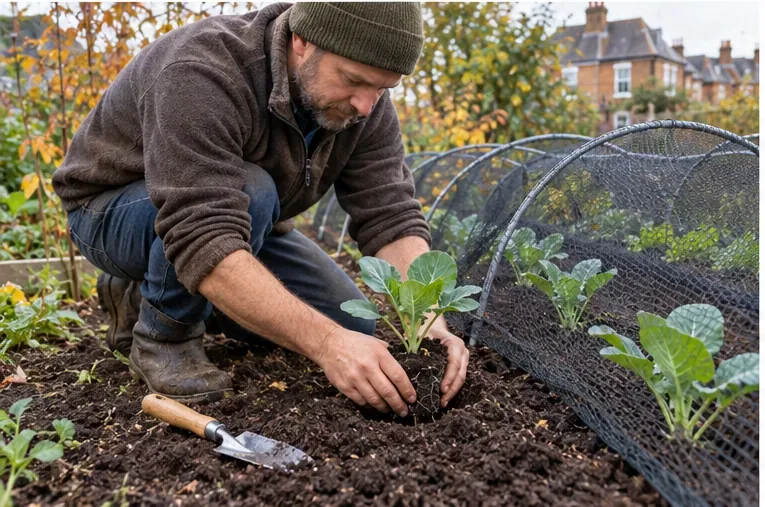
Plant out spring cabbage starts if you have healthy young plants and a suitable bed. Firm them in, water after planting if the soil is dry, and use securely fastened bird netting. The RHS specifically warns that loose netting can entangle birds and other wildlife. Fall is also suitable for moving or planting many hardy perennials, but check the plant’s own instructions and avoid working very wet soil.
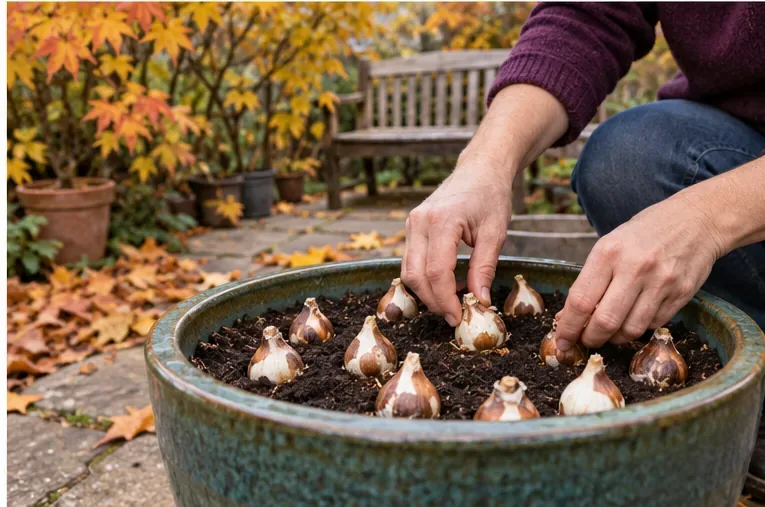
For flowers, plant spring-flowering bulbs such as daffodils and crocuses in fall. Hardy annuals such as cornflowers and pot marigolds can be sown outdoors in fall; fall-sown plants may flower earlier than spring sowings, but young seedlings can need protection from hard frost. One common timing mistake is planting tulips too early: RHS bulb guidance recommends planting tulips in November, while daffodils and crocuses can go in earlier. Check the instructions for the exact bulb species you bought.
Transplanting a spring cabbage start and protecting the row with taut mesh.
Is indoor sowing worthwhile in October?
Yes, for selected quick crops and for keeping existing herbs productive. A bright, cool windowsill, greenhouse, or cold frame can support small sowings of salad leaves or baby leaves; RHS greenhouse guidance also suggests sowing lettuces and spicy salad leaves under cover for late harvests. Pea shoots and cress are practical indoor crops when outdoor light and warmth are fading. Use clean containers with drainage and avoid keeping seedlings in a dark, overheated room, where they may become weak and leggy.
For herbs, October is often a better month to pot up or bring existing plants inside than to start tender herbs from seed. Move pots of herbs such as mint, chives, parsley, or tarragon to a bright, cool windowsill or greenhouse as conditions worsen, following RHS guidance. Do not sow basil for an outdoor crop now; basil is tender and its usual seed-starting season is spring. If your goal is fresh herbs through winter, preserve established plants and harvest lightly rather than expecting new seedlings to thrive in low light.
How should I plan around the first frost or a warm spell?
The Heathrow normal of 0.33 air-frost days in October does not mean “no frost in London.” It means frost was uncommon at that station across the 1991–2020 average, while frost can still occur and individual gardens can differ. Air frost is also not the same as a guarantee that leaves in a pot will remain unharmed: exposed containers and tender plants can be vulnerable sooner than established hardy crops.
When a local forecast shows frost, move tender potted plants into a greenhouse or sheltered position, or cover suitable crops with horticultural fleece or a cloche. Anchor covers securely and remove or ventilate them when conditions allow. During an unusually warm, dry spell, water newly planted bulbs, transplants, and seed rows if the soil is dry; warmth does not make summer crops a sensible late-October sowing. RHS notes that wind can stress plants as much as temperature, so protect balcony pots and exposed beds from drying winds.
Arranging spring-flowering bulbs in a patio planter for a later display.
What should I do each week in October 2026?
October 1–7: Prepare and start the quickest crops
Clear finished crops and weeds; improve the bed with compost if needed.
Direct-sow a short row of winter salad leaves or hardy annual flowers while soil is workable.
Check the seven-day London forecast before deciding whether to leave seedlings exposed overnight.
October 8–14: Plant garlic and overwintering sets
Plant garlic cloves and finish planting suitable overwintering onion sets.
Sow broad beans or overwintering peas only if your garden is mild, sheltered, and well drained.
Start a tray of salad leaves or pea shoots indoors if outdoor sowings are slow.
October 15–21: Transplant and protect
Set out spring cabbage starts and secure bird-safe netting.
Check salad seedlings and add a cloche if nights turn cold or windy.
Plant daffodil and crocus bulbs; keep tulip planting for the later recommended window.
October 22–31: Finish bulbs and prepare for colder nights
Finish fall bulb planting and remove diseased leaves from beds.
Check pots for blocked drainage and raise containers slightly if they sit in standing water.
Review the current forecast before frost-sensitive plants are left outside; use climate normals only as background context.
These week ranges are a practical checklist, not fixed deadlines. If the soil is saturated, wait before digging or planting. If your garden is sheltered and the forecast remains mild, some outdoor sowing may continue; if it is exposed or already cold, prioritize bulbs, hardy transplants, and protected salad crops.
Common October planting misunderstandings to avoid
“London gardens never frost.” The Heathrow average is low, not zero. Check the local forecast and protect tender plants when frost is forecast.
“A warm early-October day means summer crops will grow.” Day length and soil temperature continue to decline. Choose overwintering varieties or quick salad crops instead.
“All bulbs should be planted at once.” Fall timing varies by species; RHS guidance places tulips later than daffodils and crocuses. Follow the bulb label and RHS advice for that type.
“Herbs need to be reseeded indoors for winter.” Existing potted herbs may be easier to protect and keep cropping; seed-starting windows differ by herb.
Official sources and update note
This planting guide was prepared September 29, 2026. Climate figures are the Met Office’s 1991–2020 Heathrow normals, not an October 2026 forecast. Recheck the Met Office forecast during the month and follow the seed packet or plant label where variety-specific instructions differ.