Home
» How To
»
How to Clean Fabric Blinds Safely: What to Wash, What to Leave Dry
How to Clean Fabric Blinds Safely: What to Wash, What to Leave Dry
A useful recent clarification comes from Hunter Douglas, which updated its general home-care guidance on August 4, 2026. The message is less about a new cleaning trick and more about an important limit: not every fabric window treatment can be cleaned the same way. Some fabrics can be gently spot-cleaned, while others should stay dry or need product-specific professional care. That distinction matters more than any universal “fabric blinds cleaning hack.” See the current Hunter Douglas home-care guidance.
If you want to know how to clean fabric blinds without creating water marks, crushed pleats, stretched vanes, or damaged coatings, start with the least aggressive method and stop as soon as the result is good enough. The safest order is usually dry dust removal first, then carefully controlled moisture only when the manufacturer allows it.
First, Know What “Fabric Blinds” Actually Means
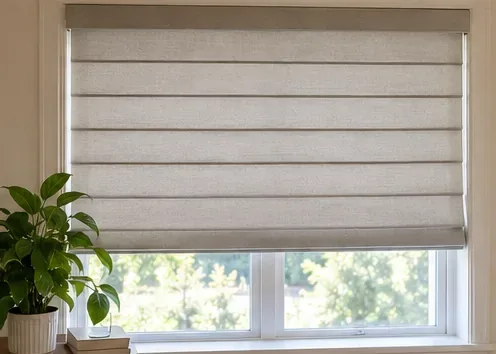
The phrase can refer to fabric vertical vanes, Roman shades, cellular or pleated shades, roller shades, layered shades, and other soft window coverings. Their surface may look similar, but the backing, adhesives, pleats, coatings, and internal structures can be very different.
Confirmed: gentle dusting and light vacuuming are widely recommended home-maintenance methods for many fabric window treatments. Both Hunter Douglas and Bali advise gentle vacuuming with a brush or upholstery attachment for many soft products. Bali also recommends mild detergent and warm water for spot cleaning on several product categories, while clearly excluding some fabrics from wet cleaning. See Bali’s current care and cleaning guide.
Depends on the product: whether you can spot-clean, wash, steam, immerse, or dry-clean the blind. For example, Bali says fabric vertical vanes should not be immersed in water, while some specific removable soft-vertical fabrics may be machine-washable under the manufacturer’s instructions. Hunter Douglas also notes that certain fabrics should not be spot-cleaned.
Unknown until you identify the product: whether a blind with no visible care label can tolerate water simply because its face fabric looks like polyester or another familiar textile. The hidden backing and construction matter too.
Useful action: before applying moisture, find the brand, model, care label, invoice, or product manual. If you cannot identify the treatment, stay with gentle dry cleaning methods until you can verify more.
What You Need
A vacuum with a clean soft-brush or upholstery attachment
Two or three clean microfiber cloths
A lint roller for loose hair or fibers, if needed
A small bowl of lukewarm or warm water
A small amount of mild detergent only if the care instructions allow it
A dry, soft detailing brush for seams, headrail edges, or hard-to-reach areas
Clean towels to protect the sill or floor during damp spot cleaning
Avoid starting with strong detergent, stain remover, bleach, solvent, steam, or a soaking bath. Bali specifically warns against strong soaps and spot removers for several soft treatments, and its guidance says dry cleaning is not recommended for many window coverings. Product-specific instructions still take priority.
How to Clean Fabric Blinds Step by Step
1. Vacuum Off Loose Dust Before Adding Moisture
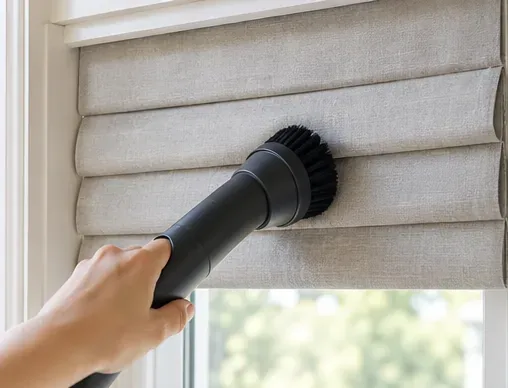
Lower or extend the blind enough to expose the fabric without putting unusual tension on it. Use a clean soft-brush or upholstery attachment and gentle suction. Move slowly across the surface instead of pressing the nozzle into the fabric. On Roman, cellular, or pleated products, follow the folds rather than flattening them.
This step is more important than it looks. If you wet dusty fabric first, loose soil can turn into gray smears that are harder to remove.
Useful action: make one light pass, inspect the fabric in side light, and repeat only where dust remains.
Start with dry soil removal. A soft brush attachment lifts dust without saturating or scrubbing the fabric.
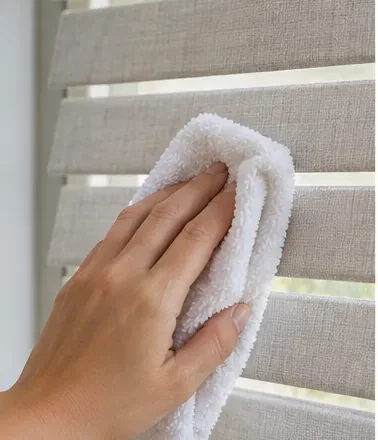
2. Use a Dry Microfiber Cloth for Remaining Surface Dust
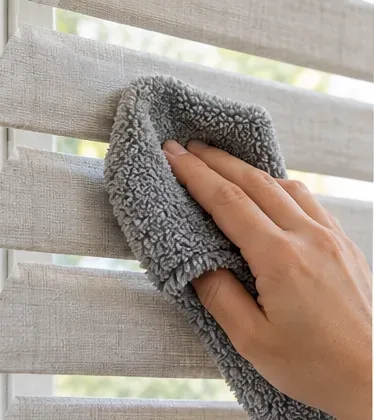
A clean, dry microfiber cloth can pick up light dust the vacuum missed, especially along slat faces, fold edges, or broad flat areas. Support the fabric with your other hand if it flexes easily. Use light strokes rather than hard rubbing.
A common misconception is that more pressure always cleans better. With soft window treatments, friction can distort texture or create a visibly cleaner patch. Hunter Douglas specifically cautions that rubbing can damage fabrics during spot cleaning.
Useful action: if the cloth begins to drag, shed lint, or change the fabric’s appearance, stop and switch to a gentler method.
Use a clean, dry microfiber cloth with light pressure to collect remaining surface dust.
3. Prepare a Mild Solution Only If Wet Cleaning Is Allowed
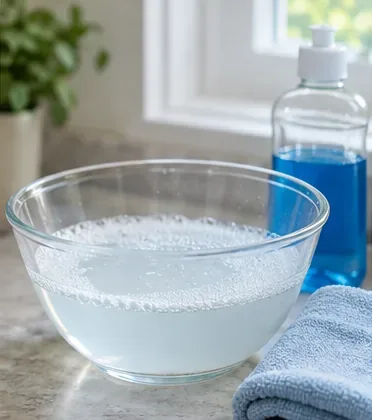
If the manufacturer permits spot cleaning, mix a small amount of mild detergent into lukewarm or warm water. You do not need heavy suds or a concentrated mixture. The goal is controlled cleaning, not soaking.
Confirmed: Bali recommends a soft cloth or sponge, mild detergent, and warm water for spot cleaning on several fabric shade categories. Conditional: other products, such as some natural or tailored fabrics, have stricter restrictions. This is why the care guide comes before the bowl of soapy water.
Useful action: make only a small amount of solution and keep it away from the headrail, motor, cords, and other mechanisms.
Prepare only a mild cleaning solution when the product’s care instructions specifically allow damp spot cleaning.
4. Spot-Clean by Blotting, Not Scrubbing
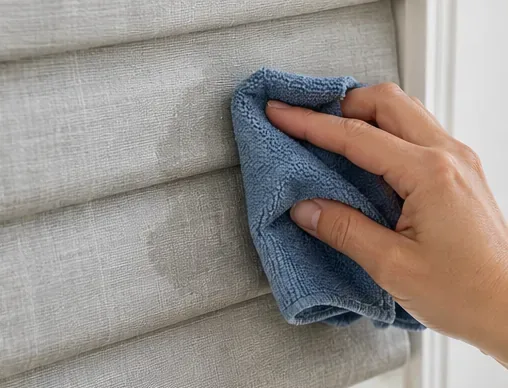
Dampen a clean cloth or soft sponge, then wring it out well. Test an inconspicuous area first. If the fabric shows no color transfer, texture change, ring, puckering, or delamination after drying, move to the visible stain. Blot from the outside of the mark inward, using as little moisture as practical.
Hunter Douglas advises blotting gently and warns that rubbing can damage fabric. It also notes that spot cleaning may leave a visibly cleaner area than the surrounding material. That means a successful stain removal can still look uneven on a heavily soiled blind.
Useful action: stop if the stain spreads, dye transfers to the cloth, or the fabric begins to wrinkle or separate.
Blot a permitted stain gently rather than scrubbing. Use minimal moisture and watch for color or texture changes.
5. Blot Away Detergent Residue With a Clean Damp Cloth
If you used detergent and the manufacturer allows damp cleaning, use a second cloth lightly dampened with plain water to lift residual soap from the treated area. Do not pour or spray water directly onto the blind.
This is not the same as “rinsing” a garment under a faucet. Fabric window treatments may contain stiffeners, laminated layers, adhesives, or internal components that should not be saturated.
Useful action: press and lift with the clean cloth a few times, then stop when the surface no longer feels soapy. If your care instructions prohibit water, skip this step entirely.
When damp cleaning is allowed, use a separate clean cloth to remove soap residue without soaking the blind.
6. Remove Lint and Pet Hair Without Overworking the Fabric
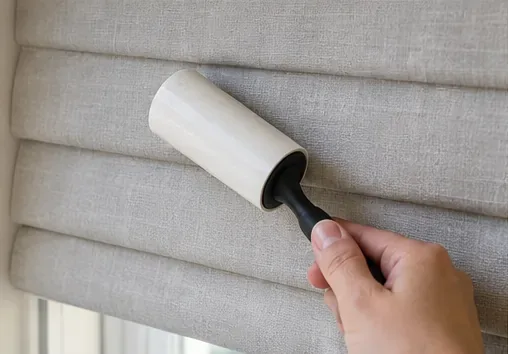
After the surface is dry or on areas that were never dampened, a clean lint roller can remove pet hair and loose fibers that a vacuum brush may leave behind. Use gentle, short passes and avoid delicate edges, loose threads, or heavily textured fabrics where adhesive could tug at the weave.
This step is optional. There is no need to use a lint roller if vacuuming already produced a clean result.
Useful action: test one low-visibility area first. If the roller pulls fibers or changes the nap, stop and return to gentle vacuuming.
A lint roller can help with pet hair or loose fibers, but use light pressure and stop if it pulls at the weave.
7. Clean Edges and Hardware With a Dry Soft Brush
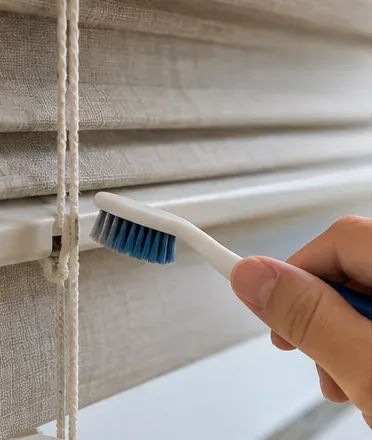
Dust often collects where fabric meets the headrail, along seams, around cords, and at lower edges. A small dry soft brush can loosen this debris so it can be vacuumed away. Keep liquid away from operating hardware unless the manufacturer specifically says otherwise.
Do not force cords, chains, vanes, or mechanisms while cleaning. If the blind is motorized, follow the brand’s maintenance instructions and keep moisture away from electrical components.
Useful action: brush debris outward, then vacuum it up rather than pushing dust deeper into seams or mechanisms.
Use a dry soft brush around edges and hardware, keeping cleaning liquid away from cords and mechanisms.
8. Let the Blind Air-Dry Completely and Check the Result
If any part of the blind became damp, leave it extended in a natural position with normal room ventilation until it is fully dry. Do not roll, stack, fold, or compress damp fabric. Bali’s guidance for several fabric treatments emphasizes gentle handling and full air drying, and it specifically warns against putting certain washable soft-vertical fabrics in a dryer.
Once dry, operate the blind slowly through one normal cycle. Look for new wrinkles, water rings, color changes, stiffness, or misalignment.
Useful action: if the blind looks clean and operates normally, stop. More cleaning is not automatically better.
Allow any damp-cleaned fabric to air-dry fully in its normal extended position before operating or folding it.
Common Myths About Cleaning Fabric Blinds
“All Fabric Blinds Can Be Washed in the Bathtub”
This is not supported as a general rule. Bali states that fabric vertical vanes should not be immersed in water, while its chart allows immersion for certain vinyl products instead. Some specialty soft-vertical fabrics may have separate washing instructions, but that is a product-specific exception.
What to do instead: assume immersion is unsafe unless the care instructions explicitly say the product is water-immersible or washable.
“If It Is Fabric, Dry Cleaning Is Safer Than Water”
Not necessarily. Manufacturer guidance can explicitly advise against dry cleaning for certain blinds and shades. The construction of a window treatment is different from a removable garment, and solvents or processing can affect backing, glue, shape, or finish.
What to do instead: use only a professional cleaning method approved for that exact product. If you hire a cleaner, give them the brand and model rather than asking for generic curtain or upholstery cleaning.
“Steam Is a Universal Deep-Cleaning Shortcut”
No. Hunter Douglas allows steam only for certain products under specific instructions and warns against it for others, such as woven face fabrics. Heat and moisture can alter some finishes or structures.
What to do instead: do not steam fabric blinds unless the manufacturer lists steam as an approved method for your product.
“A Stronger Cleaner Will Remove the Stain Faster”
Stronger chemistry is not automatically safer or more effective on window-treatment fabric. Bali warns against strong detergents and spot removers in its care guidance. The stain may be removable while the cleaner damages dye, backing, or surface finish.
What to do instead: start with the mildest approved method and judge success by the fabric’s condition, not only by whether the stain disappeared.
Quick Reference: Match the Method to the Blind
Blind or shade type
Generally safer starting point
What needs verification
Fabric vertical vanes
Dust or gently vacuum
Whether spot cleaning or machine washing is allowed; do not assume immersion is safe
Roman shades
Light dusting and gentle vacuuming
Whether the specific fabric may be spot-cleaned or needs professional care
Cellular or pleated shades
Dusting and gentle vacuuming
Whether moisture is permitted and whether special blackout material needs extra caution
Roller or solar fabric shades
Dusting or light vacuuming
Whether small stains may be wiped with mild soap and water; avoid soaking unless explicitly approved
Natural or woven shades
Gentle vacuuming
Water and steam restrictions
Tailored or decorative fabric treatments
Gentle vacuuming
Whether DIY spot cleaning is prohibited and professional cleaning is required
When to Stop DIY Cleaning
Stop and seek product-specific advice or professional service if the blind has widespread staining, smoke or grease contamination, mold-like growth, water damage, dye bleeding, delamination, brittle fabric, or a motorized mechanism near the affected area. Also stop if a test patch leaves a ring or changes the texture.
A professional method is not automatically safe simply because it is more powerful. Hunter Douglas describes professional injection/extraction cleaning as suitable for many soft products but also lists exceptions. The best cleaner is one who can match the process to the exact window treatment.
Useful action: photograph the label and the whole blind before contacting the manufacturer or cleaner. That makes it easier to identify the construction and recommend a compatible method.
How to Keep Fabric Blinds Cleaner Longer
Regular light dust removal is usually easier on the fabric than occasional aggressive cleaning. Vacuum gently before dust becomes embedded, address small marks promptly when spot cleaning is permitted, and keep condensation from sitting against the fabric. In kitchens, avoid allowing aerosolized grease to build up on soft window treatments.
The practical goal is not to make every blind look factory-new at any cost. It is to remove visible soil while preserving color, shape, texture, and operation. If a mild method gets you there, stop there.
Bottom Line
The best answer to “how to clean fabric blinds” begins with identifying what you own. Gentle vacuuming and careful dry dust removal are the most broadly supported starting points. Damp spot cleaning can work well on many fabrics, but only when the manufacturer permits it. Soaking, machine washing, dry cleaning, strong stain removers, and steam are not universal upgrades; they are product-specific methods with real limits.