Home
» How To
»
How to Wash a Wool Coat Without Shrinking or Distorting It
How to Wash a Wool Coat Without Shrinking or Distorting It
A wool coat can look as if it needs a full wash when the real problem is only surface dust, a small stain, or a little trapped odor. The difficult part is that wool is not a single-care-category fabric. Some wool coats are designed for professional dry cleaning, some can be hand washed, and a smaller group is genuinely machine washable. The safest method depends on the coat’s care label, construction, lining, finishes, and trim—not simply on the fact that the outer fabric contains wool.
The practical goal is therefore not to find one “best” way to wash every wool coat. It is to choose the least aggressive method that solves the problem while staying within the garment manufacturer’s care instructions. In the United States, the FTC Care Labeling Rule requires manufacturers and importers to provide regular-care instructions supported by a reasonable basis. That makes the sewn-in care label your first decision point.
Which Cleaning Method Should You Choose?
Method
Best for
Main advantage
Main tradeoff
Brush and air out
Dust, lint, light odors, everyday maintenance
Lowest stress on the fabric and coat structure
Will not remove oily or set-in stains
Spot clean
One small localized mark, when the label or manufacturer allows it
Treats only the affected area
Water rings, color change, or texture change are possible on sensitive finishes
Hand wash
Coats specifically labeled for hand washing
More control over agitation and handling
A wet coat is heavy and can be distorted if twisted, wrung, or dried poorly
Machine wool cycle
Coats explicitly labeled machine washable
Convenient and repeatable when the garment was designed for it
Wrong cycle, temperature, or spin can cause felting or shape loss
Professional dry cleaning
“Dry clean only” coats and many tailored, structured coats
Avoids domestic wet washing when the whole garment is not designed for it
Higher cost and requires a trip to a cleaner
Recommendation by need: if the coat is only dusty or slightly stale, start with brushing and airing. If the coat has a small mark, consider localized treatment only when the garment guidance permits it. If the label says “Hand wash” or “Machine wash,” you can proceed with the corresponding wet-cleaning method. If it says “Dry clean only,” do not treat the wording as optional.
Step 1: Read the Care Label Before You Add Water
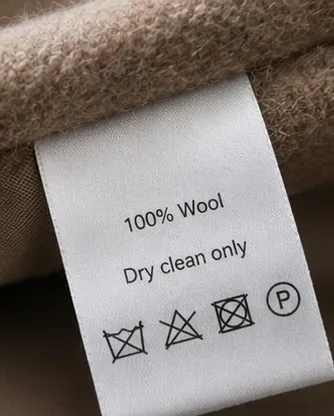
Example decision point: a coat marked “Dry clean only” should not be put through the wet-washing steps that follow.
Look for the washing method, water temperature, drying instruction, ironing guidance, and any “do not” warnings. Under the FTC rule, regular-care labeling considers the garment as a finished product, not just the fiber in isolation. That distinction matters because a coat may contain shoulder structure, fusible interlinings, adhesives, pads, decorative trim, or a lining that reacts differently from the wool shell.
A common misunderstanding is that “100% wool” automatically means “hand wash only.” It does not. Fiber content and care method answer different questions. Woolmark also explains that machine-washable wool receives shrink-resist treatment designed to reduce felting caused by moisture and agitation; untreated wool does not behave the same way. See Woolmark’s explanation of machine-washable wool and felting shrinkage.
Action: if the label says “Dry clean only” or “Do not wash,” stop here and use a professional cleaner. If it explicitly allows hand or machine washing, continue using that exact method.
Step 2: Try the Lowest-Risk Cleaning First
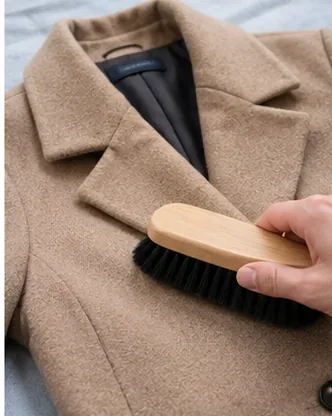
Brushing removes loose lint and surface dust without soaking the coat, making it a sensible first step for routine maintenance.
Before washing, empty the pockets, fasten loose closures as appropriate, and brush the coat gently with a clean clothes brush. Give extra attention to cuffs, collar edges, shoulders, and pocket openings, where lint and surface soil tend to collect.
If the only problem is wrinkles or a stale closet smell, a full wash may be unnecessary. Woolmark’s general wool-care guidance notes that woven wool garments can be rested, aired, and refreshed with moisture from steam, and should be kept away from direct heat. That does not mean steaming overrides a “no steam” care warning, so the label still wins.
Action: brush and air the coat first. If the coat now looks and smells acceptable, stop instead of escalating to water or solvent cleaning.
Step 3: Treat a Small Stain Only If Local Treatment Is Safe
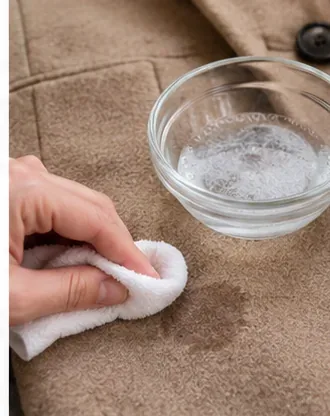
For a washable coat, dab rather than scrub a small mark; test any treatment in a hidden area before working on a visible section.
Spot cleaning can be useful, but it is not automatically safe for every “dry clean only” coat. The FTC distinguishes regular care from spot care, and a garment’s regular-care label does not necessarily guarantee that every home stain-removal method is safe. If the manufacturer provides specific stain instructions, use them. Otherwise, test a tiny hidden area for color transfer, texture change, or a visible ring before treating a prominent spot.
For a coat whose instructions permit water-based care, use a small amount of mild wool detergent diluted in cool or lukewarm water. Woolmark recommends a mild or neutral wool detergent and advises avoiding heavy-duty detergents, enzyme-containing “bio” detergents, and bleach-containing products. Its detergent guidance is available at Woolmark’s wool detergent guide.
Action: dab, do not aggressively rub. If the test area changes color or texture, stop and move to professional cleaning.
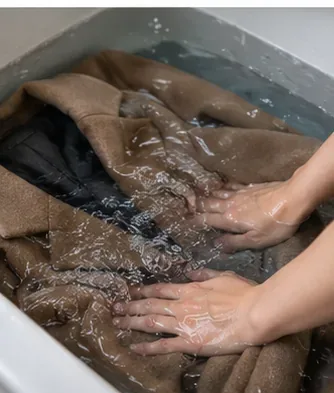
Step 4: If the Label Allows Hand Washing, Keep the Process Gentle
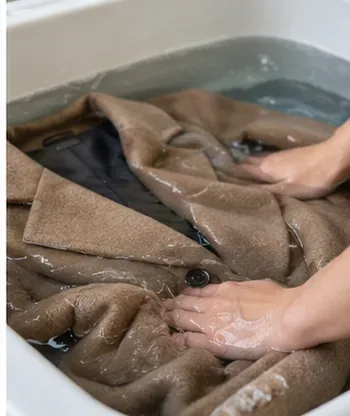
This wet-washing step applies only to a coat whose care label explicitly permits hand washing.
Fill a clean basin or tub with the temperature specified on the label. If the label calls for hand washing but does not provide a more restrictive instruction, Woolmark commonly describes hand washing in lukewarm water around 30°C (86°F) with a mild detergent. Avoid sudden temperature swings, hard scrubbing, twisting, and prolonged mechanical agitation.
Lower the coat into the water and support its weight. Move it gently enough to distribute the detergent rather than kneading it like ordinary laundry. Wool fibers have microscopic surface scales; in the wrong combination of moisture, heat, and mechanical action, those scales can interlock and create irreversible felting and shrinkage.
Action: keep the wash short and gentle. If the water becomes very dirty, replace it rather than compensating with vigorous rubbing.
What If the Label Says Machine Wash?
Use the exact cycle and temperature on the care label. A wool cycle is designed to reduce mechanical action compared with a normal cycle, but the presence of a “wool” button on the washer does not make every wool coat machine washable. Woolmark’s care guidance for washable wool garments recommends a wool cycle or, where appropriate, a gentle/delicate alternative, paired with a mild wool detergent.
Tradeoff: machine washing is easier and more consistent than hand washing for a garment engineered for it, but it gives you less direct control over agitation, spin, and how a structured coat moves while saturated. If the coat is unusually heavy, tailored, or embellished, follow the manufacturer rather than assuming the wool cycle is sufficient.
Step 5: Rinse Without Twisting or Wringing
Rinse a washable wool coat with minimal agitation, keeping the fabric supported rather than twisting it.
Drain the wash water and rinse using the temperature and method allowed by the label. The aim is to remove detergent while preserving the coat’s dimensions and surface. Woolmark’s symbol guidance specifically warns against rubbing, pulling, and wringing during hand washing.
Action: support the garment with both hands as you lift or reposition it. Do not grab a soaked coat by one shoulder or sleeve, because the weight of retained water can pull the fabric and seams out of shape.
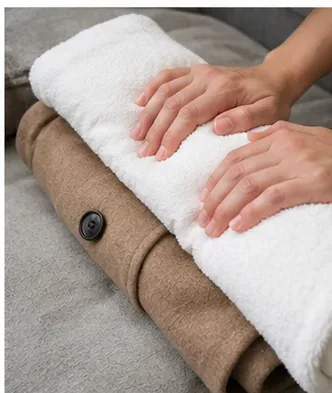
Step 6: Remove Water With Towels, Not Force
Pressing the coat with an absorbent towel removes water without the twisting action that can distort wet wool.
After the final rinse, let excess water drain. Lay the coat on a clean, colorfast towel, place another towel over it or roll sections carefully, and press to transfer moisture. Do not wring the coat.
This step is especially valuable for a coat because reducing water weight before drying makes the garment easier to support and reshape.
Action: change to a dry towel if the first one becomes saturated. Continue until the coat is damp rather than dripping.
Step 7: Dry According to the Label and Preserve the Shape
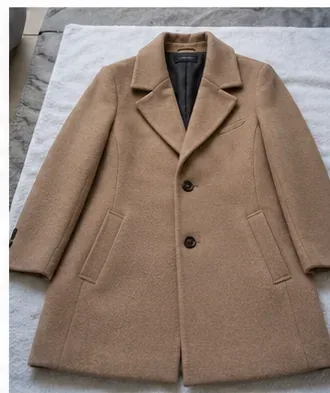
Flat drying gives you control over the shape of a washable coat when that method is consistent with its care instructions.
Drying is where a successfully washed coat can still be damaged. Follow the label’s drying instruction exactly. If flat drying is permitted, arrange the coat on clean towels or a drying screen, smooth the lapels, align the front edges, and return the sleeves and hem to their normal proportions. Keep it away from radiators, heaters, and direct sunlight.
Woolmark advises drying wool away from direct heat and sunlight. It also notes that woven wool garments such as tailored garments may be hung on a shaped or padded hanger, while knitted wool is generally better dried flat. For a coat, the deciding factor should be the actual care instruction and the garment’s construction, not a generic rule.
Action: if the label says hang dry, use a broad, shaped hanger that supports the shoulders. If it says dry flat, keep the coat flat until fully dry. Do not tumble dry unless the care label specifically permits tumble drying.
Step 8: Inspect the Coat Only After It Is Fully Dry
Once fully dry, check the coat’s shape, surface texture, odor, and any previously stained areas before returning it to storage.
When the coat is completely dry, check it in good light. Compare the shoulder line, sleeve length, lapel roll, hem, and overall drape with how the coat looked before cleaning. Brush the surface lightly if needed. If the label allows ironing or steaming, follow the specified setting; Woolmark recommends moderate wool-appropriate heat and steam rather than excessive pressure. Its current care advice is summarized at Woolmark’s wool care guidance.
Action: if the coat is misshapen, stiff, rippled, shiny, or still stained, do not repeat a stronger home treatment immediately. A second aggressive cleaning can make a problem harder to reverse. Take the coat and its care information to a professional cleaner.
Common Misunderstandings That Can Damage a Wool Coat
“Cold water makes every wool coat safe to wash.”
Verified: cold water alone does not cancel the risks from agitation, garment construction, adhesives, lining materials, or a dry-clean-only care instruction. Machine-washable wool is specifically engineered for better resistance to felting shrinkage.
Useful action: use cold or lukewarm water only when wet washing is already permitted by the care label.
“A delicate cycle is basically the same as a wool cycle.”
Depends on the washer and garment: both may reduce agitation, but cycle profiles differ among machines. More importantly, neither setting overrides the coat label.
Useful action: choose the exact cycle recommended by the garment manufacturer; if the label only allows hand washing, do not substitute a machine delicate cycle for convenience.
“If the outer fabric is wool, only the wool fibers matter.”
Verified: care instructions are for the finished garment. A coat’s lining, padding, trim, buttons, fusibles, and internal tailoring can determine whether home washing is safe.
Useful action: treat “100% wool” as a fiber-content statement, not as permission to wet wash.
“Dry cleaning is always better for wool.”
Not universally true: some wool garments are specifically designed for hand or machine washing, and the care label may allow those methods. Conversely, many structured coats are labeled for professional dry cleaning because the whole garment may not tolerate domestic washing.
Useful action: choose dry cleaning when the label requires it, and use washing only when the label supports it.
How to Know You Got a Good Result
A properly cleaned wool coat should be fully dry, free of detergent residue, and close to its original measurements and drape. The surface should not feel matted or unusually stiff. Seams should lie flat, lapels should sit naturally, and the lining should not hang below the shell or pull at the hem. Any treated stain should be less visible without a pale ring or obvious color change.
The shoulders still fit and hold their original shape.
The sleeves and body have not noticeably shortened.
The fabric surface is not felted, fuzzy, shiny, or hardened.
The lining is smooth and not puckered.
No detergent odor or residue remains.
The coat is completely dry before storage.
If any of those checks fail, do not “fix” the coat with hotter water, a stronger spin, a dryer, or concentrated detergent. Those are higher-risk interventions. A professional cleaner or tailor is the better next step.
Bottom Line
The safest way to wash a wool coat is to let the care label decide the branch, then use the least aggressive method that solves the problem. Brush and air out a lightly soiled coat. Spot treat only when localized treatment is safe. Hand wash only when the label allows hand washing. Machine wash only when the coat is explicitly machine washable. If the label says “Dry clean only,” use professional dry cleaning.
That approach is less dramatic than a universal “wash wool this way” recipe, but it matches how real coats are built. Wool fiber can be resilient, yet a finished coat is a system of fabric, structure, lining, trim, seams, and finishes. Protecting all of those parts is what keeps the coat looking like a coat after cleaning.