Home
» How To
»
How to Wash Stuffed Animals in the Washing Machine Without Ruining Them
How to Wash Stuffed Animals in the Washing Machine Without Ruining Them
A favorite stuffed animal can go from “a little dusty” to sticky, stained, or musty surprisingly fast. The difficult part is not getting it wet; it is getting it clean without loosening an eye, splitting a seam, matting the fur, damaging an internal sound box, or leaving damp stuffing trapped inside.
The most important rule is simple: machine wash a stuffed animal only when its sewn-in care label or the manufacturer says machine washing is allowed. Different plush toys can look almost identical while having very different internal parts and care limits. Build-A-Bear, Steiff, Jellycat, Aurora, and Ty all publish product-specific guidance that varies by toy.
This guide starts with the safest checks, moves through a gentle machine-wash method, and ends with a practical inspection so you know whether the toy is actually ready to return to a child, a bed, or a shelf.
Before you wash: is this stuffed animal machine washable?
What you find
Machine wash?
Best next step
Label explicitly allows machine washing
Usually yes
Use the stated temperature, cycle, and drying instructions.
Sound box, battery pack, light, motor, or other electronics
No unless the electronic part is designed to be removed and the manufacturer specifically allows washing afterward
Surface clean, or remove the component using the maker's instructions or service.
Label says hand wash or sponge/surface clean only
No
Follow the labeled method instead.
Vintage, collectible, mohair, alpaca, fragile glued decoration, or brittle fabric
Usually not a good candidate
Use conservative surface cleaning or a specialist.
Loose seam, exposed stuffing, loose eye, or damaged attachment
Not yet
Repair the damage before any full wash.
No label and no reliable manufacturer instructions
Uncertain
Default to surface cleaning rather than guessing.
Build-A-Bear's current Care and Cleaning guidance says a furry friend that needs more than spot cleaning can be placed in a pillowcase and machine washed on a gentle cold cycle with mild soap, then air dried. It specifically says not to submerge or machine wash toys that contain a sound device or are battery operated.
Steiff likewise says many plush toys are machine washable at up to 30°C, but the individual product instructions control. Its care and washing guide notes that collector's items made from materials such as mohair or alpaca are not suitable for the washing machine. Jellycat's Safety & Care page says many products can be washed at 30°C, while others must be surface washed by hand.
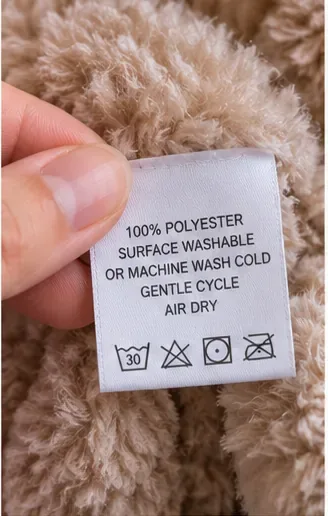
Check the sewn-in care label first. The washing symbol and manufacturer instructions matter more than a general stuffed-animal cleaning rule.
How to wash a stuffed animal in the washing machine
1. Remove loose dirt and inspect the toy
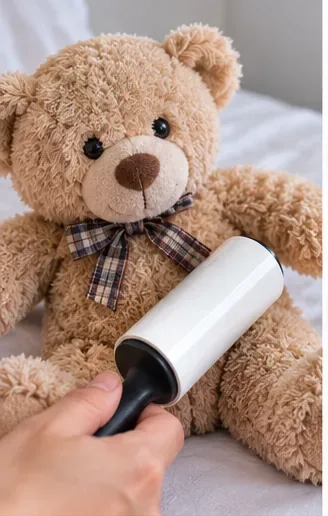
Start dry. Use a lint roller, soft brush, or low-suction vacuum attachment to remove dust, hair, crumbs, and sand from the fur. This keeps loose debris from turning into muddy residue during the wash.
Then inspect the entire toy. Check the eyes, nose, ears, paws, tail, decorative bows, stitched features, and every visible seam. Pull very gently on attachments to see whether anything is already loose. If stuffing is visible or a seam is opening, sew the area before washing.
Why this comes first: the washer did not cause every loose eye or split seam that becomes obvious afterward. Washing adds water weight and movement, so a weak area that was already failing can open further.
Remove lint, hair, crumbs, and dry debris before wet cleaning so loose dirt does not become embedded during the wash.
2. Confirm there are no electronics or wash-sensitive components
Feel the body, paws, and belly for a hard sound box, battery compartment, vibrating unit, light module, or motor. Check for an access zipper or hook-and-loop opening. If the toy talks, sings, lights up, or moves, do not assume the electronics are waterproof.
Build-A-Bear explicitly instructs owners not to submerge or machine wash a toy with a sound component or battery. Aurora gives similar advice for plush with musical chips, sound boxes, squeakers, crinkles, or rattles, recommending surface washing for those items in its official plush-care guide.
If the part is removable, follow the manufacturer's removal and reinsertion instructions. If there is no safe way to remove it, switch to surface cleaning.
3. Pre-treat only the spots that need extra help
For food marks or visibly dirty patches, use a small amount of mild detergent diluted with water and blot with a clean white cloth. Work from the outside of the spot inward. Avoid saturating the toy before the wash.
Do not jump straight to chlorine bleach, strong stain remover, alcohol, or solvent. Plush fabrics can lose color, adhesives may soften, and printed or coated details may change. Ty's current plush-care guidance specifically warns that bleach can strip color and damage the toy.
If a spot does not respond to mild treatment, it is usually safer to reassess after a gentle wash than to keep increasing chemical strength.
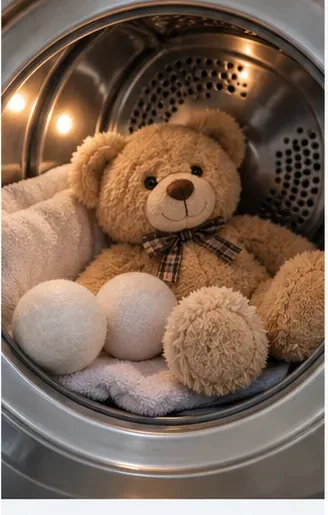
4. Put the toy in a mesh laundry bag or pillowcase
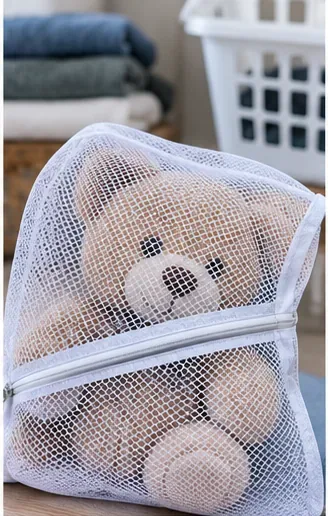
A protective bag reduces abrasion and keeps ears, tails, ribbons, and other projections from snagging on the washer drum or other items. Steiff recommends a laundry net or pillowcase for its machine-washable plush toys. Build-A-Bear similarly recommends a tied pillowcase.
Use a bag large enough that the toy is not tightly compressed. If using a pillowcase, close it securely without tying a knot so hard that it is difficult to undo when wet.
A roomy mesh laundry bag protects the toy from abrasion and snagging while still allowing water and detergent to move through the plush.
5. Use mild detergent and the label-approved water temperature
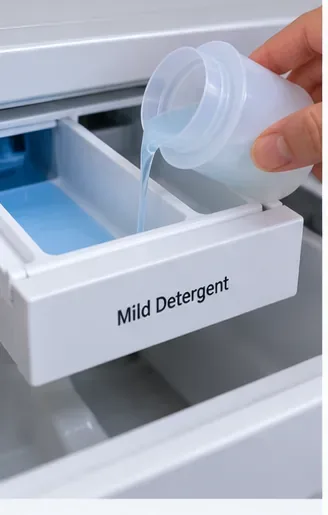
Use a small, measured amount of mild detergent. More detergent does not automatically clean better; it can be harder to rinse from dense stuffing. Avoid fabric softener unless the manufacturer specifically recommends it.
Do not force every plush into a “cold water only” rule. Build-A-Bear specifies cold water for its washable furry friends, while Steiff commonly specifies a maximum of 30°C for machine-washable toys. Jellycat says many of its products can be washed at a maximum of 30°C. The correct setting is therefore the one on the toy's label or official product page.
Use only the amount of mild detergent needed for the load so it can rinse cleanly from the toy's outer fabric and stuffing.
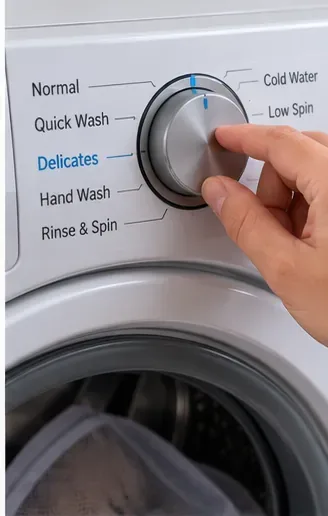
6. Choose a gentle cycle and avoid an aggressive load
Select the gentlest machine cycle permitted by the label. Steiff recommends a gentle or easy-care program for its machine-washable toys and says to wash them separately from other laundry. Build-A-Bear specifies a gentle cycle.
Use a low or moderate spin if your machine offers that option and the toy does not need a stronger spin according to its manufacturer. The goal is to remove water without repeatedly slamming a heavy, saturated plush against the drum.
If you have an older top-loading washer with a large central agitator and the toy is bulky or delicate, consider using a front-loading or other gentler machine instead. When you cannot provide the conditions recommended by the label, hand washing or surface cleaning is a better fallback than improvising a harsher cycle.
Choose the gentle or delicate setting when that matches the toy's care instructions, and stay within the labeled water-temperature limit.
7. Remove the toy promptly and choose the correct drying method
Do not leave a wet stuffed animal sitting in the washer for hours. Dense stuffing can retain moisture long after the surface feels merely damp.
Air drying is the safest common instruction across many major plush brands. Build-A-Bear says to air dry its washable furry friends. Steiff says not to dry its cuddly toys on a radiator or in a tumble dryer and recommends a drying rack or line at room temperature. Jellycat says it does not recommend putting any of its toys in a tumble dryer.
Some manufacturers do allow machine drying for specific products. Aurora, for example, says selected machine-washable plush can be line dried or machine dried on low or no heat. Use a dryer only when the care label or official product instructions explicitly permit it. Never substitute high heat just to finish faster.
Dryer use is conditional: only use a tumble dryer when the specific toy's care instructions allow it, and stay within the permitted heat setting.
8. Air dry completely, then fluff and inspect
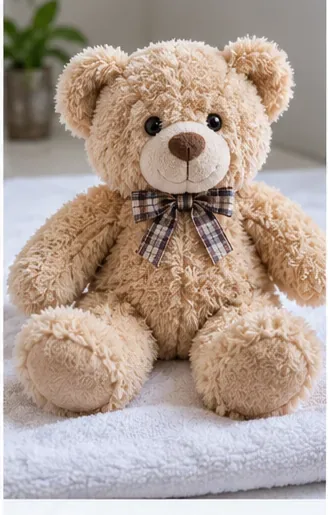
For an air-dry toy, place it on a clean dry towel or drying rack in a well-ventilated room. Rotate it periodically so the underside does not stay damp. Gently reshape the limbs and redistribute lumpy stuffing with your hands. Avoid a hot radiator, hair dryer, or other concentrated heat source unless the manufacturer explicitly permits it.
Air dry in a well-ventilated area and rotate the toy so hidden surfaces and dense stuffing can dry completely.
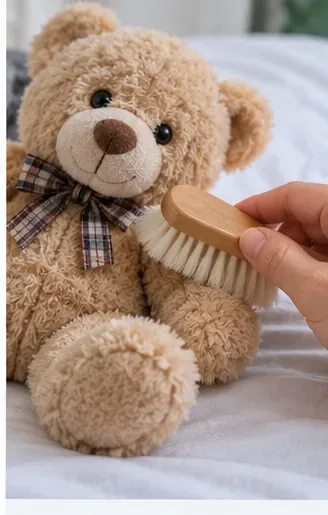
When the toy is fully dry, use a soft brush to lift flattened fur. Work gently in the direction of the pile. Do not aggressively brush felt, faux-suede, very short pile, fragile vintage fabric, or delicate decorative areas.
Once the toy is completely dry, a soft brush can restore the pile and reveal any remaining matted or damaged areas.
How do you know the stuffed animal is really clean and dry?
A stuffed animal can look clean on the outside while still holding moisture deep in its torso or limbs. Before returning it to a child or putting it in storage, use this simple result check:
Smell: there should be no sour, musty, or strongly soapy odor.
Touch: squeeze the thickest part of the body. It should not feel cool, clammy, or unusually heavy.
Shape: stuffing should be redistributed rather than packed into hard lumps.
Fur: the pile should be reasonably even and free of detergent residue.
Seams: check for openings that were not visible before washing.
Attachments: eyes, noses, bows, buttons, and other parts should still be secure.
Color: look for bleeding, fading, or dye transfer onto the protective bag or towel.
The CDC's current household-cleaning guidance includes cloth toys in laundry items and says to launder them according to the manufacturer's instructions using the recommended water temperature and to dry them completely. See the CDC home cleaning guidance.
When the washing machine is the wrong solution
Switch methods if the care label says hand wash or surface clean, if the toy contains electronics, if fabric or seams are fragile, or if the toy is a valuable collectible. Ty's August 2026 plush preservation guide says its Beanie Babies, Beanie Boos, Beanie Bellies, and Squishy Beanies typically recommend surface cleaning only. That is a useful reminder that “stuffed animal” is too broad a category for one universal wash method.
Jellycat makes the same point through product-specific care. Its Safety & Care page says many designs can be machine washed, yet other individual product pages specify hand wash only or sponge clean only. If the sewn-in label has become unreadable, search the manufacturer's product page using the product name or article number before deciding.
What if the toy is still dirty after one gentle wash?
Do not automatically move to hotter water, a heavy-duty cycle, or bleach. Let the toy dry completely and reassess the problem. A remaining localized stain may respond better to a second spot treatment than another full wash. A persistent odor can indicate detergent residue, trapped moisture, or contamination that needs a different cleaning strategy.
If a toy was exposed to floodwater, sewage, mold, or another hazardous contamination, ordinary laundering may not be enough and the safest choice may be disposal. CDC disaster guidance specifically warns that some stuffed animals exposed to floodwater cannot be adequately cleaned.
A quick checklist before you press Start
The care label or manufacturer explicitly permits machine washing.
There is no non-removable battery, sound box, light, motor, or electronic unit.
Loose seams and attachments have been repaired.
Surface dust and debris have been removed.
The toy is protected in a mesh bag or pillowcase when recommended.
You are using mild detergent in a modest amount.
The washer temperature and cycle match the label.
You know the approved drying method before the wash begins.