How to Clean a PS5 Fan Without Taking It Apart: A Safe Beginner Guide
Learn how to clean PS5 vents safely without opening the console, using Sony-recommended low-power vacuuming, dry wiping, and proper airflow.
Mesh sneakers are easy to wear and easy to get dirty, but they are not always easy to clean safely. The main problem is that the breathable upper is often made from thin synthetic yarns bonded to foam, overlays, stitching, and adhesives. Aggressive scrubbing can snag the mesh, while soaking, hot water, a washing machine, or a dryer can stress materials that were never designed for that treatment.
For most mesh athletic shoes, the lowest-risk method is simple: remove loose dirt, take out the laces and removable insoles, hand-clean with a small amount of mild detergent and cool or lukewarm water, wipe away the cleaner, and air-dry at room temperature. That approach is consistent with current manufacturer guidance from Nike for mesh and Flyknit shoes, New Balance shoe-care guidance, HOKA footwear care guidance, and ASICS running-shoe cleaning guidance.
| Task | Safer choice | What to avoid |
|---|---|---|
| Cleaning the mesh upper | Soft brush, soft sponge, or microfiber cloth | Stiff brushes, hard scrubbing, abrasive pads |
| Cleaning solution | Small amount of mild, preferably dye-free detergent in cool or lukewarm water | Bleach, strong household cleaners, solvents, very hot water |
| Removing soap | Damp clean cloth or controlled light rinsing if the maker permits it | Long soaking or fully submerging the whole shoe |
| Drying | Air-dry in a ventilated area at room temperature | Clothes dryer, radiator, hair dryer, direct high heat |
| Mixed materials | Follow the most delicate material's care instructions | Treating suede, nubuck, leather, or waterproof sections like ordinary mesh |
“Mesh sneaker” describes only part of the shoe. A pair may also include synthetic leather, real leather, suede, nubuck, reflective films, printed graphics, glued overlays, waterproof membranes, or foam that reacts differently to water and cleaning agents. Read the product care instructions if they are available. If the upper contains suede, nubuck, or leather, use the cleaner and method specified for that material rather than automatically applying soap and water everywhere.
Also test your diluted cleaner on a small, inconspicuous spot before cleaning a visible area. New Balance specifically recommends testing detergent first to make sure it does not stain the shoe. A quick spot test is especially useful on dark colors, bright dyes, printed mesh, and shoes you have never cleaned before.
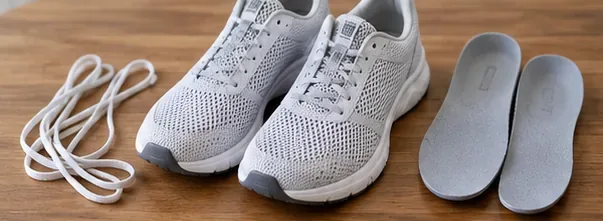
Take the laces out so you can reach the tongue and eye-stay area. Remove the insoles only if they are designed to come out; do not force anything that appears glued in place. This is also the best moment to inspect the shoe for split seams, peeling overlays, exposed foam, or torn mesh. If the shoe is already coming apart, aggressive wet cleaning can make the damage worse.
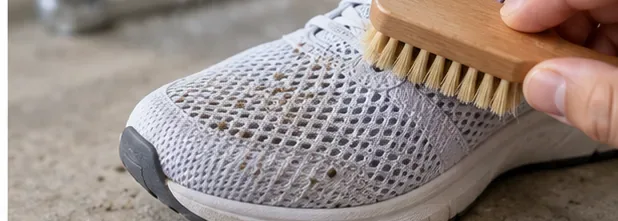
Use a soft shoe brush or clean soft-bristle toothbrush to lift dust, sand, and dried mud from the mesh. Work gently instead of grinding particles deeper into the openings. If the shoes are muddy, let the mud dry first; dry debris is usually easier to remove without smearing it across the upper. HOKA specifically notes that mesh can fray under harsh scrubbing, so minimal force is a better default.
Fill a small bowl with cool or lukewarm water and add only a small amount of mild detergent or clothing-safe soap. More detergent does not mean a cleaner shoe; it can simply leave more residue to remove later. Nike advises avoiding hot water because it can affect color, while HOKA recommends cold water for general footwear cleaning. If you want one conservative default across brands, use cool water and a modest amount of cleaner.
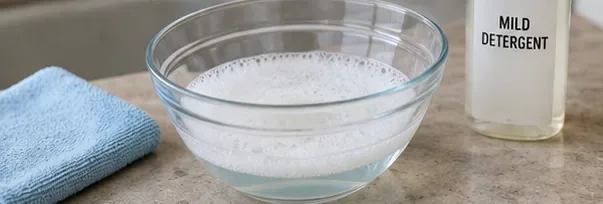
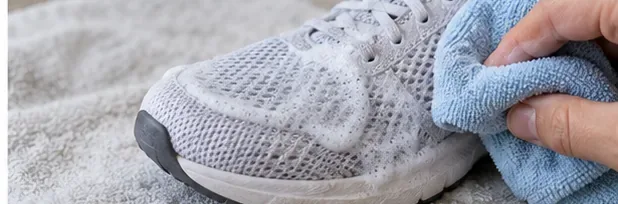
Dampen a soft brush, sponge, or microfiber cloth with the solution. Work on a small area at a time and use light strokes. On knit-style uppers, follow the direction of the knit instead of scrubbing aggressively back and forth. Nike's mesh-care instructions specifically advise brushing in the direction of the knit pattern and being careful not to snag yarn.
Give stained zones several gentle passes rather than one hard scrub. This is especially important around the toe box, flex points, and thin ventilation panels, where the material moves the most during wear.
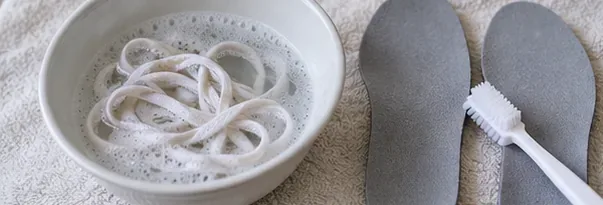
Laces can usually be hand-washed in the same mild solution, then rinsed and air-dried. Insoles need more judgment. ASICS advises against soaking insoles because water can affect foam and shape, even though some removable liners can tolerate controlled washing. Unless your shoe maker says otherwise, scrub or wipe the surface with a lightly dampened brush or cloth and remove the remaining soap with a damp cloth.
If odor is the main problem, do not try to hide it with heavy fragrance while the insole is still damp. Clean it, remove residue, and let it dry completely before reinstalling it.
Use a clean damp cloth to lift off detergent and loosened dirt. Rinse or switch to a clean section of the cloth as it becomes dirty. The goal is to remove cleaner without saturating the entire shoe. If your manufacturer's instructions explicitly allow a light rinse, keep it brief and controlled rather than leaving the shoes underwater.
Then blot the upper and midsole with a dry towel. Do not twist or wring the shoe. Wringing puts mechanical stress on the upper, seams, foam, and bonded parts for no useful benefit.
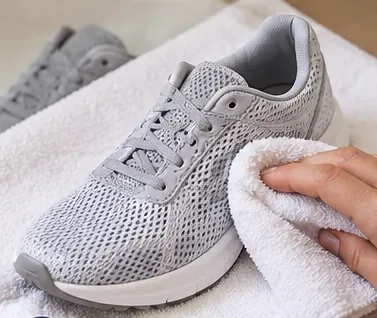
Place the shoes in a ventilated indoor area and let them dry naturally. Stuffing the toe box loosely with plain absorbent paper or a clean cloth can help hold the shape and draw out moisture; replace damp paper if needed. Avoid a clothes dryer, radiator, space heater, hair dryer, or other concentrated heat. Manufacturer guidance from Nike, New Balance, HOKA, and ASICS consistently warns against machine drying or high heat.
Direct strong sunlight can also be a poor drying shortcut for some materials and adhesives. HOKA recommends natural drying away from direct heat or sunlight, and ASICS likewise cautions against heat during drying. Patience is safer than forcing the process.
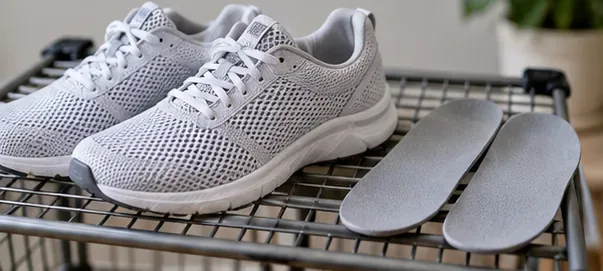
Only put the insoles and laces back after all parts are dry to the touch, including the toe box and heel lining. Then inspect the results under good light. The mesh should look cleaner without fuzzy, pulled, or distorted fibers. There should be no slippery soap residue, no damp odor trapped inside, and no new separation around glued overlays or the sole edge.
If a stain remains, repeat a targeted spot-clean rather than washing the entire pair again. If the mesh is clean but the shoe still smells after complete drying, focus the next cleaning on the removable insole and interior lining rather than over-scrubbing the upper.
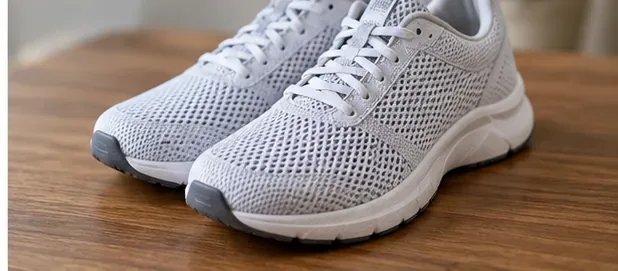
Do not assume that mesh means machine washable. Several major athletic-shoe manufacturers explicitly discourage machine washing. Nike says it does not recommend washing shoes in a washing machine and directs mesh and Flyknit owners to hand washing. New Balance says it does not suggest putting its shoes in a washer or dryer because many materials should not be fully submerged or exposed to heat. HOKA says machine washing or drying can damage materials and may affect warranty coverage. ASICS also warns that washing machines can interfere with shoe construction.
The practical rule is simple: only use a washing machine when the care instructions for your exact shoe clearly allow it. A generic internet tip is not a substitute for model-specific instructions.
White mesh shows dirt quickly, but bleach is not a good default. Nike's mesh guidance recommends avoiding bleach and harsh cleaning products. Start with mild soap and repeat gentle spot cleaning. Nike also describes a baking-soda-and-water paste as an option for white mesh, but that is brand guidance rather than a universal requirement. If your shoe has colored logos, overlays, or specialty finishes, test first and follow the product's own care advice.
Wait until mud is dry, then brush away as much as possible before using water. Turning dry mud into wet slurry makes it easier to spread fine particles through the mesh. Clean the outsole separately so dirty water from the tread does not migrate back onto the upper.
Do not escalate immediately to solvents, stain removers, or concentrated detergent. These can affect dye, printed graphics, adhesives, or synthetic fibers. Blot fresh residue, spot-test a mild cleaner, and repeat light treatment. If the stain came from paint, oil, adhesive, or another chemical, check the shoe maker's care instructions before trying a specialized remover.
| Material or feature | What changes |
|---|---|
| Suede or nubuck overlays | Avoid treating those sections like ordinary mesh; use a product intended for suede or nubuck. |
| Leather panels | Use material-specific leather care and limit water exposure. |
| Waterproof membrane | Follow the membrane/shoe maker's cleaner and reproofing instructions. |
| Printed or reflective graphics | Spot-test first and use minimal friction. |
| Peeling glue or torn mesh | Clean locally and gently; repair may be more important than a full wash. |
| Problem after cleaning | Likely cause | What to do next |
|---|---|---|
| White or stiff residue | Too much detergent or incomplete removal | Wipe repeatedly with a clean damp cloth, then air-dry again. |
| Mesh looks fuzzy | Brush was too stiff or pressure was too high | Stop scrubbing; use a microfiber cloth or softer brush for future cleaning. |
| Shoe is still damp inside | Insufficient airflow or too much water used | Remove insoles, increase ventilation, and give it more time. Do not use high heat. |
| Odor returns quickly | Insole or lining remained dirty or damp | Clean removable parts separately and dry every component completely. |
| Color transfers to cloth | Dye may not be colorfast with the cleaner | Stop and rinse/wipe the test area; switch to manufacturer-approved care. |
If those checks pass, the cleaning method did what it was supposed to do: remove dirt without trading appearance for material damage. If they do not, change only the part of the process that caused the problem. Use less detergent for residue, less pressure for fiber damage, more ventilation for slow drying, or model-specific care for mixed materials.
For model-specific decisions, start with the manufacturer of your shoes. Useful official references include Nike's mesh and Flyknit cleaning guide, New Balance FAQs on shoe cleaning, HOKA's footwear cleaning page, and ASICS' official running-shoe cleaning guide. These sources agree on the core principle that matters most for mesh sneakers: gentle hand cleaning and natural air drying are safer defaults than machine washing and forced heat.
Learn how to clean PS5 vents safely without opening the console, using Sony-recommended low-power vacuuming, dry wiping, and proper airflow.
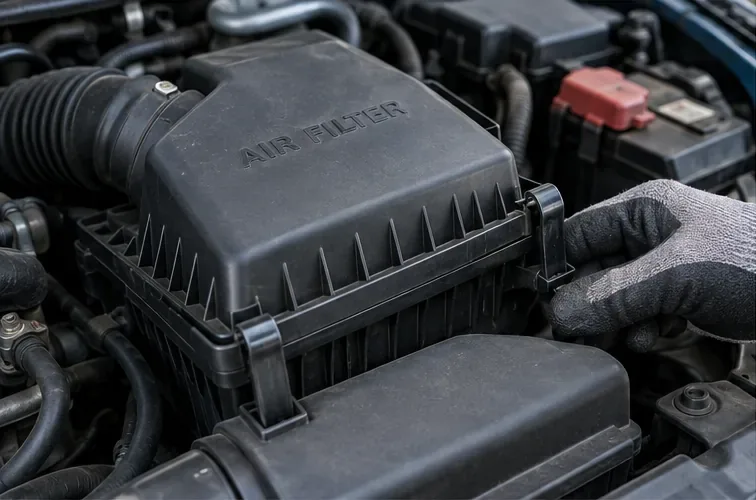
Learn how to clean a car air filter safely, when a paper filter should be replaced instead, and how reusable filters require different care.
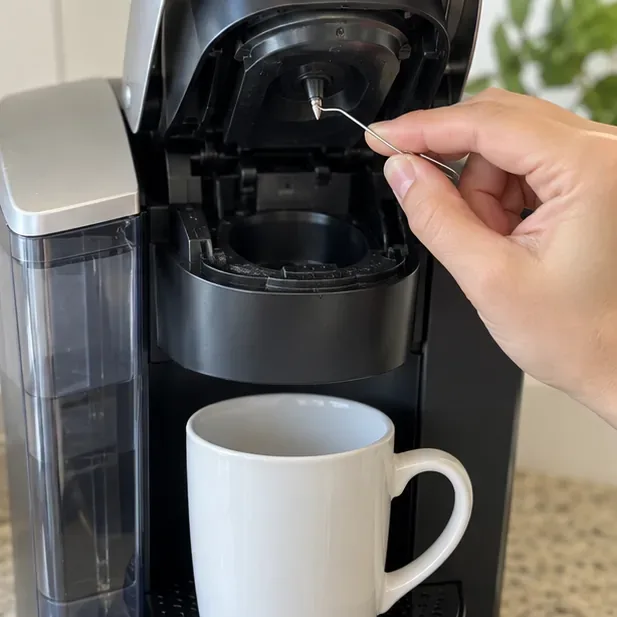
Learn how to clean a Keurig entrance and exit needle safely, clear coffee-ground clogs, rinse the brewer, and know when descaling is the next step.
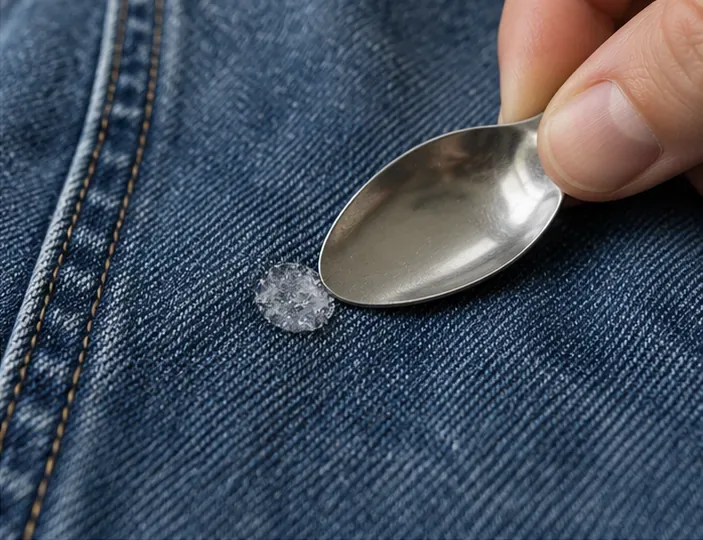
Learn how to remove dried nail glue from clothes safely, when acetone is appropriate, which fabrics need extra care, and when to stop and call a cleaner.
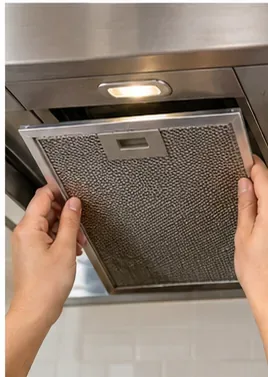
Learn how to clean a metal range hood filter safely, when dishwasher cleaning is okay, and why charcoal filter care depends on your exact model.
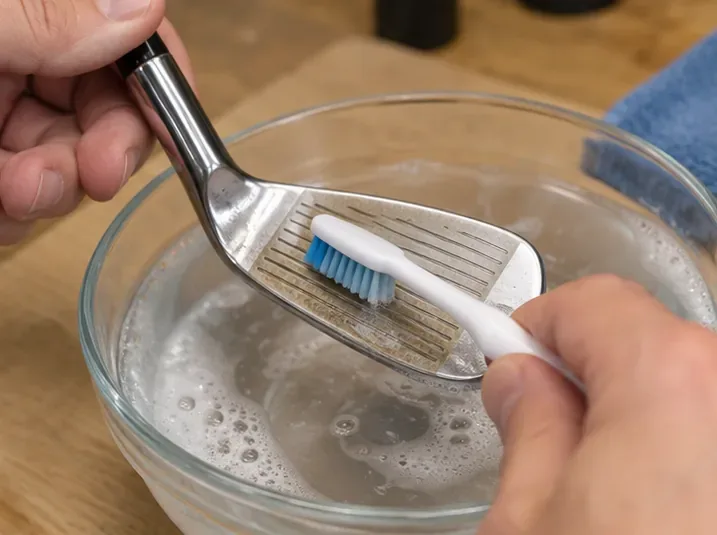
Learn how to remove rust from golf clubs safely, judge the result, protect raw and plated finishes, and know when cleaning should stop.
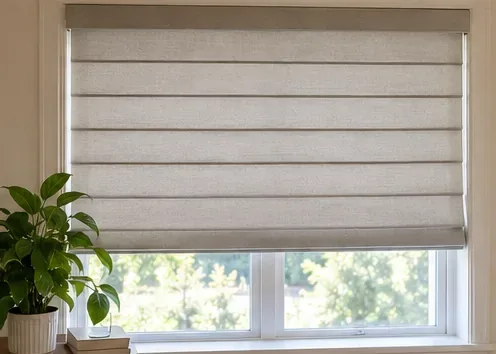
Learn how to clean fabric blinds safely with gentle vacuuming, spot cleaning, rinsing, and drying—plus when water, washing, or DIY deep cleaning can cause damage.
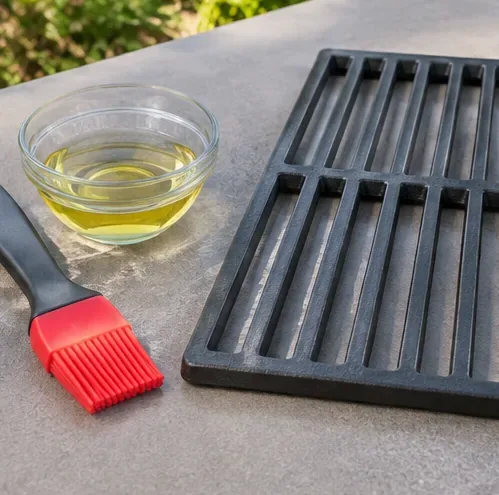
Learn how to season gas grill grates safely, including when cast iron needs seasoning, when porcelain enamel does not, and how to check the result.
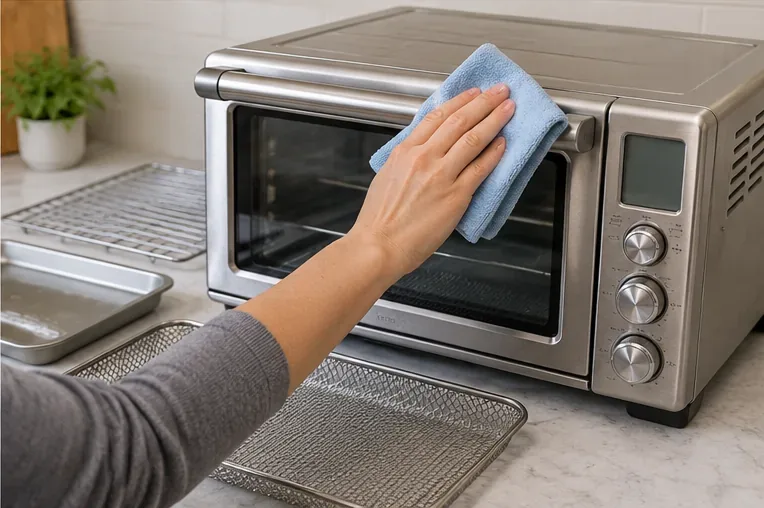
Clean a Breville toaster oven safely with mild soap, soft cloths, and the right sequence. Learn what clean should look like, what to avoid, and when to stop.
Learn how to clean a microwave grease filter, when a dishwasher is appropriate, and why charcoal filters should be replaced instead of washed.