How to Clean a PS5 Fan Without Taking It Apart: A Safe Beginner Guide
Learn how to clean PS5 vents safely without opening the console, using Sony-recommended low-power vacuuming, dry wiping, and proper airflow.
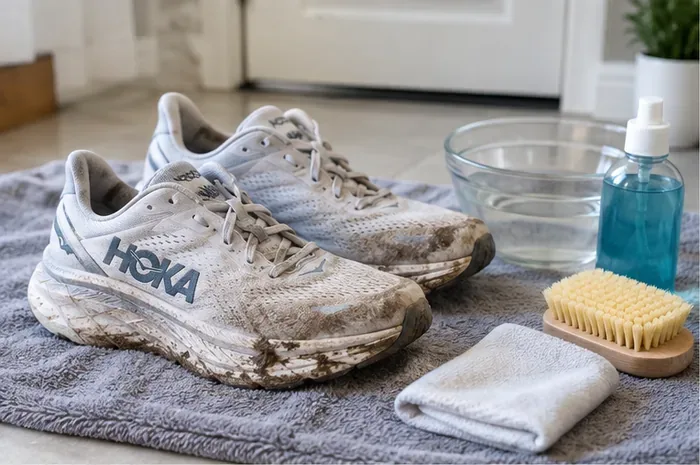
Your HOKA sneakers come back from a wet run looking gray, the outsole is packed with mud, and the mesh around the toe box has picked up road grime. The obvious shortcut is to toss them in the washing machine. That is also the shortcut most likely to create a new problem.
HOKA's current general care guidance recommends hand washing footwear with cold water and a mild soap or detergent, then letting it dry naturally away from direct heat or sunlight. HOKA also advises against washing shoes in a machine because agitation can damage materials, fastenings, and glue. Guidance was checked on September 12, 2026 against HOKA's official Care & Cleaning page and HOKA Product Care support.
Short answer: remove the laces and removable insoles, dry-brush off loose dirt, hand wash with a small amount of mild cleaner and cool water, wipe away the suds, blot excess moisture, and air dry the shoes at room temperature. Do not use a heated dryer, hair dryer, radiator, or direct sun to speed things up.
This approach matters because a running shoe is not one solid piece. It combines a textile upper, foam, rubber, adhesives, stitching, and sometimes specialty materials such as suede or waterproof membranes. Mud in the tread is mostly a surface problem; aggressive heat or machine agitation can turn cleaning into a construction problem.
If your model contains suede, nubuck, leather, or GORE-TEX material, read the material-specific section below before getting it wet. HOKA uses different constructions across models, so there is no single cleaning chemical that is ideal for every upper.
Look at the upper, heel, eyelets, midsole, and outsole. If the problem is only a little dust or one fresh splash, you may not need a full wash. A dry brush or damp cloth is often enough. If the shoes are muddy, sweaty, or dirty across several areas, continue with the full process.
Also identify any suede, nubuck, leather, or waterproof sections. Those materials can require a modified method. This quick check is the easiest way to avoid treating every HOKA sneaker as if it were the same mesh road shoe.
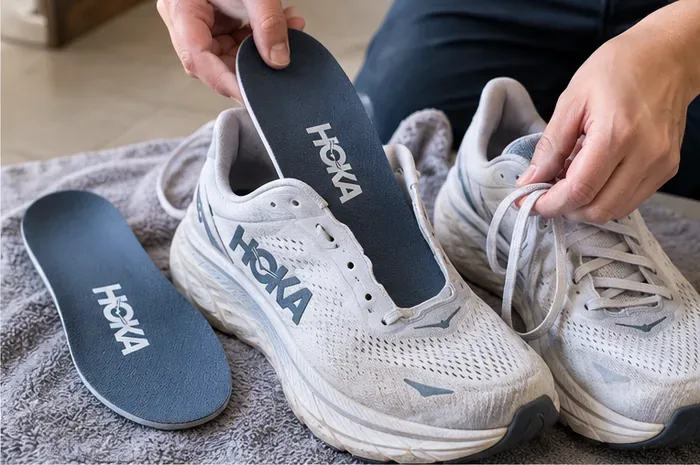
Take out the laces and any removable sockliners or insoles. This opens the shoe so you can clean around the tongue and eyelets and, just as importantly, allows moisture to escape later. HOKA's care guide specifically recommends disassembling removable parts before cleaning.
You can wash ordinary fabric laces separately with mild detergent and cool water. HOKA's general guide says laces may be washed cold with running clothes, but hand washing them is a simple option if you want to keep the entire shoe-cleaning job out of the washer.
If the shoes are coated in wet mud, resist the urge to scrub immediately. HOKA notes that caked mud can be easier to remove after it dries. Knock off loose clumps outdoors, then use a dry brush around the outsole lugs, sidewalls, toe bumper, and seams.
Do not attack breathable mesh with the same force you use on rubber tread. HOKA's material guidance says mesh is vulnerable to fraying under harsh scrubbing, so use softer bristles and lighter, repeated dabbing on the upper.
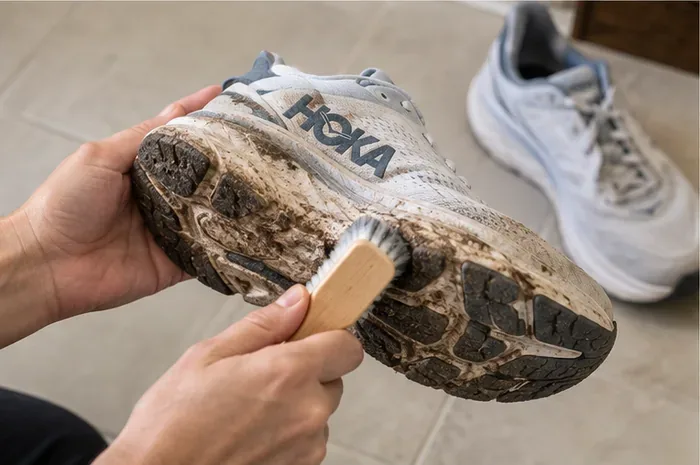
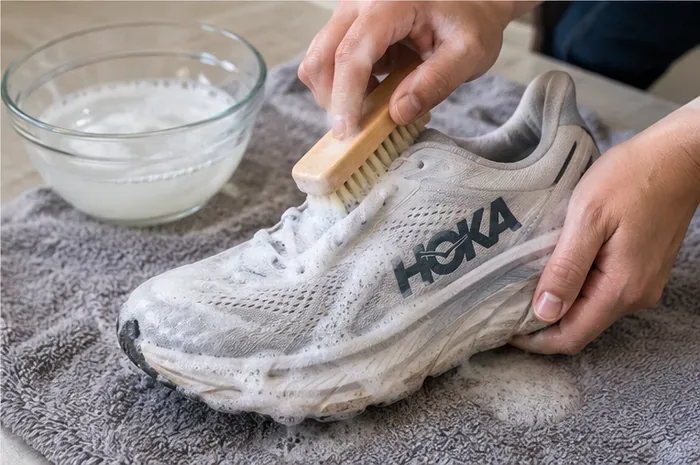
Add only a small amount of mild cleaner to cool water. Dip the brush into the solution rather than pouring detergent directly onto the shoe. Work on one section at a time, starting with the upper and moving to dirtier rubber areas. Use short, gentle strokes and give the cleaner time to lift grime instead of increasing pressure.
For ordinary synthetic-mesh HOKA running shoes, the goal is controlled hand washing, not soaking. A current HOKA trail-shoe guide likewise recommends a gentle hand wash and cautions against hot water. If the bowl becomes visibly muddy, replace the water so you are not brushing dirty water back into light-colored fabric.
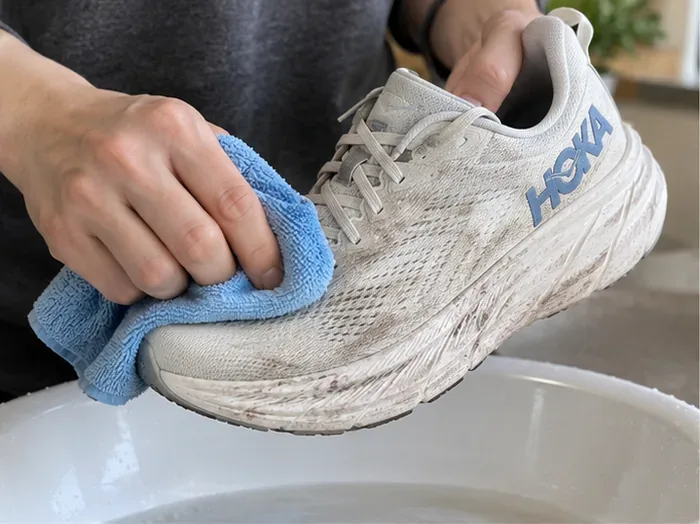
Dampen a clean cloth with cool water and wipe the upper, midsole, and accessible interior surfaces until the obvious suds are gone. Rinse the cloth frequently. HOKA's general care instructions use this damp-rag step rather than telling owners to put the whole shoe through a rinse cycle.
If an area still looks dirty after the soap is removed, repeat a localized gentle scrub. Do not respond to a stubborn stain by switching to hotter water or a more abrasive brush; that increases the risk to the upper without guaranteeing a better result.
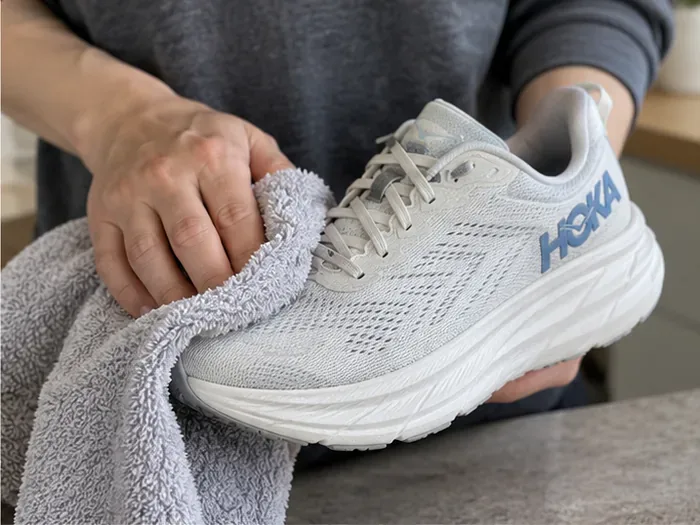
Press a dry towel against the upper, tongue, collar, and interior. Do not wring the shoe, twist the forefoot, or crush the heel to squeeze out water. A running shoe is meant to flex in specific places during use, not to be twisted like a towel.
Blotting shortens the drying time while keeping the shape intact. Do the same with the removable insoles if you washed them.
Loosely fill each shoe with absorbent paper so it can pull moisture from the lining and help the upper hold its shape. Keep the insoles out and lay the laces separately. Place everything in a shaded, well-ventilated indoor area.
HOKA specifically advises natural drying away from direct heat or sunlight. Its cleaning guide suggests stuffing the shoes and letting them dry overnight, but actual drying time depends on how wet they became, indoor humidity, airflow, and the materials in your model. If the paper becomes very damp, replace it with dry paper.
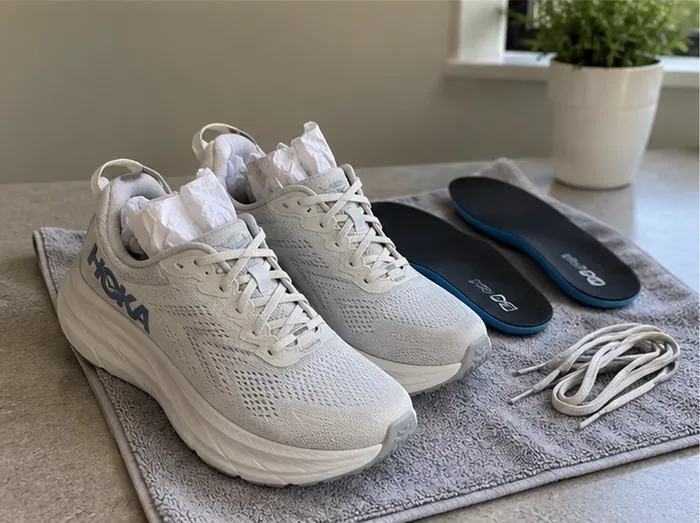
Do not use the clock alone to decide that your HOKAs are ready. Feel the toe box lining, heel lining, tongue, and insole. Look for darker damp patches. Rub a clean finger over the upper to make sure it does not feel slick with soap. Check the outsole grooves for remaining grit or small stones.
Only reinstall the insoles and laces once every part is dry. If one stained area remains but the shoe otherwise looks good, spot-clean that area rather than repeating a full wash immediately.
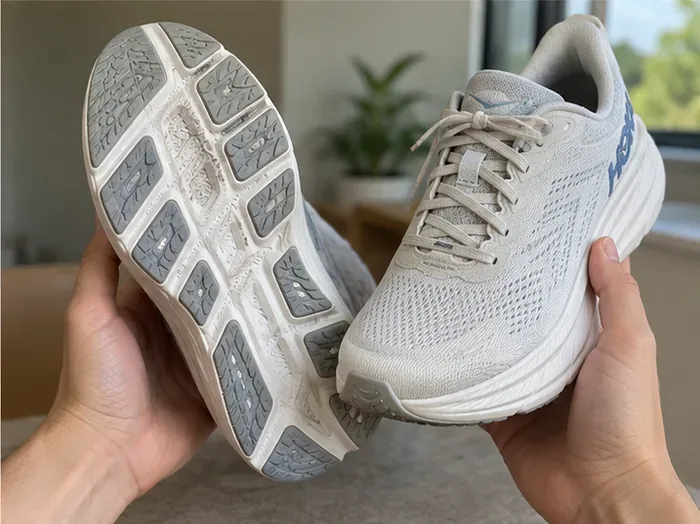
HOKA's official guidance says not to machine-wash the shoes. The reason is not merely cosmetic: current HOKA support material warns that machine washing can damage fastenings and glue, while the brand's care guide recommends hand washing instead.
That does not mean a shoe will automatically fall apart the first time it enters a washer. It means the method is outside the brand's recommended care approach and adds avoidable agitation. If your goal is to clean the shoes while preserving their construction, hand washing is the better default.
| Material | Adjustment | Useful action |
|---|---|---|
| Mesh | Use minimal pressure because harsh scrubbing can fray the fabric. | Choose a soft brush and dab or make short light strokes. |
| Suede or nubuck | HOKA recommends working mainly when the material is dry and using a dry brush plus an appropriate stain treatment. | Let the area dry first; consider a suede/nubuck-specific cleaner rather than the general wet scrub. |
| Leather | Follow the gentle cleaning method and wipe the surface after cleaning. | Avoid oversaturating seams and let the shoe air dry naturally. |
| GORE-TEX footwear | HOKA's material guidance calls for lukewarm water with mild detergent and a specific air-drying approach; waterproofing may need renewal if water no longer beads. | Follow the model's waterproof-care instructions and test water beading after the shoe is completely dry. |
For more detail on trail models and material-specific cleaning, see HOKA's official trail-shoe cleaning guide. If your shoe's product page or care label gives more specific instructions than the general guidance above, follow the model-specific instructions.
White foam and mesh make leftover dirt easier to see, but the safest first move is still the same: mild cleaner, cool water, a soft brush, and a clean damp cloth. Avoid escalating immediately to harsh bleach or strong stain removers unless the care instructions for your exact material explicitly permit them.
For odor, clean and dry the removable insole separately and make sure the shoe is fully dry before storage. HOKA's general care page also suggests a light dusting of baking soda as an optional odor-control measure. Use it lightly and remove loose powder before wearing the shoe again.
If a stubborn mark survives one gentle cleaning, let the shoe dry and reassess the stain. A mark that sits on suede, nubuck, or another specialty panel should be treated according to that material rather than repeatedly soaking the whole sneaker.
If all six checks pass, relace the shoes and reinstall the insoles. If one area is still damp, give it more air-drying time. If one stain remains, spot-clean it rather than automatically repeating the entire wash. That simple decision—clean only as aggressively as the problem requires—is the best way to keep a dirty pair of HOKA sneakers from becoming a damaged pair.
Learn how to clean PS5 vents safely without opening the console, using Sony-recommended low-power vacuuming, dry wiping, and proper airflow.
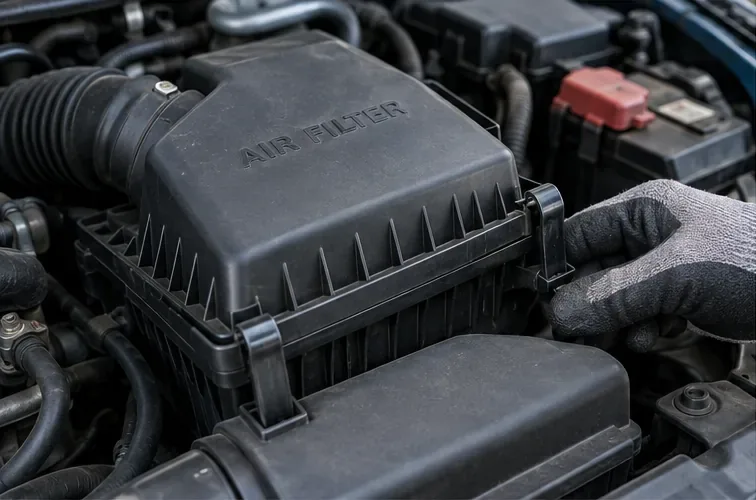
Learn how to clean a car air filter safely, when a paper filter should be replaced instead, and how reusable filters require different care.
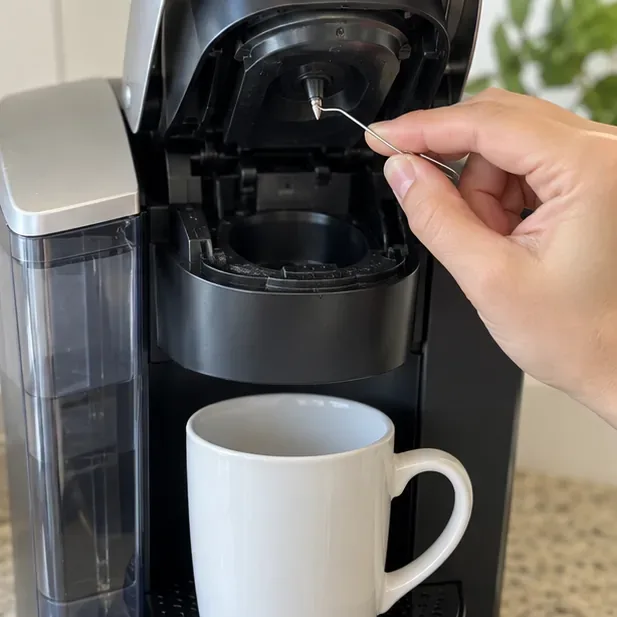
Learn how to clean a Keurig entrance and exit needle safely, clear coffee-ground clogs, rinse the brewer, and know when descaling is the next step.
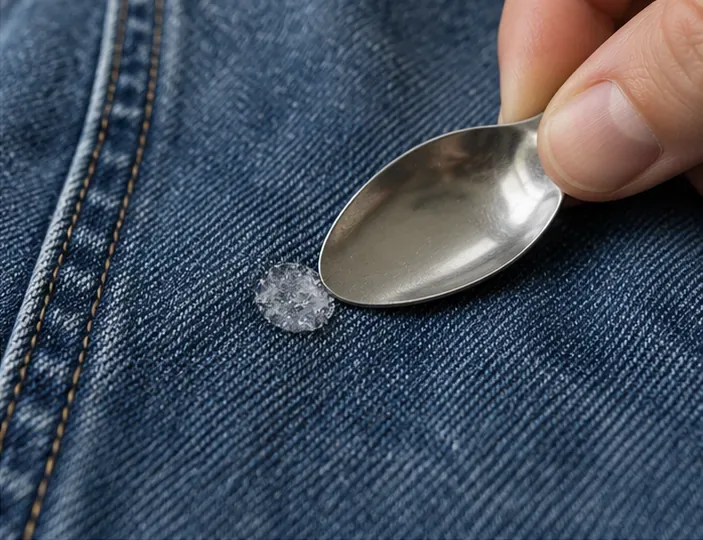
Learn how to remove dried nail glue from clothes safely, when acetone is appropriate, which fabrics need extra care, and when to stop and call a cleaner.
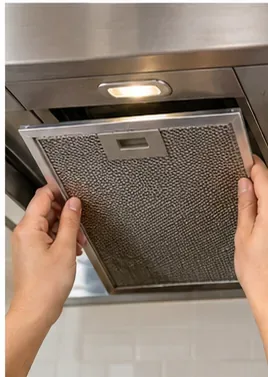
Learn how to clean a metal range hood filter safely, when dishwasher cleaning is okay, and why charcoal filter care depends on your exact model.
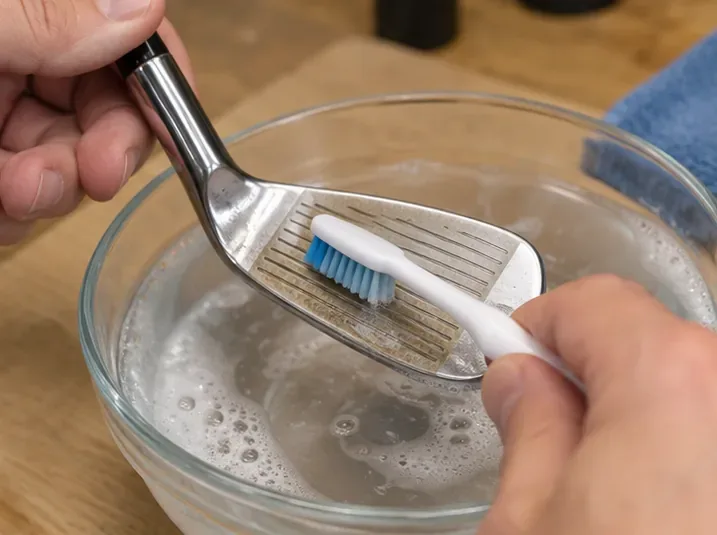
Learn how to remove rust from golf clubs safely, judge the result, protect raw and plated finishes, and know when cleaning should stop.
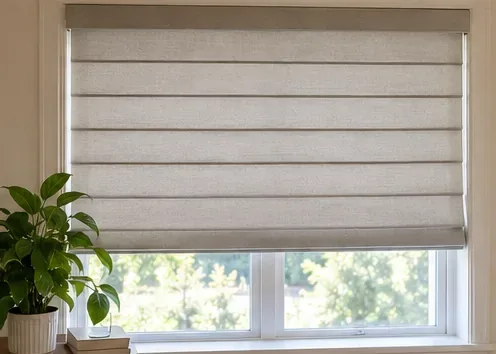
Learn how to clean fabric blinds safely with gentle vacuuming, spot cleaning, rinsing, and drying—plus when water, washing, or DIY deep cleaning can cause damage.
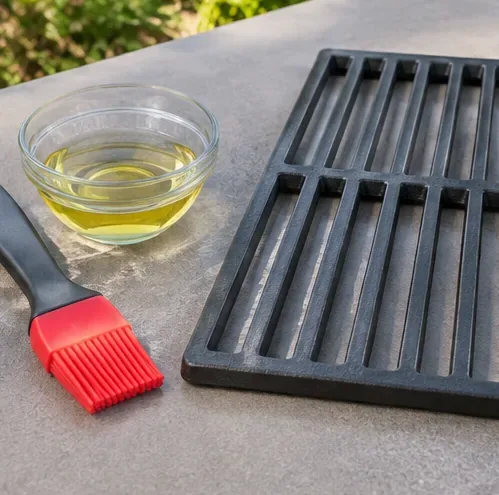
Learn how to season gas grill grates safely, including when cast iron needs seasoning, when porcelain enamel does not, and how to check the result.
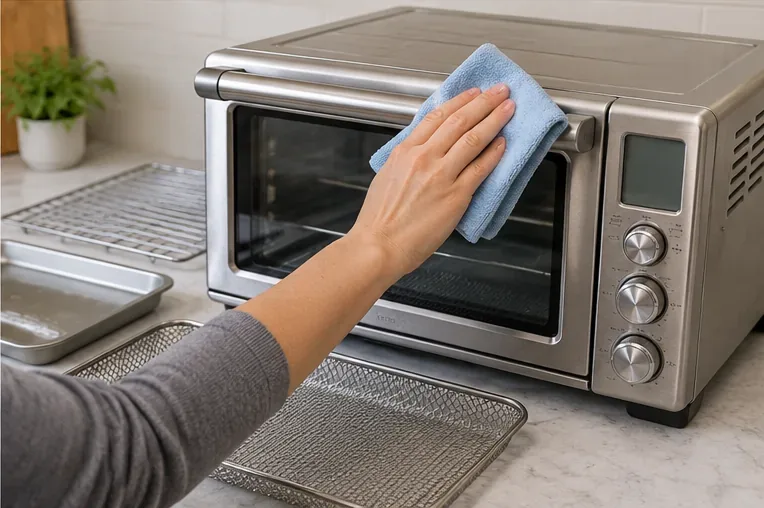
Clean a Breville toaster oven safely with mild soap, soft cloths, and the right sequence. Learn what clean should look like, what to avoid, and when to stop.
Learn how to clean a microwave grease filter, when a dishwasher is appropriate, and why charcoal filters should be replaced instead of washed.