How to Clean a PS5 Fan Without Taking It Apart: A Safe Beginner Guide
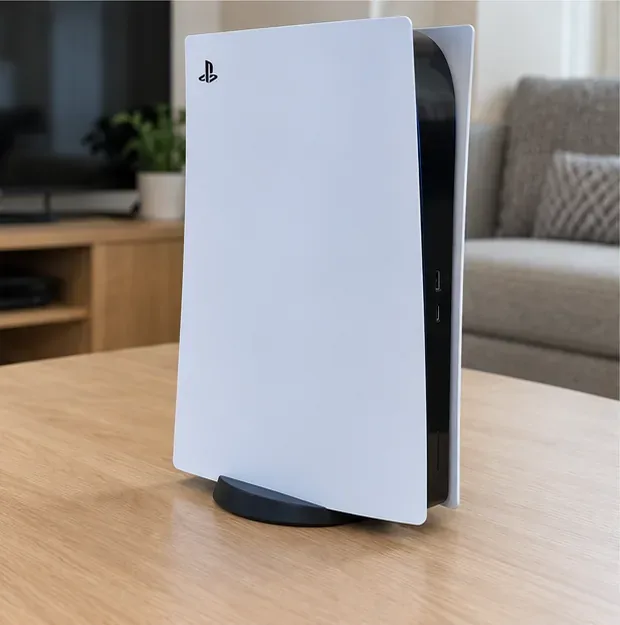
Learn how to clean PS5 vents safely without opening the console, using Sony-recommended low-power vacuuming, dry wiping, and proper airflow.
If water gets into a phone’s charging port, the safest response is usually less dramatic than the internet makes it sound: disconnect the cable, let gravity and airflow do the work, and do not push anything into the connector. Modern phones may also disable wired charging when moisture is detected to reduce the risk of corrosion or electrical damage.
Illustrative example only: imagine Alex sets a phone beside a glass of water, a small splash reaches the bottom edge, and a “liquid detected” or moisture warning appears the next time a cable is connected. This is not a real test or testimonial. We will use Alex’s hypothetical situation to show how the same principles apply in practice.
The details vary by device. Apple, Samsung, and Google all publish moisture guidance, but they do not use identical waiting times or alerts. That means the most useful rule is not “wait exactly two hours” or “leave it overnight.” It is: stop wired charging, dry the device using the manufacturer-approved method, and do not reconnect until the port and cable are dry and the device says it is safe.
Alex should disconnect the charging cable immediately and keep the wet connector away from power. Apple says charging while a Lightning or USB-C connector is wet can corrode the pins and cause permanent damage or connectivity problems. Google tells Pixel users to unplug the charger when the phone reports liquid or debris in the USB port. Samsung also disables charging when moisture is detected as a protective measure.
If the phone was submerged or is visibly wet beyond the port, follow the manufacturer’s broader water-exposure guidance. Google tells Pixel users whose phone falls in water to remove it, turn it off, dry it with a soft cloth, and leave it on a flat surface to finish drying at room temperature. Some Samsung support pages likewise recommend powering the device off while it dries.
Useful action: unplug the cable and charger, stop trying to charge by wire, and move the phone to a dry place.

For Alex’s hypothetical phone, the next goal is not to “suck” or “scrape” water out. It is to let loose liquid drain naturally. Apple says to tap an iPhone gently against your hand with the connector facing down. Google similarly tells Pixel users with debris to face the USB-C port downward and gently tap the phone against their hand. Samsung advises lightly shaking some devices with the port facing downward to release moisture.
The common idea is gentle movement plus gravity. Vigorous shaking is unnecessary and could spread liquid or cause you to drop the phone.
Useful action: hold the phone with the charging port facing down and gently tap it against your hand or use the light movement recommended by your device maker.

Alex can wipe the phone’s exterior with a soft, dry, lint-free cloth. What Alex should not do is insert a cotton swab, paper towel, pin, toothpick, or similar object into the charging connector. Apple explicitly warns against putting foreign objects such as cotton swabs or paper towels into the Lightning or USB-C connector. Google’s Pixel guidance says not to put anything into the USB-C port or cable.
This matters because the connector contains small contacts. A swab can leave fibers behind, a metal object can damage or short contacts, and a rigid tool can bend pins or push debris deeper.
Useful action: wipe only the exterior surfaces you can reach safely. Leave the inside of the port alone.

Now Alex should place the phone in a dry area with airflow. Apple says a cool fan blowing directly into the Lightning or USB-C connector may help its drying process. Samsung also recommends a well-ventilated area and, on current support pages, allows a fan to assist drying. Google tells Pixel owners to leave a wet phone on a flat surface and let it finish drying at room temperature.
Do not use a hair dryer, heater, oven, microwave, heat gun, or other external heat source. Apple and Google specifically warn against external heat. Apple also says not to use compressed air on a wet iPhone connector. Strong air pressure can drive moisture or debris farther into openings.
Useful action: leave the phone in a dry, well-ventilated place. If your manufacturer allows it, use only cool ambient airflow.

There is no single cross-brand answer. This is where following the exact device guidance matters.
| Manufacturer example | Current official guidance | What the reader should do |
|---|---|---|
| Apple liquid-detection alert | Apple says an initial retry can be made after at least 30 minutes; if the alert returns, drying can take up to 24 hours. | Retry only if the connector and cable are dry; stop if the alert returns. |
| Apple after general liquid exposure | Apple’s separate water-resistance page says to allow at least 5 hours before wired charging or connecting an accessory. | When guidance overlaps, follow the more relevant page for your situation and your on-device alert. |
| Samsung moisture warning | Samsung says water may naturally evaporate from the port in roughly 1–2 hours on supported devices, though conditions vary. | Wait until the warning clears and the port is dry. |
| Google Pixel liquid/debris alert | Google says to wait until the phone reports “OK to use USB port”; if the warning lasts two hours or more, contact support. | Use the phone’s alert state rather than a guessed timer. |
Useful action: do not keep plugging the cable in every few minutes. Wait for the manufacturer’s minimum interval and the device’s moisture warning to clear. If the warning comes back, disconnect and keep drying.
Sometimes. Apple says a compatible wireless charger can be used while the connector dries as long as the back of the iPhone is dry. Samsung also says wireless charging can be used on supported devices while the port dries, again with the device exterior dry.
Google’s Pixel lineup has model-specific wireless-charging support, so not every Pixel has it. The same is true across Android phones generally.
Useful action: if your phone supports wireless charging and the outside of the phone is completely dry, check the manufacturer’s guidance for your model before using it.
No. Apple explicitly says not to put an iPhone in a bag of rice because small rice particles can damage the device. More broadly, rice does not remove water from inside a port in a controlled way, and it can introduce dust or debris.
Useful action: skip rice. Use a dry area, gravity, and approved airflow instead.
These are common suggestions, but they are not universally safe.
Useful action: if a drying trick is not in your phone maker’s support instructions, do not assume it is harmless just because it sounds faster.
Contaminated liquids can leave conductive or corrosive residue even after the water evaporates. Apple says that if a liquid other than water splashes on a supported iPhone, the affected area should be rinsed with tap water and then wiped with a soft lint-free cloth. Samsung similarly says that if a liquid other than fresh water enters the charging port of certain supported devices, the device should be rinsed in fresh water and dried thoroughly.
That does not mean every phone should be rinsed under a faucet. Water-resistance ratings vary, can degrade with age or damage, and some devices are not rated for water exposure at all.
Useful action: if the spill was not plain water, look up the exact model’s manufacturer instructions before rinsing anything. If the phone has cracks, prior repairs, or unknown water resistance, professional service may be the safer choice.
In the illustrative scenario, suppose Alex follows the drying steps but the moisture warning keeps returning. At that point, repeating the same home drying process indefinitely is not useful.
Google says Pixel users should contact support if the “Liquid or debris in USB port” message remains for two hours or more. Apple says that if the liquid alert appears every time with an Apple cable or accessory after the phone has dried, service may be needed. Samsung advises requesting service if its drying instructions do not solve the problem.
Visible corrosion, a burned or melted connector, a cable that becomes unusually hot, or a port that is physically damaged are also reasons to stop using wired charging and seek professional support.
Useful action: if the warning persists beyond the manufacturer’s stated troubleshooting window, or if the connector looks damaged, stop testing with the cable and arrange support.
No. Water resistance does not mean “safe to charge while wet.” Apple notes that water resistance is not permanent and can decrease with normal wear. Google makes the same point for Pixel devices. Samsung’s moisture detection exists precisely because charging a wet connector can cause damage or corrosion even on water-resistant phones.
Useful action: treat a water-resistant phone as better protected from accidental exposure—not as a phone that can be plugged in while the port is wet.
The important lesson from Alex’s hypothetical spill is that removing water from a charger port is mostly a matter of preventing further electrical contact while moisture evaporates safely. The fastest-looking shortcuts—heat, rice, swabs, or repeated plug-in tests—are often the ones manufacturers warn against. Give the port time, follow the device’s own alert, and treat persistent warnings as a reason to escalate rather than experiment.
Learn how to clean PS5 vents safely without opening the console, using Sony-recommended low-power vacuuming, dry wiping, and proper airflow.
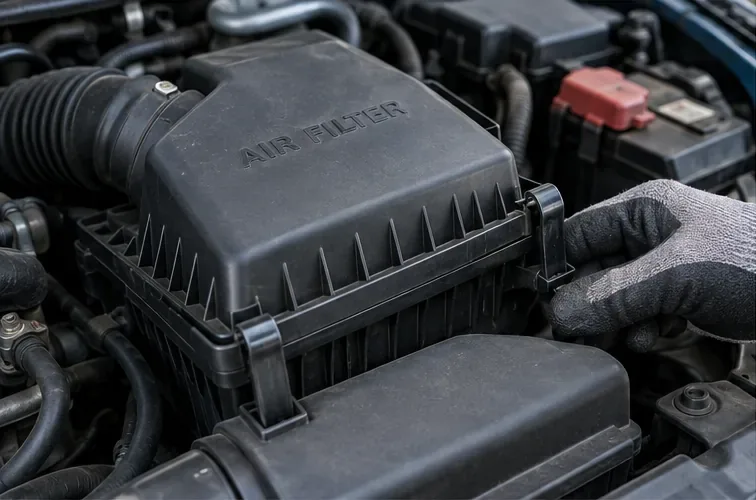
Learn how to clean a car air filter safely, when a paper filter should be replaced instead, and how reusable filters require different care.
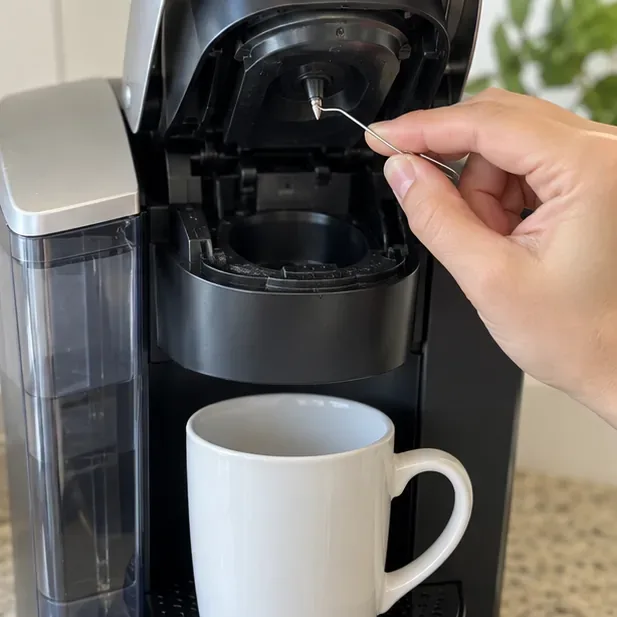
Learn how to clean a Keurig entrance and exit needle safely, clear coffee-ground clogs, rinse the brewer, and know when descaling is the next step.
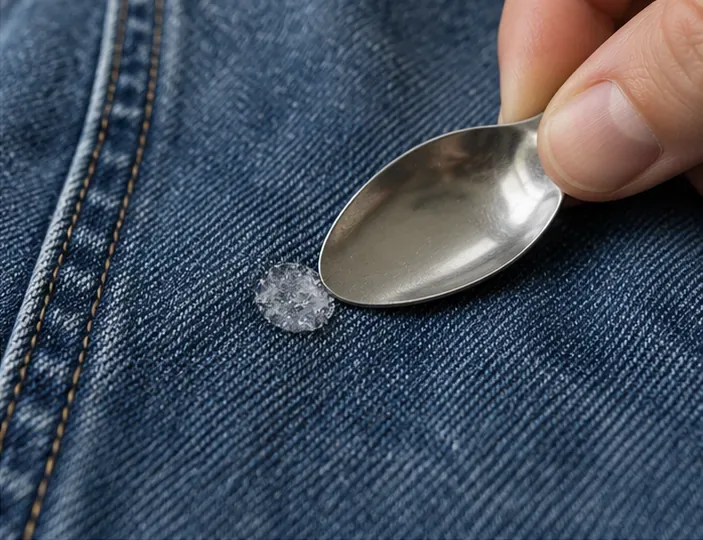
Learn how to remove dried nail glue from clothes safely, when acetone is appropriate, which fabrics need extra care, and when to stop and call a cleaner.
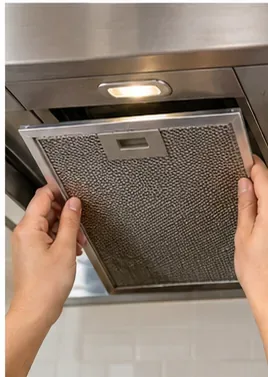
Learn how to clean a metal range hood filter safely, when dishwasher cleaning is okay, and why charcoal filter care depends on your exact model.
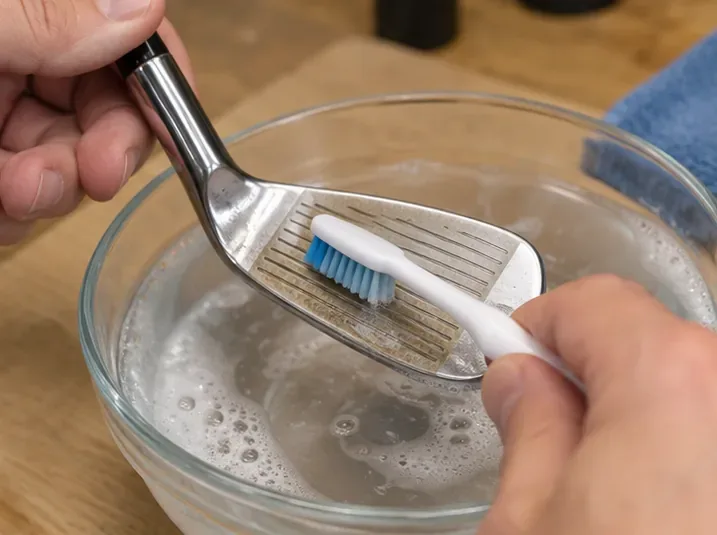
Learn how to remove rust from golf clubs safely, judge the result, protect raw and plated finishes, and know when cleaning should stop.
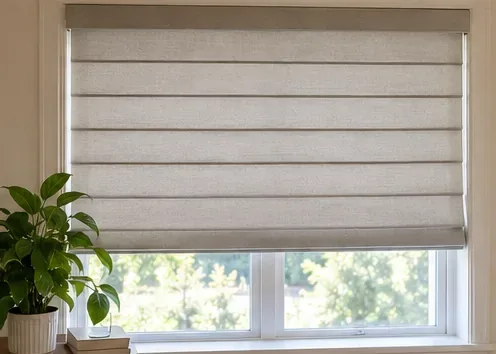
Learn how to clean fabric blinds safely with gentle vacuuming, spot cleaning, rinsing, and drying—plus when water, washing, or DIY deep cleaning can cause damage.
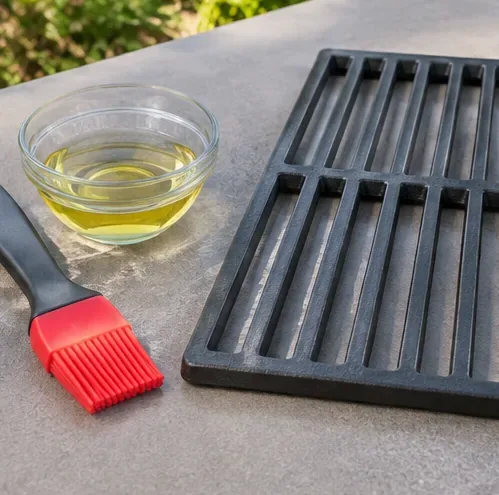
Learn how to season gas grill grates safely, including when cast iron needs seasoning, when porcelain enamel does not, and how to check the result.
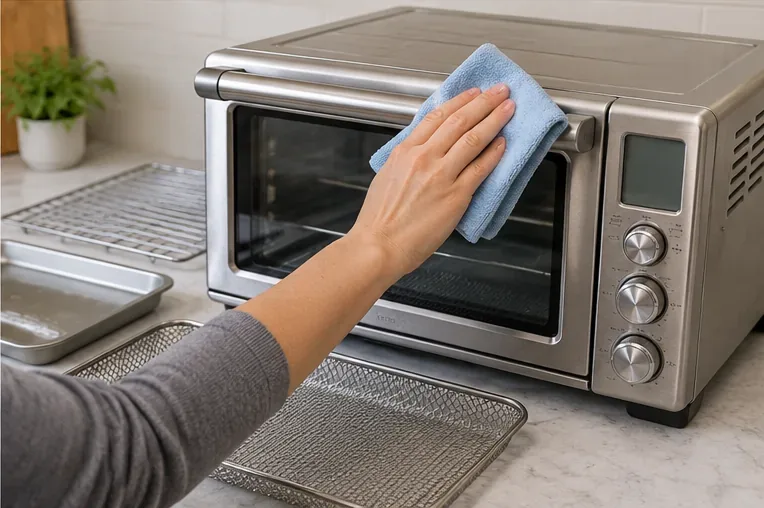
Clean a Breville toaster oven safely with mild soap, soft cloths, and the right sequence. Learn what clean should look like, what to avoid, and when to stop.
Learn how to clean a microwave grease filter, when a dishwasher is appropriate, and why charcoal filters should be replaced instead of washed.