How to Clean a PS5 Fan Without Taking It Apart: A Safe Beginner Guide
Learn how to clean PS5 vents safely without opening the console, using Sony-recommended low-power vacuuming, dry wiping, and proper airflow.
Chewing gum on a bed sheet creates two different problems at once: a stretchy mass sitting on the surface and a sticky residue that can remain between the fibers after the bulk gum is removed. The easiest mistake is to attack both problems with the same method. Warm water can make gum softer and smear it farther. A strong solvent may remove residue but create unnecessary risk for dye, elastic, or delicate fibers.
For most washable cotton and polyester sheets, the most practical starting point is to harden the gum with ice, lift off as much as possible with a dull tool, then treat only the residue that remains. The University of Georgia Cooperative Extension recommends this basic freeze-and-scrape approach for gum on apparel and fabrics. Whirlpool and Maytag also recommend ice as a low-chemical first method, followed by detergent or stain treatment when residue remains. These sources were reviewed on September 12, 2026.
| Method | Best use | Advantage | Tradeoff |
|---|---|---|---|
| Ice or freezer | Fresh or dried gum on most washable cotton/polyester sheets | No solvent; makes gum brittle enough to lift | Large sheets are awkward to freeze, so an ice bag is usually easier |
| Liquid laundry detergent or prewash stain remover | Sticky or oily residue after scraping | Designed for washable textiles and easy to rinse | May need a second treatment for heavy residue |
| Commercial fabric/upholstery spot cleaner | Residue that survives freezing and ordinary detergent | University of Georgia lists a commercial fabric/upholstery cleaner for remaining gum stain | Must be fabric-safe, spot-tested, and used according to ventilation/safety directions |
| Rubbing alcohol | Stubborn residue on durable, colorfast fabric | Can loosen sticky residue when simpler methods fail | Not a good default for delicate fibers or elastic; must be rinsed out before washing or drying |
| Clothing-safe adhesive remover | Very stubborn residue on compatible fabric | Targets adhesives directly | Highest compatibility uncertainty; requires label check, spot test, and thorough rinsing |
| Warm vinegar | Sometimes suggested for sturdy washable fabric | Can soften gum | Whirlpool advises avoiding it on delicate fabric and items with elastic, including fitted sheets |
If you have ordinary washable sheets and want the lowest-risk sequence, choose ice first, detergent second, and a tested solvent only if residue still remains. That order avoids exposing the entire sheet to a stronger product when mechanical removal may solve most of the problem.
Check the manufacturer's care instructions and fiber content if available. Cotton and many polyester sheets usually tolerate ordinary laundering, but that does not mean every stain-removal chemical is automatically safe. Silk sheets, wool blankets, specialty finishes, and some rayon or acetate fabrics can react differently to water, friction, or solvents.
A fitted sheet adds another concern: elastic. Whirlpool specifically cautions that vinegar should be avoided on delicate fabrics and items containing elastic, giving fitted sheets as an example. Alcohol and adhesive-removal products also deserve caution around elasticized edges; if you use them at all, confine treatment to the gum area, spot-test first, and rinse thoroughly.
If the sheet is labeled for professional cleaning, is silk or another high-value delicate fabric, or has unstable dye, freezing the gum may still help you remove a surface lump without chemistry, but professional textile cleaning is the safer next step for residue.

The reason ice works is mechanical rather than chemical. Gum is difficult to scrape while soft because it stretches and smears. Chilling makes it hard and brittle enough to lift in pieces. The University of Georgia advises applying ice to harden gum and scraping off the excess; Whirlpool recommends holding ice on gum for about 10–15 minutes or until it feels hard and brittle.
Pull the sheet off the bed so the gum cannot transfer to the mattress, blanket, or another layer of fabric. Lay the stained area on a flat surface. If the gum has folded onto another part of the sheet, separate the layers gently without stretching the sticky area.
Put ice cubes in a sealed plastic bag so melting water does not soak the fabric unnecessarily. Hold the bag directly against the gum until the gum becomes firm rather than stretchy. If you have a small pillowcase or sheet section that fits comfortably in a freezer, freezing is another option, but an ice bag is easier for a queen- or king-size sheet.
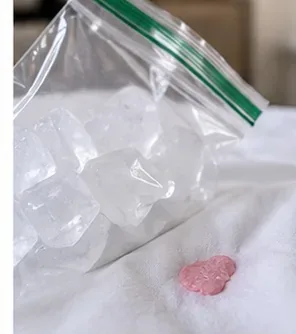
The time is not an absolute target. Ten to fifteen minutes is a useful reference from Whirlpool, but the real test is texture: scrape when the gum is hard, and re-chill it whenever it starts to soften.
Use a spoon, dull butter knife, or plastic scraper. Hold the fabric reasonably flat and work under the edge of the gum with short, controlled movements. Avoid sharp knives that can slice threads.
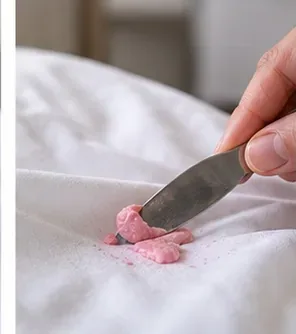
Do not try to remove everything in one stroke. Lift the thickest pieces first, return the ice if necessary, and repeat. This is slower than pulling warm gum, but it reduces spreading.
After scraping, run your fingers lightly over the dry fabric. If there is a tacky film or faint oily-looking patch, switch from mechanical removal to stain treatment. Whirlpool recommends liquid laundry detergent or stain remover for residue and says to let the treatment work for roughly 10–15 minutes before laundering; Maytag also recommends liquid detergent followed by gentle scraping and stain treatment.
Apply a small amount of liquid laundry detergent or a prewash stain remover whose label allows use on the sheet. Work from the outside of the residue toward the center so you do not enlarge the treated area.
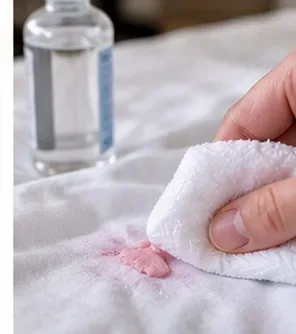
This option is usually preferable to a household solvent because it is already intended for washable textiles. It may not dissolve every stubborn gum residue in one pass, but its compatibility is easier to evaluate from the product label.
On ordinary cotton or polyester, use your fingers or a soft-bristle toothbrush to work the detergent into the sticky fibers. Gentle agitation helps cleaner reach the residue. Stop if the fabric begins to fuzz, pill, or distort.
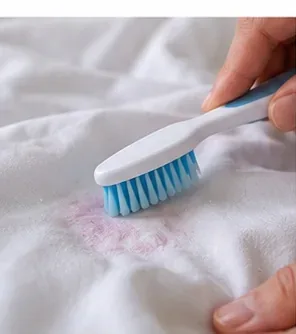
For sateen, loosely woven fabric, decorative embroidery, or delicate fibers, skip the toothbrush and blot instead. The tradeoff is speed versus fiber protection: brushing may remove residue faster on sturdy fabric, while blotting is slower but mechanically gentler.
Reserve a solvent for residue that survives freezing, scraping, and textile detergent. Whirlpool says rubbing alcohol is for durable fabrics only and recommends a hidden-area spot test. It also says adhesive remover should be confirmed safe for clothing before use. Any alcohol-containing product should be rinsed thoroughly before the sheet goes into a washer or dryer.
The University of Georgia takes a similar cautious approach: after freezing and scraping, its fabric guidance uses a commercial fabric/upholstery cleaner, while emphasizing care-label checks, hidden-area colorfastness testing, and ventilation when commercial cleaning products are used.
If you choose a solvent-based option:
For a fitted sheet, treat solvent use as a higher-risk choice if the gum is close to the elastic edge. If detergent is slowly working, repeating that lower-risk method may be a better tradeoff than exposing elastic to a stronger chemical.
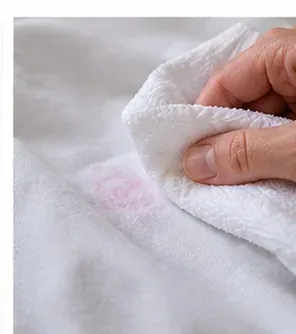
Vinegar can soften gum, and Whirlpool lists warm vinegar as one possible method for clothing. However, it is not the best universal recommendation for sheets. Whirlpool notes that vinegar is acidic, does not recommend it for regular garment use, and specifically says it should be avoided on delicate fabrics or items containing elastic such as a fitted sheet.
That leaves vinegar with a narrow role: a possible alternative for a sturdy, colorfast flat sheet when the care instructions and fabric tolerate it. Even then, ice is simpler because it does not introduce acid, odor, or an extra rinse requirement.
Do not put a large piece of gum into the washer and hope agitation will remove it. Remove the solid gum first, treat the residue, then launder.
Whirlpool recommends washing in the warmest water safe for the fabric after residue treatment. The important phrase is safe for the fabric: use the sheet's own care instructions rather than choosing hot water automatically. Wash with normal laundry detergent and an appropriate cycle for the material.
If you used an adhesive remover, rubbing alcohol, or another specialty product, confirm from its label that it has been thoroughly rinsed away before placing the sheet in the appliance.
Heat can make remaining gum or stain harder to remove. Whirlpool and Maytag both advise checking the treated area before drying and repeating treatment if residue remains.
Air-dry the affected section—or the whole sheet if practical—then inspect it in good light. Look for three things: visible pieces of gum, a tacky feel, and a greasy or discolored shadow. Do not judge only while the fabric is wet because water can temporarily hide residue.
Choose ice. Soft fresh gum is exactly where freezing has the largest advantage because it converts a stretchy mess into something you can lift mechanically.
You may need less chilling, but a few minutes of ice can still reduce tackiness. Scrape carefully, then treat residue with liquid detergent.
Prefer ice and detergent. Avoid making vinegar the default, and be conservative with alcohol or adhesive remover. The elastic edge is more chemically sensitive than a broad cotton center panel.
You have more stain-treatment flexibility than with silk or unstable dark dyes, but “white” is not permission to use any chemical. Some white sheets contain elastic, finishes, or blended fibers. Follow the label and spot-test specialty products.
Use ice only as a cautious surface-removal step, without aggressive scraping. If residue remains, professional cleaning is the safer recommendation because a solvent that removes gum can also alter dye, sheen, or fiber texture.
Repeat detergent once before escalating. This costs more time but lowers the risk of dye or elastic damage. Move to a fabric-safe commercial spot cleaner or a spot-tested solvent only when the residue justifies the additional risk.
After air-drying, run your hand over the treated area. The fabric should feel like the surrounding sheet, not tacky, stiff, waxy, or oily. Inspect it from different angles under bright light. If you see no gum, no greasy shadow, and no cleaner-caused color change, normal drying is reasonable.
If a faint residue remains, repeat the mildest method that was working. If the fabric changed color or texture during a spot test, stop and do not escalate with a stronger cleaner. A professional cleaner is a better next step than trading a removable gum mark for permanent textile damage.
For most washable sheets, the best balance of effectiveness and fabric safety is not a single magic solvent. It is a sequence: chill the gum, scrape gently, pretreat the residue, wash according to the sheet's instructions, and inspect before heat. Stronger chemistry is an option only when the remaining residue is worth the extra compatibility risk.
Learn how to clean PS5 vents safely without opening the console, using Sony-recommended low-power vacuuming, dry wiping, and proper airflow.
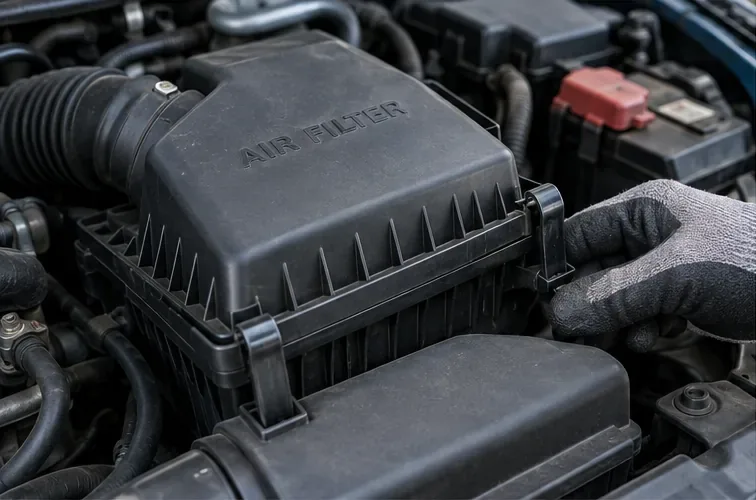
Learn how to clean a car air filter safely, when a paper filter should be replaced instead, and how reusable filters require different care.
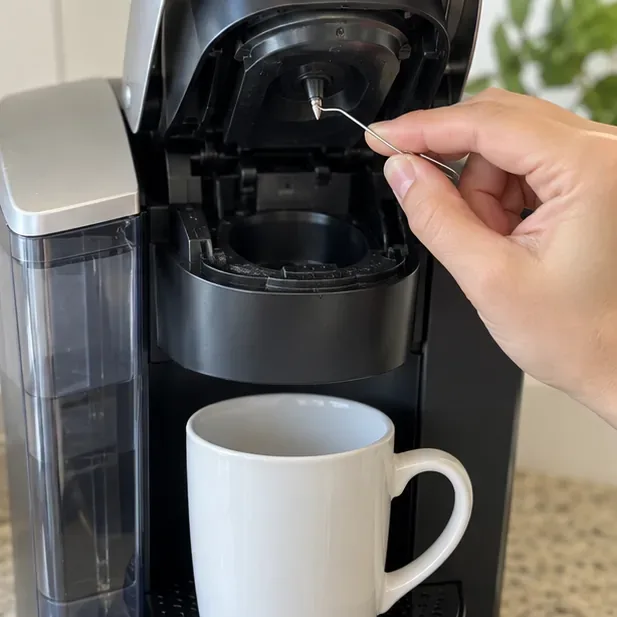
Learn how to clean a Keurig entrance and exit needle safely, clear coffee-ground clogs, rinse the brewer, and know when descaling is the next step.
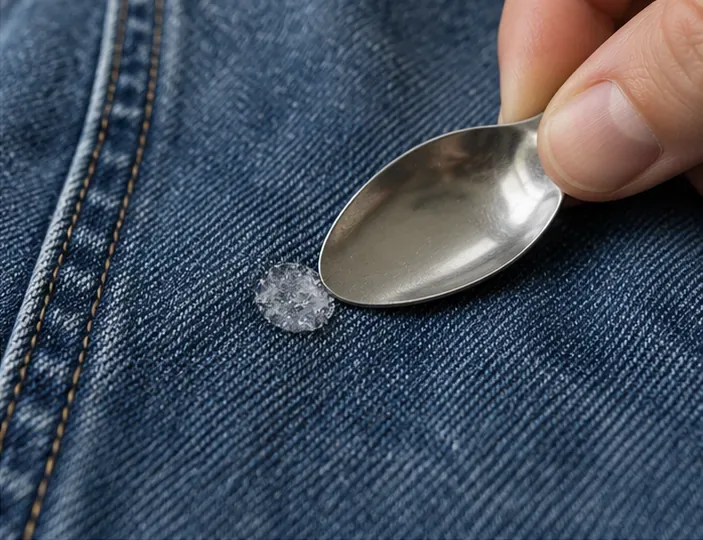
Learn how to remove dried nail glue from clothes safely, when acetone is appropriate, which fabrics need extra care, and when to stop and call a cleaner.
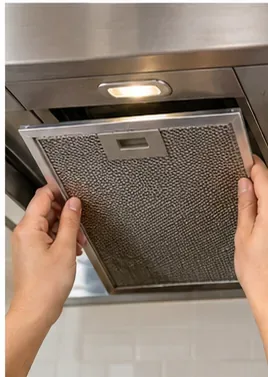
Learn how to clean a metal range hood filter safely, when dishwasher cleaning is okay, and why charcoal filter care depends on your exact model.
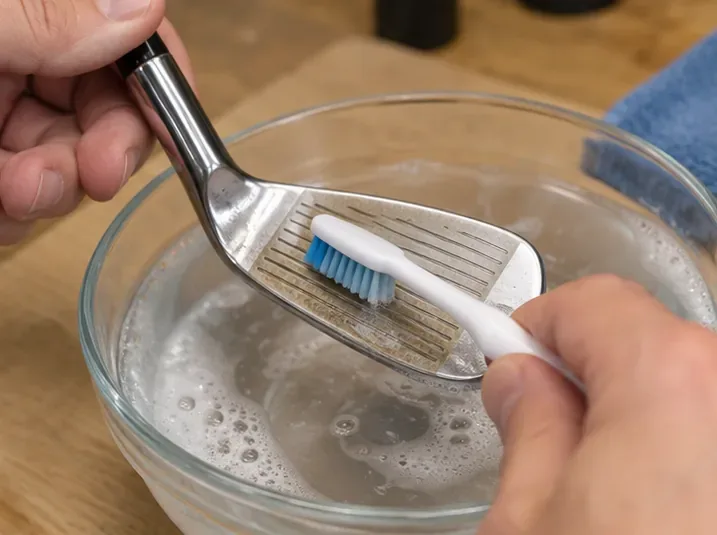
Learn how to remove rust from golf clubs safely, judge the result, protect raw and plated finishes, and know when cleaning should stop.
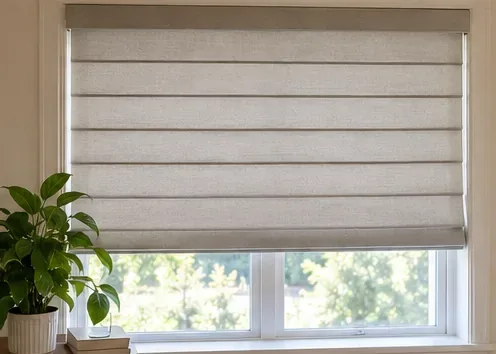
Learn how to clean fabric blinds safely with gentle vacuuming, spot cleaning, rinsing, and drying—plus when water, washing, or DIY deep cleaning can cause damage.
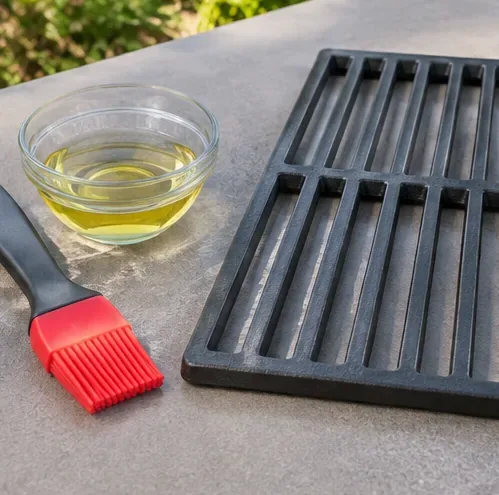
Learn how to season gas grill grates safely, including when cast iron needs seasoning, when porcelain enamel does not, and how to check the result.
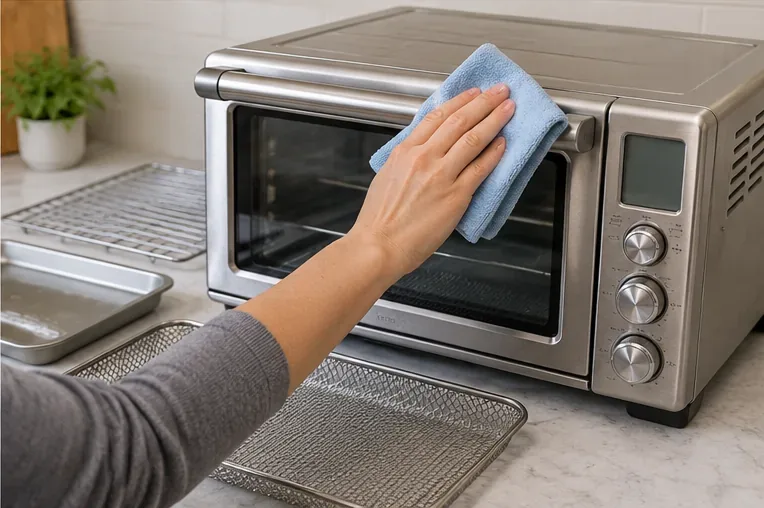
Clean a Breville toaster oven safely with mild soap, soft cloths, and the right sequence. Learn what clean should look like, what to avoid, and when to stop.
Learn how to clean a microwave grease filter, when a dishwasher is appropriate, and why charcoal filters should be replaced instead of washed.