Home
» How To
»
How to Get Deodorant Off a Black Shirt Without Fading It
How to Get Deodorant Off a Black Shirt Without Fading It
A white deodorant streak on a black shirt usually looks worse than it is. If the mark is fresh and sitting on the surface, start with the gentlest dry method and avoid washing the whole shirt unless you need to. If the underarm area feels stiff, waxy, or grayish, treat it as buildup rather than a simple transfer mark.
The most important rule is to protect the black dye while you work. Check the care label before adding water, detergent, stain remover, or any home treatment. In the United States, apparel care labels are required to give washing, drying, bleaching, and warning information when those instructions matter for safe care; the Federal Trade Commission's Care Labeling Rule explains what those directions mean.
Is it a fresh white mark or an actual deodorant stain?
First, look at the texture. A fresh transfer mark is usually chalky, white, and superficial. It often appears after pulling a black shirt over freshly applied stick or antiperspirant. A built-up stain is more likely to sit in the underarm area, feel stiff or coated, and remain after a quick wipe.
What you see
Best first move
What not to do first
Dry white streak from getting dressed
Gently rub with clean dark fabric or nylon
Soak the whole shirt immediately
Light residue that remains after dry rubbing
Dab with a barely damp clean cloth
Scrub aggressively
Stiff or persistent underarm buildup
Pretreat with liquid laundry detergent, then wash per the label
Use chlorine bleach or peroxide on a black shirt without confirming it is safe
What is the fastest way to remove a fresh deodorant mark?
1. Try dry friction before adding water
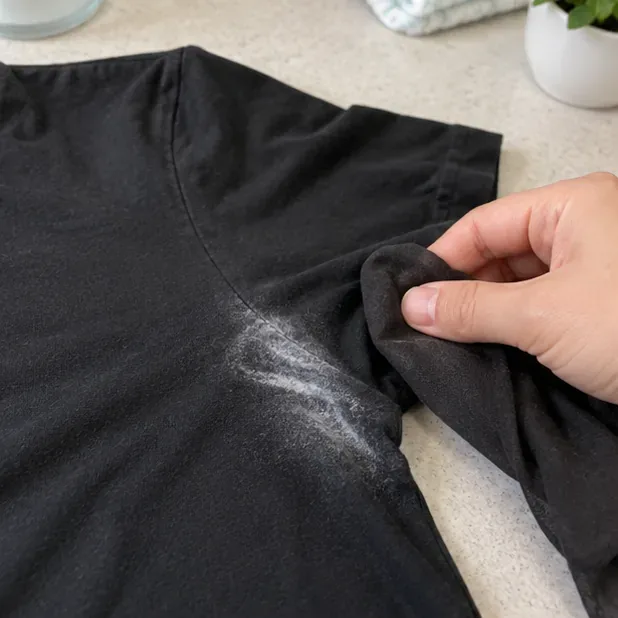
Lay the shirt flat and gently rub the white mark with a clean section of the same black fabric, a clean dark cotton cloth, or a piece of nylon hosiery. Use short, light strokes and stop once the residue lifts. The goal is to pick up loose product, not grind it deeper into the fibers.
This is a practical first choice for a surface mark because it adds no moisture and no chemical treatment. Dove's U.S. guidance, updated February 5, 2026, specifically suggests using nylon tights to rub away white antiperspirant marks and advises dabbing rather than hard rubbing when using a wipe; see Dove's guidance on avoiding and removing white marks.
Start with the least invasive method: gently work a fresh, chalky deodorant streak with clean dry fabric before adding water or cleaner.
2. If a faint shadow remains, dab it with a barely damp cloth
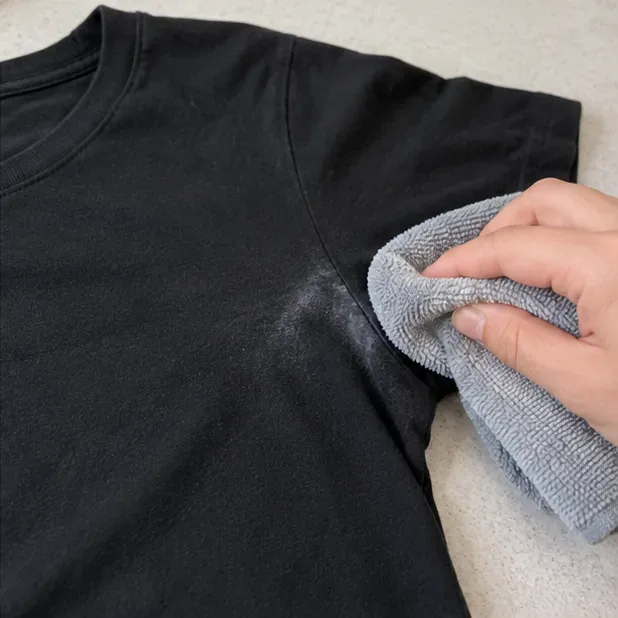
For residue that will not lift completely when dry, dampen a clean microfiber cloth with plain water, wring it very well, and dab the area from the outside of the mark toward the center. Do not saturate the shirt. Then blot with a dry towel and let the spot air-dry so you can see whether the mark is truly gone.
If you use a premoistened wipe in an emergency, choose one that does not contain bleach and test it first on an inconspicuous area. A dark shirt can show rings or dye changes if a wet treatment is too strong or too concentrated.
A barely damp microfiber cloth can lift the last visible residue after the dry method, without soaking the entire garment.
What if the deodorant has built up in the underarm area?
3. Pretreat persistent residue with liquid laundry detergent
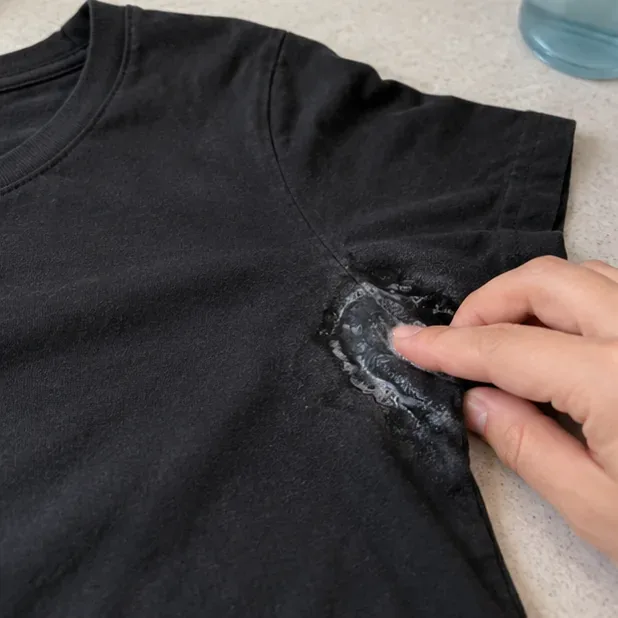
If the fabric feels stiff or coated, a surface wipe is unlikely to be enough. Apply a small amount of liquid laundry detergent directly to the affected area and gently work it into the fabric with your fingers. Let it sit according to the detergent label, then rinse or wash the shirt as directed on its care label.
The American Cleaning Institute stain-removal guide recommends pretreating light deodorant stains with liquid laundry detergent before laundering. For heavier deodorant stains, it recommends a prewash stain remover, a short dwell time, and laundering with oxygen bleach. On a black shirt, however, only use an oxygen-bleach product if both the garment care label and the product label indicate that it is safe for the fabric and color.
For set-in underarm residue, pretreat the affected fabric gently rather than scrubbing the entire shirt.
4. Wash according to the care label, then inspect before machine drying
Wash the shirt using the method and temperature allowed by its label. For washable dark clothing, cold water and a shorter cycle can help reduce fading over repeated washes; the American Cleaning Institute's dark-clothing care guidance also suggests turning dark garments inside out and considering cold water when machine washing is recommended.
After washing, inspect the underarm while the shirt is still damp. If the residue is still visible, repeat the pretreatment rather than sending the shirt straight into a hot dryer. Both the American Cleaning Institute and Whirlpool caution against machine drying a stained garment before the stain is gone because dryer heat can make removal more difficult.
Air-dry first so you can inspect the black fabric in good light before exposing any remaining stain to dryer heat.
Can you use baking soda, vinegar, or hydrogen peroxide on a black shirt?
Baking soda: useful for stubborn buildup, but not always necessary
For a persistent deodorant stain that survives detergent pretreatment, baking soda is a reasonable next step if the fabric can tolerate gentle brushing. Whirlpool's current care guide for black shirts describes making a paste from equal parts baking soda and water, working it into the stain with a soft toothbrush, letting it sit for 20 minutes, and then washing according to the garment label. It also recommends testing treatments first; see Whirlpool's deodorant-stain guidance.
Use this as an escalation step, not the first response to a simple white streak. Excess brushing can roughen delicate knits or make a dark fabric look fuzzy.
White vinegar: possible, but patch-test it first
Whirlpool also lists a diluted white-vinegar treatment for deodorant stains. If you choose it, test the solution on an inside seam first, rinse thoroughly afterward, and follow the garment label. Vinegar is not a substitute for checking whether the shirt is washable.
Hydrogen peroxide: skip it on black clothing
Do not use hydrogen peroxide as your first-line treatment for a black shirt. Whirlpool explicitly notes that peroxide can discolor darker clothing and recommends that particular method for white clothing instead. Likewise, do not reach for chlorine bleach unless the care label clearly permits it. The FTC's labeling rule distinguishes garments that can use all bleaches from those that require non-chlorine bleach or no bleach at all.
Can you remove deodorant from a black shirt without washing it?
Yes, when the problem is a fresh white transfer mark. Dry rubbing with clean fabric or nylon, followed by a light damp dab if needed, can often remove the visible residue without a full wash. This is especially useful when you are already dressed and need a quick fix.
If the underarm is stiff, smells strongly after airing, or has recurring gray or whitish buildup, treat and wash it. A quick surface wipe will not remove material that has accumulated inside the fibers.
How do you keep white deodorant marks from coming back?
Apply deodorant or antiperspirant before getting dressed when practical.
Use only the amount directed on the product label rather than layering on extra product.
Let the product dry before pulling on a dark shirt. Dove's deodorant FAQ recommends applying before dressing, avoiding overapplication, and waiting for it to dry.
If your shirt is tight at the shoulders or underarms, roll or fold the lower hem outward while putting it on so the outer face of the fabric is less likely to drag across the underarm area.
Wash recurring underarm residue before it becomes a stiff layer. Early treatment is generally easier than removing old buildup.
What should you do if the shirt is delicate or dry-clean-only?
Stop before applying household treatments. If the care label says dry-clean-only, or the shirt contains delicate fibers, special finishes, trim, or color treatments, follow that instruction and point out the deodorant mark to the cleaner. The same caution applies if a hidden-area test shows dye transfer, lightening, or texture change.
For an ordinary washable black cotton or cotton-blend T-shirt, the safest progression is simple: dry removal first, then a lightly damp cloth, then detergent pretreatment for buildup, followed by label-directed washing and air-drying for inspection. That sequence solves the common problem while minimizing unnecessary stress on dark fabric.