How to Clean a PS5 Fan Without Taking It Apart: A Safe Beginner Guide
Learn how to clean PS5 vents safely without opening the console, using Sony-recommended low-power vacuuming, dry wiping, and proper airflow.
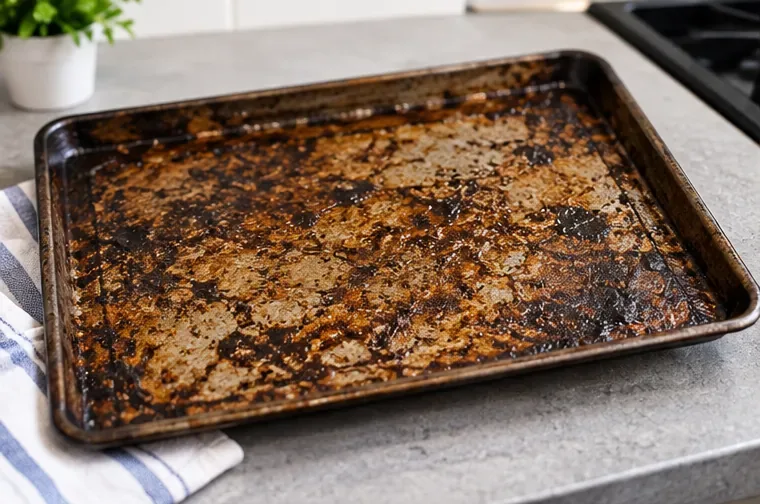
Oven trays can look permanently ruined after a few rounds of roasted vegetables, bacon, melted cheese, or sugary drips. The difficult part is not simply removing the brown and black residue. It is removing it without damaging the tray underneath. A method that is acceptable for stainless steel may be a poor choice for natural aluminum or a coated nonstick sheet.
The safest approach is to start with the least aggressive method that works: let the tray cool, remove loose food, use warm water and dish soap, scrub with a non-damaging tool, then escalate only if the tray's material and manufacturer instructions support it. That order is consistent with current care guidance from major bakeware manufacturers including Nordic Ware, USA Pan, and All-Clad.
Verified: manufacturer care instructions differ by material and finish. Nordic Ware recommends hand washing its natural aluminum bakeware and warns that automatic dishwasher detergent can discolor it. USA Pan recommends warm soapy hand washing for its silicone-based nonstick bakeware. All-Clad tells users to let stainless steel bakeware cool before cleaning, then use warm soapy water and a sponge or soft cloth. Action: check the underside, packaging, product page, or manual before using a dishwasher, abrasive pad, acidic cleaner, or specialty chemical.
| Tray type | Safest starting point | What not to assume |
|---|---|---|
| Natural aluminum | Warm soapy water and a sponge, textured non-metal scrubber, or dishcloth | Do not assume dishwasher discoloration means damage, and do not assume vinegar is harmless on aluminum |
| Nonstick-coated | Hand wash with mild dish soap and a soft sponge or nylon-safe pad | Do not assume steel wool, metal scrapers, or abrasive powders are safe |
| Stainless steel | Cool first, then warm soapy water, a sponge or soft cloth, and a gentle nylon pad if needed | Do not assume every stainless tray accepts every cookware cleaner; follow the tray's own care instructions |
| Unknown, enamel-coated, or mixed-material | Use mild soap and a soft cloth while you identify the product | Do not guess with acids, oven cleaner, dishwasher detergent, or aggressive abrasives |
For reference, see Nordic Ware's Naturals Aluminum Bakeware care guidance, USA Pan's Bakeware Use & Care instructions, and All-Clad's Care & Use guide.
Do not take a hot tray straight from the oven to a sink full of cool water. All-Clad specifically warns that putting hot stainless steel bakeware under cold water can cause warping. Once the tray is cool enough to handle safely, lift away loose food with a wooden, silicone, nylon, or other non-damaging utensil appropriate for the surface.
Action: if the tray is nonstick or you are not certain what the finish is, skip metal spatulas and razor-style scrapers. Start with the least abrasive tool you have.
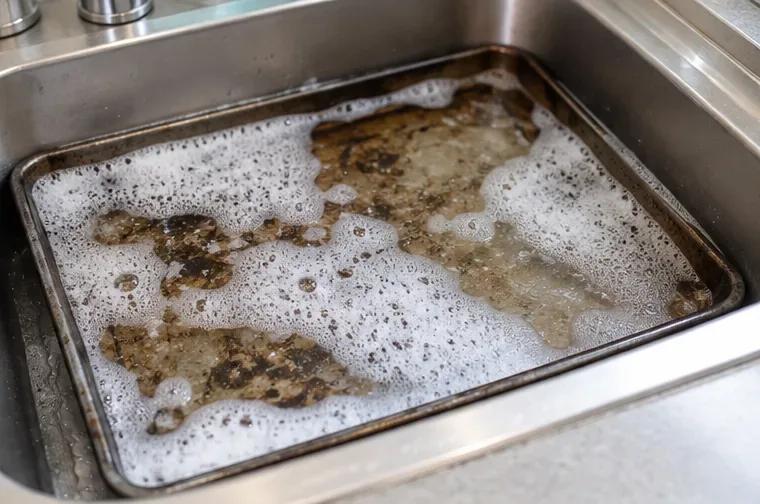
Warm water and dish soap are the safest first-line treatment across the manufacturer guidance reviewed for this article. All-Clad says stainless bakeware can be soaked in warm soapy water before washing with a sponge or soft cloth. Nordic Ware also recommends warm soapy water for natural aluminum, but advises against extended soaking. That means a long overnight soak should not be treated as a universal rule.
Action: use enough warm soapy water to wet the greasy areas and give the residue time to soften, but keep the soak brief if your tray's manufacturer warns against prolonged immersion. If you cannot find the care instructions, check the product model before leaving the tray submerged for hours.
Most cleaning damage happens at this stage. A rough pad may remove carbon quickly, but it can also scratch aluminum or a nonstick coating. Nordic Ware says metal utensils and scouring pads can scratch natural aluminum. USA Pan says to use mild dish soap with a soft sponge or nylon cleaning pad and to avoid steel wool and harsh abrasives on its nonstick bakeware. All-Clad recommends a gentle nylon scouring pad for more difficult residue on stainless steel bakeware while avoiding harsh products and abrasive scouring pads.
Action: scrub the softened residue with a sponge, soft cloth, non-metal brush, or manufacturer-approved nylon pad. Work on the dirtiest areas first. If progress stops, do not simply switch to the harshest tool in the cabinet; move to the material-specific options below.
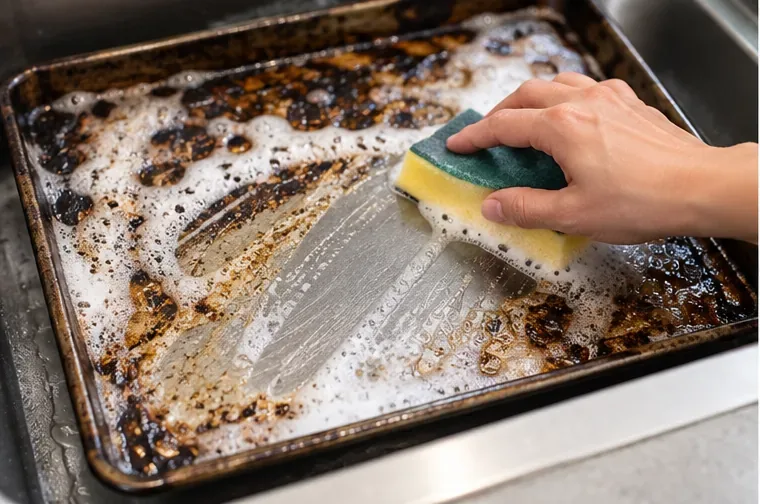
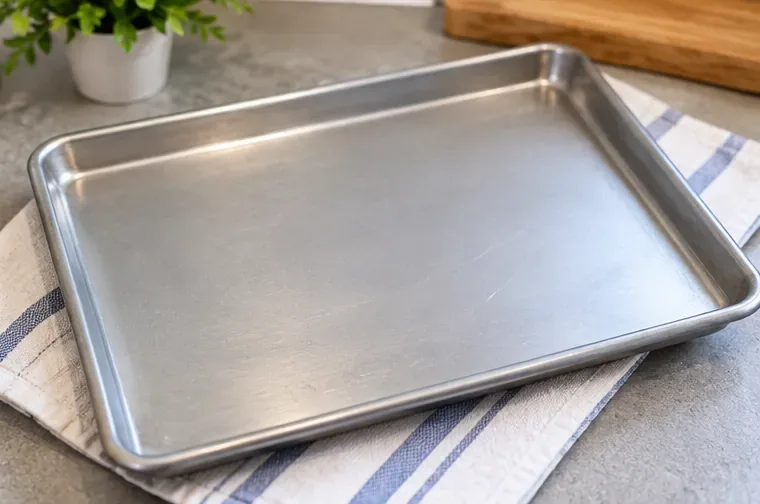
Rinse away soap and loosened debris with warm water, then dry the tray thoroughly. On stainless steel bakeware, All-Clad recommends drying immediately to help prevent spotting. Natural aluminum may remain darkened or discolored even when it is clean. Nordic Ware states that dishwasher-related discoloration on its natural aluminum bakeware is cosmetic and does not affect baking performance or safety.
Action: check for a greasy film, loose char, sticky residue, or detergent left on the surface. If those are gone, a uniform stain or color change may not require more aggressive scrubbing. If the tray is coated and the finish itself is scratched, chipped, or peeling, treat that as a product-condition issue rather than a stain and consult the manufacturer about continued use.
Verified: Nordic Ware says that for darker baked-on food on its natural aluminum baking sheets, users can apply Dawn Powerwash Dish Spray, let it sit for 10 minutes, scrub with a non-metal brush or textured sponge, rinse with warm water, and repeat if necessary. The same guidance says to avoid extended soaking. Nordic Ware also notes that aluminum reacts with acidic ingredients such as vinegar and tomato products and that prolonged exposure may darken, pit, or corrode aluminum.
Action: if your tray is bare aluminum, do not automatically reach for a vinegar bath just because it is a popular household cleaning trick. Use the aluminum-safe method recommended for your specific pan, and keep acids off the tray unless its manufacturer explicitly approves them.
Verified: USA Pan recommends hand washing its silicone-based nonstick bakeware with warm soapy water, mild dish soap, and a soft sponge or nylon cleaning pad. It warns against steel wool, harsh abrasives, and abrasive tools. All-Clad similarly recommends hand washing its Pro-Release bakeware with soap and water and avoiding abrasive cleaners or scouring pads.
Action: if baked-on residue does not come off with gentle repeated cleaning, check the exact product's care instructions before using a powder cleanser, metal pad, or oven cleaner. Preserving the coating is more important than polishing the tray back to a factory-new color.
Verified: All-Clad's stainless steel bakeware instructions say to cool the tray, rinse off excess food, soak in warm soapy water, wash with a sponge or soft cloth, and use a gentle nylon scouring pad for tougher cleaning. The company says to avoid harsh cleaners and abrasive scouring pads for its stainless bakeware.
Depends on the product: on the same care page, All-Clad gives additional methods such as nonabrasive non-chlorine cleaners, vinegar for discoloration, and baking soda for burnt food under its stainless steel cookware guidance. Those instructions should not automatically be generalized to every stainless baking tray from every brand.
Action: if you want to move beyond soap and a nylon pad, look up the care page for your exact stainless tray. Use a specialty cleanser, vinegar, or baking soda only when that maker supports it for that product or material.
This is not a reliable rule. Nordic Ware advises against dishwasher use for its natural aluminum bakeware because dishwasher heat and detergent can discolor the metal. For its nonstick aluminum half sheet, the company says dishwasher use can shorten the life of the nonstick coating. USA Pan also recommends hand washing its nonstick bakeware.
Action: use the dishwasher only when the tray's own care instructions say it is dishwasher safe. Do not use “metal” as the deciding factor.
It may be fast, but it is not universally appropriate. USA Pan warns that steel wool can harm its nonstick coating, Nordic Ware warns that scouring pads can scratch natural aluminum, and All-Clad recommends gentle nylon rather than abrasive scouring pads for stainless bakeware.
Action: choose the scrubber by surface, not by stain severity. If a soft or nylon tool does not work, change the cleaning chemistry only after checking the tray's care instructions.
This mixes together advice for different materials. All-Clad uses vinegar and baking soda in some stainless steel cookware guidance, while Nordic Ware warns that aluminum is reactive to acidic ingredients such as vinegar. There is no sound basis for treating the same home remedy as equally appropriate for natural aluminum, nonstick, stainless steel, and enamel-coated trays.
Action: identify the material first. On an unknown tray, stay with warm soapy water and a nonabrasive tool until you can verify the manufacturer-approved next step.
Not necessarily. Grease and loose carbon should be removed, but metal can develop permanent color changes. Nordic Ware explicitly says the dishwasher discoloration that can occur on its natural aluminum bakeware is cosmetic. Scrubbing harder after the surface is already clean may create scratches without improving performance.
Action: stop when the surface is free of grease, loose burnt food, and cleaner residue. Judge stubborn color changes against the manufacturer's description of normal wear instead of assuming every dark mark must be polished away.
“Oven tray” is a broad description, not a material specification. Some trays are bare aluminum, some are aluminized steel with a nonstick coating, some are stainless steel, and others have enamel or proprietary finishes. Without the brand and model, it is not possible to verify whether a particular tray is dishwasher safe, whether a cleanser such as Bar Keepers Friend is approved, or whether a specific stain is cosmetic or evidence of coating damage.
Action: if the basic soap-and-water method does not solve the problem, look for the stamped brand/model or the original oven accessory listing before escalating. That one check can prevent a cleaning shortcut from turning into permanent surface damage.
For future cleanup, prevention is often easier than restoration. Nordic Ware says natural aluminum pans can be used with parchment paper, silicone baking mats, or aluminum foil for roasting and baking. Using an appropriate liner when the recipe allows it can reduce baked-on residue and make the next wash much easier.
Learn how to clean PS5 vents safely without opening the console, using Sony-recommended low-power vacuuming, dry wiping, and proper airflow.
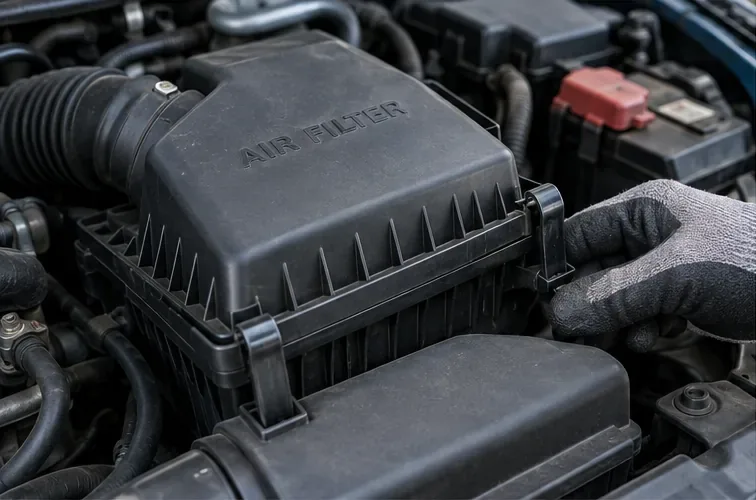
Learn how to clean a car air filter safely, when a paper filter should be replaced instead, and how reusable filters require different care.
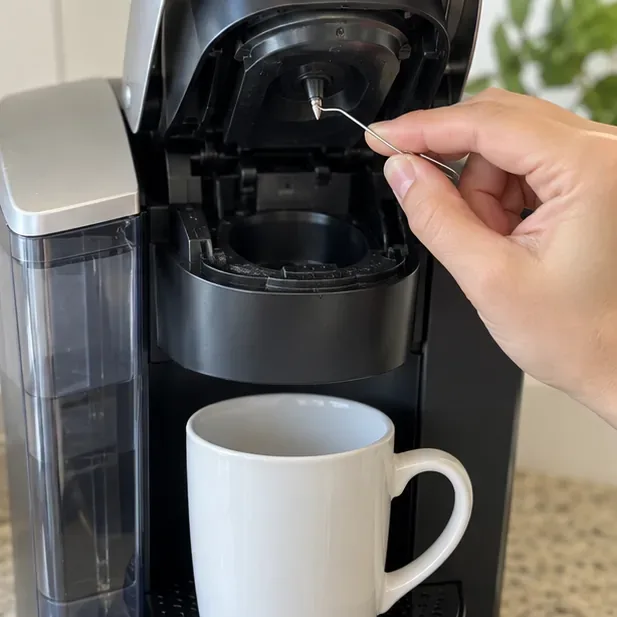
Learn how to clean a Keurig entrance and exit needle safely, clear coffee-ground clogs, rinse the brewer, and know when descaling is the next step.
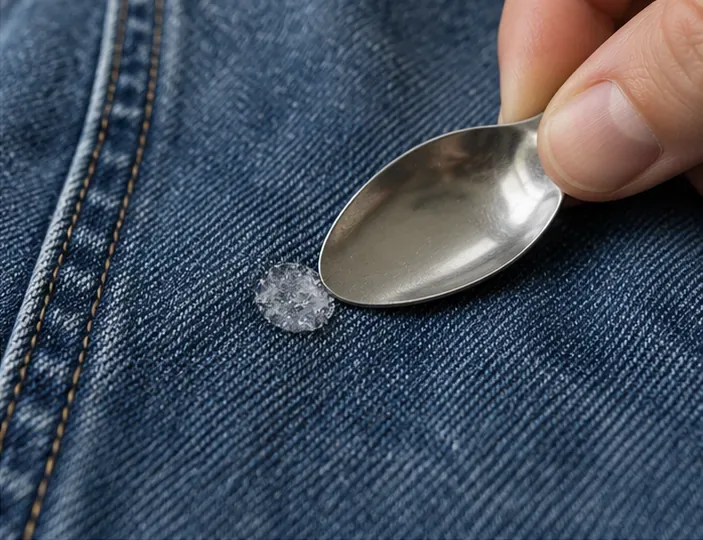
Learn how to remove dried nail glue from clothes safely, when acetone is appropriate, which fabrics need extra care, and when to stop and call a cleaner.
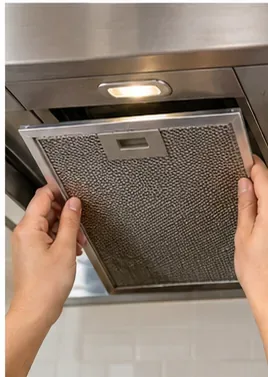
Learn how to clean a metal range hood filter safely, when dishwasher cleaning is okay, and why charcoal filter care depends on your exact model.
Learn how to remove rust from golf clubs safely, judge the result, protect raw and plated finishes, and know when cleaning should stop.
Learn how to clean fabric blinds safely with gentle vacuuming, spot cleaning, rinsing, and drying—plus when water, washing, or DIY deep cleaning can cause damage.
Learn how to season gas grill grates safely, including when cast iron needs seasoning, when porcelain enamel does not, and how to check the result.
Clean a Breville toaster oven safely with mild soap, soft cloths, and the right sequence. Learn what clean should look like, what to avoid, and when to stop.
Learn how to clean a microwave grease filter, when a dishwasher is appropriate, and why charcoal filters should be replaced instead of washed.