Home
» How To
»
How to Clean an Ooni Pizza Stone Without Cracking It
How to Clean an Ooni Pizza Stone Without Cracking It
As of September 2026, Ooni’s current official guidance has not shifted to a new washing method: the stone should still be cleaned primarily with heat and dry tools, not with water or detergent. Ooni’s detailed cleaning guide says to run the oven at top temperature for about 30 minutes when food debris is stuck to the stone, let the oven cool, brush away the carbonized residue, and flip the stone if stubborn material remains. Ooni’s current pizza-stone FAQ gives a closely related target of 450–500°C (850–900°F) for 20–30 minutes. The important point is the same: burn residue to ash, then remove it dry.
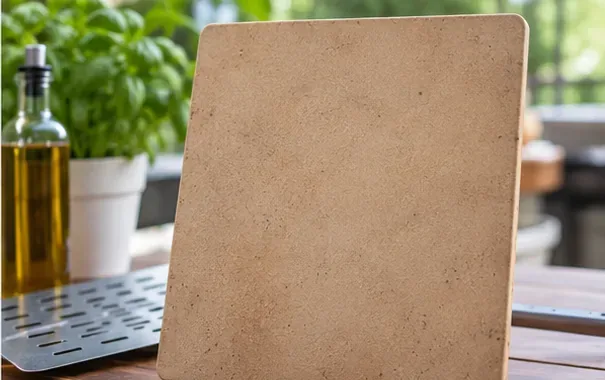
That matters because an Ooni baking stone is porous. Water can be absorbed into the material, and Ooni warns that retained moisture plus later heating can contribute to cracking. Soap or cleaning chemicals can also soak into the stone and affect food. For the current manufacturer instructions, see Ooni’s pizza stone cleaning guide and the Ooni pizza stone FAQ.
Quick answer: the safest cleaning method
If your Ooni pizza stone has flour, cheese, sauce, grease, or burnt food on it, use this sequence:
Use high heat to carbonize stuck-on food.
Let the oven and stone cool completely.
Brush loose ash and debris away with a stiff pizza-oven brush.
Use a suitable scraper gently on raised, stubborn deposits.
Sweep debris out and wipe the surface with a clean, dry cloth or paper towel.
If residue remains, carefully flip the cooled stone before the next cook so high heat can clean the opposite face.
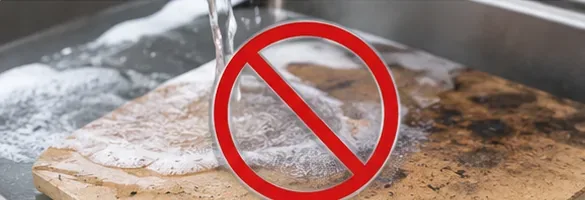
Do not soak the stone, rinse it under a faucet, put it in a dishwasher, or apply soap, detergent, degreaser, or other cleaning liquids.
What you need
A stiff pizza-oven brush or a brush-and-scraper tool intended for pizza stones
A clean, dry cloth or paper towel
Protective gloves for handling the oven when appropriate
Enough time for a high-heat burn-off and complete cooldown
Ooni specifically recommends a stiff brush or scraper that removes burnt material without gouging the stone, and warns against harsh metal scourers that can cut grooves into the surface. Ooni’s own pizza oven brush uses a scraper on one side and bristles on the other; you do not need to buy that exact tool, but whatever you use should be suitable for a cordierite baking surface.
Step 1: Burn off heavy food residue
If you have stuck cheese, sauce, grease, or burnt flour, start with heat rather than scraping aggressively. Turn on the oven and run it at its highest normal operating temperature for roughly 30 minutes, following the operating instructions for your specific Ooni model. The goal is to carbonize food residue so it becomes dry and brittle instead of greasy and sticky.
The stone heats inside the pizza oven during a burn-off cycle. Keep hands and cleaning tools away until the oven has been switched off and cooled completely.
Ooni’s pizza-stone collection FAQ currently describes this as 450–500°C (850–900°F) for 20–30 minutes, while its detailed cleaning guide says top temperature for 30 minutes. Because Ooni sells different oven models, use your model’s normal maximum operating range rather than trying to exceed its specifications.
Step 2: Let the oven and stone cool completely
After the burn-off, switch the oven off and wait until it is fully cool before brushing, scraping, wiping, removing, or flipping the stone. This is both a burn-safety issue and a stone-care issue. Sudden temperature changes are one of the things you want to avoid with a ceramic-like baking surface.
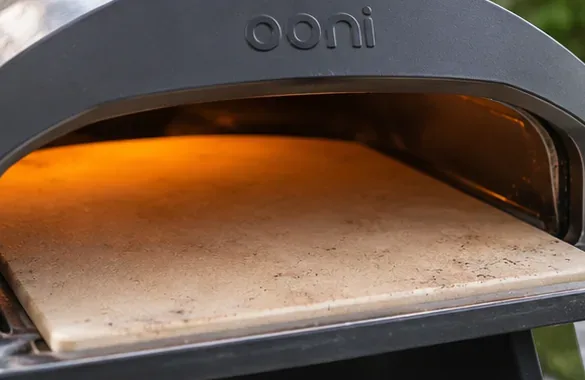
After the high-heat burn-off, allow the oven and stone to cool fully. Carbonized residue should be dry and easier to remove.
Do not speed cooling by spraying water, carrying the hot stone into a cool sink, placing it on a cold wet surface, or exposing it to another abrupt temperature change.
Step 3: Brush off ash, flour, and loose debris
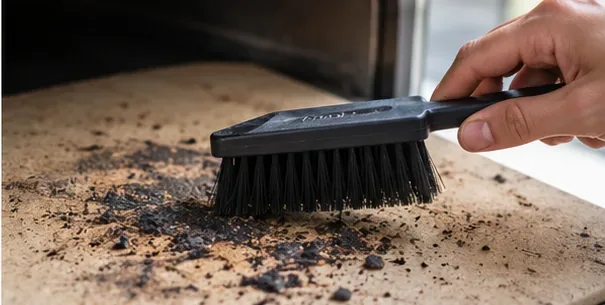
Once everything is cool, use a stiff pizza-oven brush. Ooni recommends both a sideways motion and a back-and-forth scrub for hardened material. Work gradually rather than pressing with maximum force. The goal is to lift ash and crusted food without digging into the stone.
Brush the fully cooled stone with dry bristles, using short sideways and back-and-forth strokes to loosen carbonized debris.
Push the loosened material toward the oven opening so it can be swept out rather than scattered deeper into the oven.
Step 4: Scrape only the raised, stubborn deposits
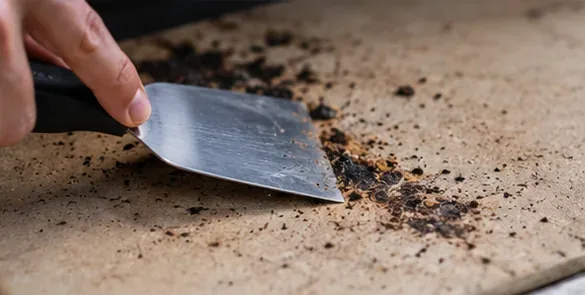
If brushing leaves a hard ridge of burnt cheese or food, use the scraper side of a pizza-oven cleaning tool or another scraper suitable for the stone. Keep the angle shallow and use controlled pressure. Ooni warns against harsh metal scourers because they can damage the stone surface and create grooves that trap food.
Use a suitable scraper gently on raised deposits that remain after brushing; avoid gouging or grinding the cordierite surface.
Do not keep scraping simply to erase dark coloration. If the surface feels reasonably smooth and there are no raised crusts, discoloration itself is not a cleaning failure.
Step 5: Sweep out the debris and finish with a dry wipe
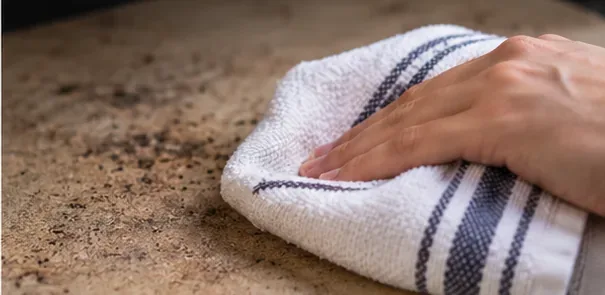
After brushing and scraping, sweep the loosened ash out through the oven opening. For a cleaner finish, Ooni says you can wipe the stone or oven interior with a clean, dry cloth or paper towel once everything is completely cool.
A final dry wipe removes fine ash and loose particles. The cloth should be dry; the stone does not need washing.
This is also a good moment to inspect the cooking surface. A few dark marks are normal. What matters more is that loose ash is gone and the stone does not have thick, crusty food deposits.
Step 6: Flip the stone if stubborn residue remains
If the cooled stone still has stubborn bits, Ooni’s current guidance is to carefully remove it, flip it over, and place it back inside. During the next cook, the high heat on the lower face helps self-clean that side. Handle the stone with care and only when it is cold.
A cooled stone can be carefully removed before being turned over. Support the stone securely and avoid dropping or knocking its edges.
Do not assume that “flip it” means the stone should be moved while hot. Ooni’s instructions say to do this after the oven has cooled.
Never wash an Ooni pizza stone with water or soap
This is one of the most important points in Ooni’s current care guidance. Do not soak the stone, run water over it, put it in the dishwasher, or apply cleaning agents. Because the stone is porous, moisture and detergent can be absorbed into it.
Do not rinse or soak an Ooni pizza stone. Ooni’s current instructions call for dry cleaning rather than water, soap, or dishwasher cleaning.
If the exterior shell of the pizza oven needs cleaning, that is different. Ooni says the fully cooled exterior can be wiped with a damp cloth and a small amount of light dish soap, then dried. Keep that method for the exterior shell—not the baking stone.
Do dark stains mean the stone is dirty?
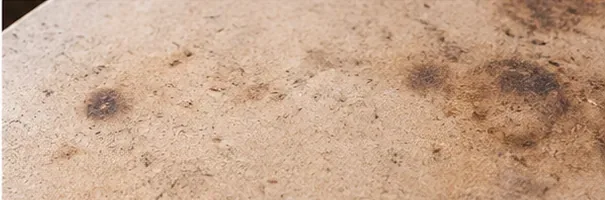
No. Brown and black marks are normal on a frequently used cordierite stone. Ooni describes visible stains as normal seasoning and says discoloration is acceptable as long as the stone is not covered with raised, crusty deposits.
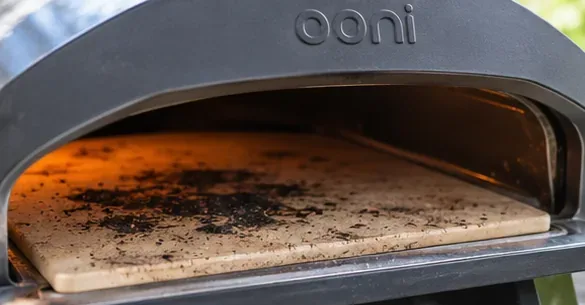
Dark spots and baked-in discoloration are normal on a used pizza stone. Focus on removing raised residue rather than trying to restore a brand-new color.
Trying to make the surface look new can lead to unnecessary abrasion. Judge cleanliness by texture and debris, not by color.
How to handle specific messes
Burnt cheese
Use the high-heat burn-off first. Ooni says the cheese should carbonize and become ash that can then be brushed or scraped away after cooling. Do not try to dissolve it with water.
Grease or a lingering smell
If the stone smells when it heats, Ooni says lingering grease may be the cause. Repeat a high-heat burn-off for about 30 minutes, then let the oven cool and dry-brush the residue.
Excess flour
Loose flour can usually be brushed out once the oven is cool. Ooni also recommends flipping its replacement cordierite baking stones before the next use to help burn off excess flour. The Ooni Karu baking stone care instructions specifically state: clean with the Ooni Pizza Oven Brush when cool, flip before the next use, and do not use soap or water.
Hairline cracks
A small hairline crack does not automatically mean the stone has failed, according to Ooni’s cleaning guide. But if the stone is unstable, separating, or no longer safe to handle, replace it rather than continuing to cook on it.
What about Ooni rotating pizza stones?
Ooni now sells rotating stone systems for parts of its Koda 2 range, so owners of those models have one extra detail to remember. Ooni’s current cleaning guide says to brush debris from between the rotating stone pieces and wipe the sensor with a dry cloth or paper towel. Keep liquids away from the stone and sensor area unless the model-specific manual explicitly instructs otherwise.
If you have a rotating-stone model, use the instructions supplied with that model rather than assuming every removable part should be cleaned like an ordinary fixed stone.
Common mistakes to avoid
Mistake
Why to avoid it
Better approach
Rinsing or soaking the stone
Porous stone can absorb moisture, increasing the risk of damage during later heating.
Use heat, dry brushing, scraping, and a dry wipe.
Using dish soap or degreaser
The porous material can absorb cleaning chemicals and unwanted flavors.
Reserve light dish soap for the cooled exterior shell only.
Scrubbing until every stain disappears
Normal discoloration does not need to be removed, and excessive abrasion can damage the surface.
Remove raised debris and accept baked-in patina.
Handling or flipping the stone while hot
This creates burn risk and unnecessary thermal/mechanical stress.
Wait until the oven and stone are fully cool.
Using very aggressive metal scourers
Ooni warns they can groove the surface and create places for food to stick.
Use a stiff pizza-oven brush and a suitable scraper with controlled pressure.
How often should you clean the stone?
You do not need a deep cleaning cycle after every pizza if the stone has only normal dark marks and a dusting of flour. Brush away loose debris as needed. Use the full high-heat burn-off when food, cheese, grease, or thick deposits are stuck to the surface or when a lingering smell suggests grease remains.
The easiest standard is simple: before the next cook, the stone should be dry, stable, and free of loose ash or raised food debris. It does not need to look beige or new.
Final checklist
Burn stubborn debris at high heat using your oven’s normal operating limits.
Let the oven and stone cool completely before touching or cleaning them.
Brush dry; scrape only stubborn raised residue.
Sweep debris out and finish with a dry cloth or paper towel.
Flip a fully cooled stone if stubborn material remains.
Never use soap, detergent, soaking water, running water, or a dishwasher on the stone.
Accept normal brown and black discoloration.
Replace the stone if cracking makes it unstable or unsafe.
For broader oven care, including the exterior and internal metal parts, consult Ooni’s current pizza oven cleaning guide. Model-specific instructions should take priority if they differ from general stone-care advice.