How to Clean a PS5 Fan Without Taking It Apart: A Safe Beginner Guide
Learn how to clean PS5 vents safely without opening the console, using Sony-recommended low-power vacuuming, dry wiping, and proper airflow.
A dirty vacuum filter can restrict airflow, weaken pickup, and send you searching for a clog that may not be there. The good news is that filter care is usually simple once you know one crucial fact: not every vacuum filter is washable. The safest method is to identify the exact filter in your machine, follow its model-specific instructions, and use water only when the manufacturer allows it.
This beginner-friendly guide explains what the filter does, how to tell which cleaning method applies, what to prepare, how to clean it without damaging the media, and how to know when cleaning is no longer enough.
A vacuum may have more than one filter. A pre-motor filter sits in the airflow before the motor and helps keep fine debris out of the motor area. A post-motor filter, sometimes called an exhaust filter, sits after the motor and helps filter air leaving the machine. Some vacuums use foam, felt, fabric-like, or pleated cartridge filters in one or both positions.
You may also see the term HEPA, which stands for high-efficiency particulate air. The U.S. Environmental Protection Agency describes a HEPA filter as a pleated mechanical filter designed to capture at least 99.97% of particles at 0.3 microns under the referenced test definition. Importantly, “HEPA” describes filtration performance; it does not tell you whether a particular vacuum filter can be washed. The EPA also advises following the manufacturer’s maintenance and replacement recommendations. See the EPA explanation of HEPA filters.
Manufacturer guidance shows why this distinction matters. Dyson’s cordless filter-care instructions tell owners of covered models to use cold tap water, avoid detergent, and let the filter dry for at least 24 hours. Shark’s upright-vacuum maintenance guidance says to rinse applicable filters with cold water and dry them completely for 24 hours. By contrast, BISSELL’s CleanView support page describes a washable pre-motor foam filter but a post-motor filter that must not be washed. Your exact model wins over any generic rule.
| What you see | What it tells you | Safest next step |
|---|---|---|
| Foam or felt pre-motor filter | Many models make these washable, but not all. | Check the manual or manufacturer support page before using water. |
| Pleated cartridge or pleated HEPA-style filter | Washability varies widely by model. | Do not assume the pleats can get wet just because the filter looks sturdy. |
| Post-motor or exhaust filter | Some are washable; others are replacement-only. | Find the instructions for that exact filter position and model. |
| “Do not wash,” “replace,” or similar wording in the manual | The filter is not intended for water cleaning. | Remove loose surface dust only if the manufacturer permits, or replace it. |
You usually need very little equipment. Gather a trash can, a clean sink or basin if the filter is washable, a clean towel, and your vacuum’s model number or owner’s manual. If the manufacturer specifies a particular cleaning solution, use only that product or method. Do not automatically add dish soap: some manufacturers permit mild detergent on certain filters, while others explicitly say not to use detergent.
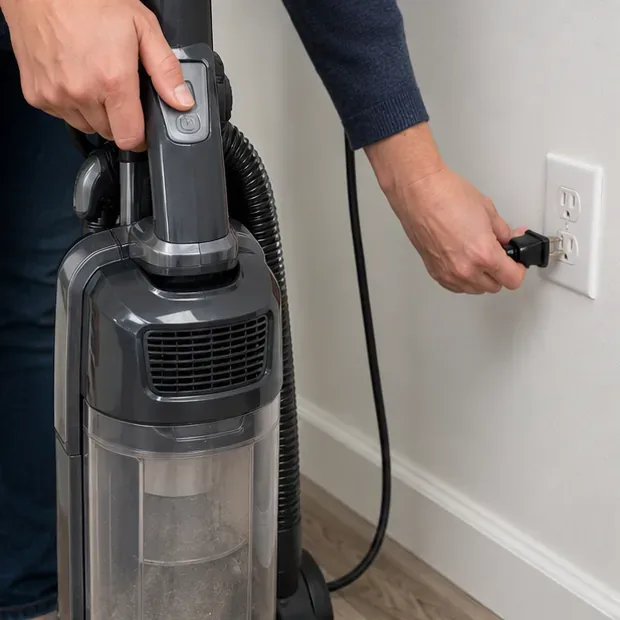
Switch the vacuum off before opening any filter compartment. Unplug a corded vacuum. For a cordless model with a removable battery, remove the battery if the manufacturer’s maintenance instructions call for it. Wait until all moving parts have stopped before you open the dust bin, filter door, or housing.
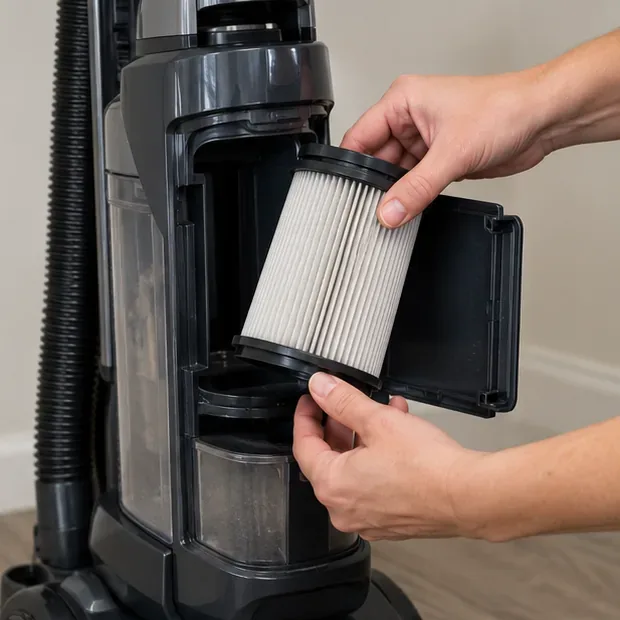
Next, locate the filter. The manual may call it a pre-motor filter, post-motor filter, exhaust filter, foam filter, or cartridge filter. If the machine has two or more filters, identify each one separately because the cleaning instructions may differ.
Open the designated cover or remove the dust bin as instructed for your model. Hold the filter by its frame, tab, or end cap rather than grabbing the pleated paper-like material. If it feels stuck, stop and check the release mechanism instead of twisting or forcing it.
Take a moment to inspect the filter. Small amounts of gray dust are normal. Replace the filter rather than trying to rescue it if you see torn pleats, a cracked frame, a damaged seal, delamination, or other structural damage that could let air bypass the filter.
For a filter that your manufacturer allows you to clean, start by removing loose debris over a trash can. Gentle tapping can release surface dust without driving it deeper into the filter. Avoid banging the filter against a hard edge, scraping the pleats, or crushing foam to force dust out.
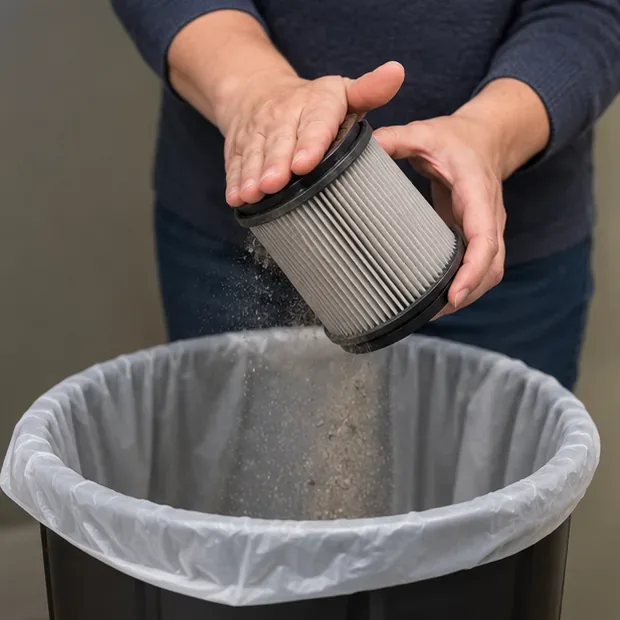
If the manual says the filter is non-washable, stop here unless the manufacturer provides another dry-cleaning method. A filter can look similar to a washable one and still contain media, adhesives, or coatings that are not intended to be soaked.
If the manufacturer clearly says the filter can be washed, follow the specified water temperature and method. Some brands call for cold water; some model-specific instructions allow warm water. Rotate the filter gently so water reaches the permitted surfaces, and continue until loose dirt is removed according to the manual.
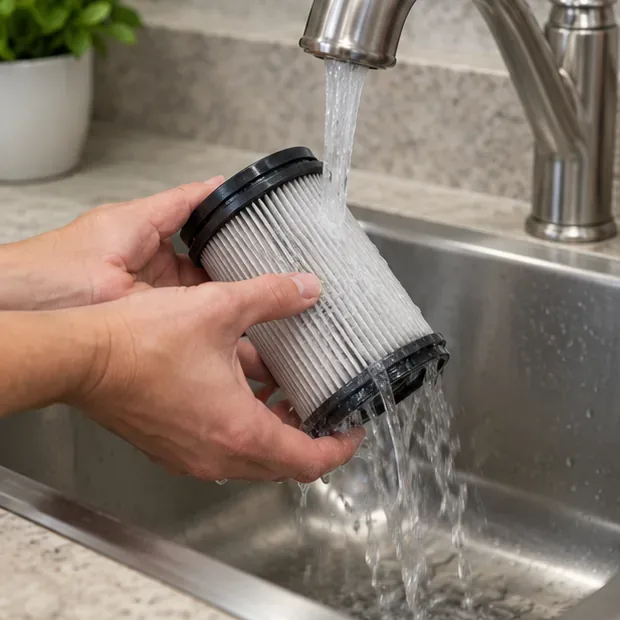
Do not improvise with bleach, solvents, degreasers, fragranced cleaners, or hot water. Do not put the filter in a dishwasher or washing machine unless the manufacturer explicitly permits that method. These shortcuts can deform the frame, damage filter media, loosen adhesive, or change the way the filter seals inside the machine.
Shake off excess water only as the manufacturer instructs, then place the filter in a clean, well-ventilated area. It must be completely dry before it goes back into the vacuum. Drying time is model-specific: Dyson and Shark, for example, instruct owners of the covered models to allow at least 24 hours, while some BISSELL support instructions for washable filters specify 24 to 48 hours.
Do not speed drying with a clothes dryer, oven, microwave, open flame, or other high-heat source. Heat can damage filter materials. When the filter feels dry, check the center, seams, foam layers, and end caps rather than judging only the outside surface. Reinstall it in the correct orientation and make sure every filter door, dust bin, latch, and seal is fully seated.
Before returning to normal cleaning, confirm that the filter is bone-dry, the filter frame is undamaged, and the compartment closes without force. Start the vacuum briefly on a clean floor area. Normal airflow should return without unusual rattling, error messages, burning smells, or air leaking around a poorly seated cover.
If suction is still weak after proper filter maintenance, the filter may not be the only issue. Turn the machine off again and check the hose, wand, floor head, brush roll, dust path, and bin for blockages according to the manufacturer’s troubleshooting instructions.
There is no single interval that fits every vacuum. Dyson’s current cordless filter-care page recommends washing covered filters at least once a month. Shark’s upright maintenance page calls for regular rinsing of applicable filters and complete drying. BISSELL schedules vary by model; some support pages tell owners to check filters monthly and wash or replace them every three to six months, while other models call for different intervals.
Use your manual as the primary schedule, then pay attention to conditions that can load a filter faster: frequent vacuuming, fine dust, pet hair, construction debris, or a small dust bin that fills quickly. Visible loading, reduced airflow, or a manufacturer filter alert are good reasons to inspect the filter sooner, but they do not override model-specific maintenance instructions.
Replace the filter when the manual reaches its replacement interval, when a non-washable filter is heavily loaded, or when the filter is torn, warped, cracked, permanently misshapen, or no longer seals correctly. Persistent odor after permitted cleaning and complete drying can also be a sign that replacement is the better option.
A spare washable filter can be convenient on models that support user-replaceable filters because one filter can dry fully while the other is in service. Use a replacement specified for your exact vacuum model so dimensions, seals, and filtration performance match the machine’s design.
The safest way to clean a vacuum filter is simple: disconnect power, identify the exact filter, remove loose dust gently, wash it only if the manufacturer says it is washable, and let it dry completely before reinstalling. The most important beginner habit is resisting the urge to treat every filter the same. A foam pre-filter, pleated cartridge, HEPA exhaust filter, and replacement-only paper filter can require very different care even when they come from the same vacuum.
When in doubt, look up the model number on the manufacturer’s support site before adding water or cleaner. That one check prevents most avoidable filter damage and gives you the correct cleaning interval, water temperature, detergent guidance, drying time, and replacement schedule for your machine.
Learn how to clean PS5 vents safely without opening the console, using Sony-recommended low-power vacuuming, dry wiping, and proper airflow.
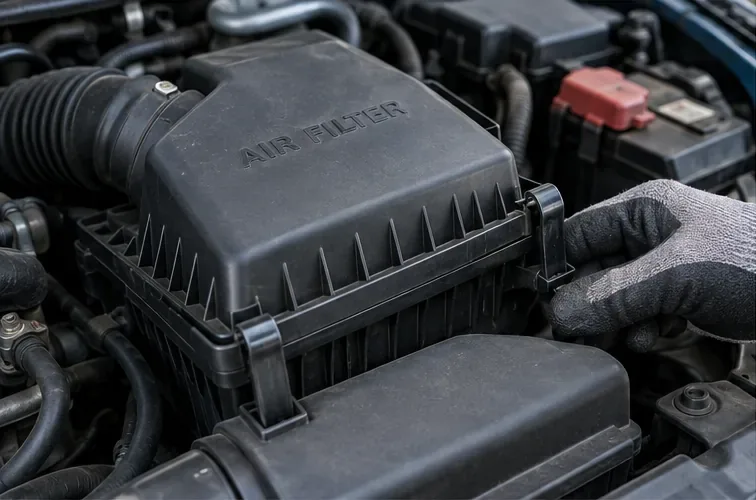
Learn how to clean a car air filter safely, when a paper filter should be replaced instead, and how reusable filters require different care.
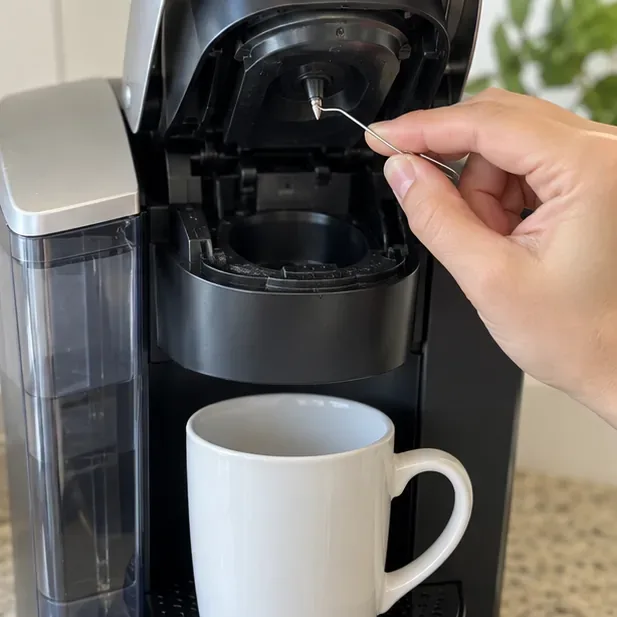
Learn how to clean a Keurig entrance and exit needle safely, clear coffee-ground clogs, rinse the brewer, and know when descaling is the next step.
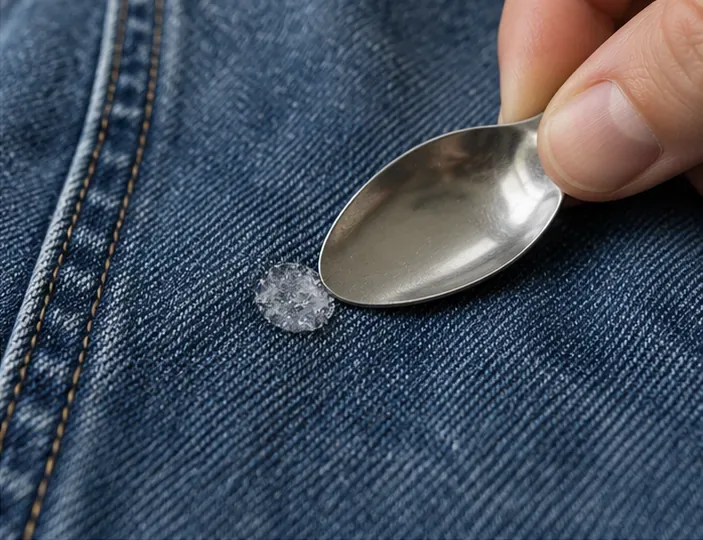
Learn how to remove dried nail glue from clothes safely, when acetone is appropriate, which fabrics need extra care, and when to stop and call a cleaner.
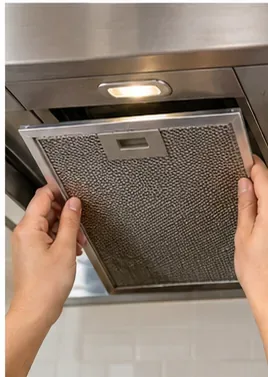
Learn how to clean a metal range hood filter safely, when dishwasher cleaning is okay, and why charcoal filter care depends on your exact model.
Learn how to remove rust from golf clubs safely, judge the result, protect raw and plated finishes, and know when cleaning should stop.
Learn how to clean fabric blinds safely with gentle vacuuming, spot cleaning, rinsing, and drying—plus when water, washing, or DIY deep cleaning can cause damage.
Learn how to season gas grill grates safely, including when cast iron needs seasoning, when porcelain enamel does not, and how to check the result.
Clean a Breville toaster oven safely with mild soap, soft cloths, and the right sequence. Learn what clean should look like, what to avoid, and when to stop.
Learn how to clean a microwave grease filter, when a dishwasher is appropriate, and why charcoal filters should be replaced instead of washed.