Home
» How To
»
How to Clean a Pool Sand Filter: A Beginner’s Backwash Guide
How to Clean a Pool Sand Filter: A Beginner’s Backwash Guide
A pool sand filter is usually cleaned by backwashing, which means reversing the normal water flow through the sand bed so trapped dirt is carried out through the waste line. For a beginner, the most important rule is simple: never move the filter valve while the pump is running. Shut the pump off first, change the valve position, then restart only when the plumbing path is ready.
This guide is for residential swimming-pool sand filters. It does not apply to drinking-water, well-water, irrigation, or industrial sand filters, which may use very different cleaning procedures.
What to Know Before You Start
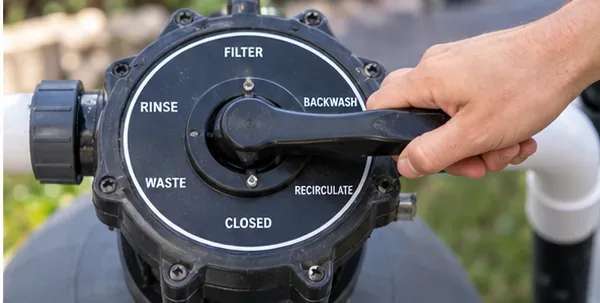
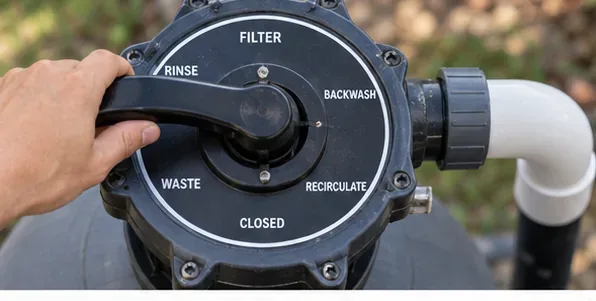
Most pool sand filters have a pressure gauge and either a multiport valve or a simpler push-pull/slide valve. A multiport valve is the large selector valve labeled with positions such as FILTER, BACKWASH, RINSE, WASTE, RECIRCULATE, and CLOSED. A slide valve normally has only two operating positions.
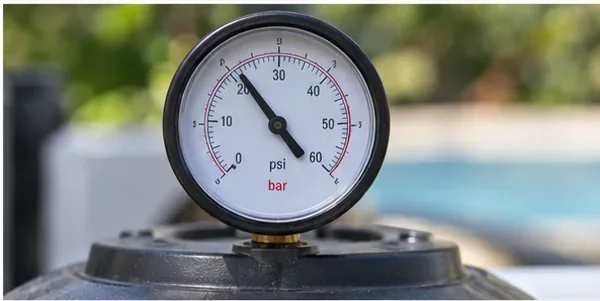
Your filter also has a normal clean pressure: the pressure shown on the gauge when the filter is clean and the pump is running at its usual speed. That number is more useful than a universal pressure target because plumbing, pump speed, filter size, and pool layout all affect the reading.
Manufacturer guidance varies slightly by model. Jandy says its SFSM sand filter should be backwashed when pressure rises about 10 to 12 psi above the recorded clean pressure, or when return flow is reduced substantially. Pentair likewise instructs owners to watch filter pressure and flow rather than cleaning on an arbitrary calendar. Jandy also cautions that backwashing too often can reduce a sand filter's ability to catch finer particles. Check the instructions for your exact filter before relying on any single pressure number.
What You Need
Your filter and valve owner's manual.
A safe, code-compliant route for backwash water.
Enough pool water to complete the backwash without letting the skimmer suck air.
Work gloves and eye protection if you will handle hoses or open any drain fittings.
A garden hose only if your manufacturer's deep-clean procedure calls for opening and flushing the sand bed.
You normally do not need to remove the sand for routine cleaning. Backwashing is the regular maintenance method.
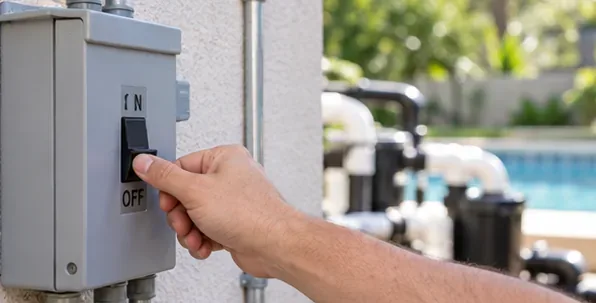
Step 1: Shut the pool pump off before touching the multiport or slide valve. Disable automatic schedules so the pump cannot restart unexpectedly.
How to Clean a Pool Sand Filter
1. Shut Off the Pump and Confirm the System Is Safe
Turn off the pool pump using the control method specified for your system. If automation could restart the pump, disable the schedule or isolate power as directed by the equipment manual. Do not loosen the filter lid, clamp, drain plug, pressure gauge, or any plumbing fitting while the system is pressurized.
If your filter has a manual air-relief valve and the manufacturer directs you to use it, stand clear of the tank and relieve trapped air before opening any part of the vessel. The pressure gauge should be at zero before the tank is opened for service.
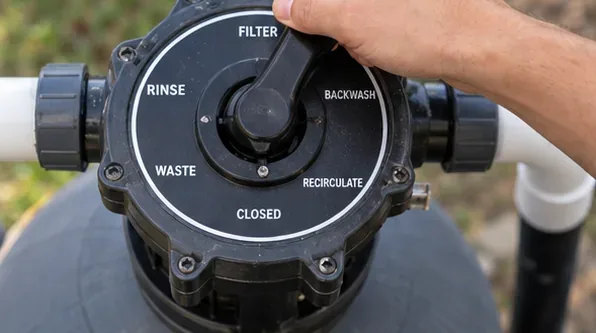
Step 2: With the pump off, move the selector to BACKWASH. Valve layouts differ, so follow the label on your own valve rather than copying the exact handle angle shown here.
2. Set the Valve to BACKWASH
Make sure the waste or backwash line is open and can discharge safely. Then, with the pump still off, press or turn the multiport handle into the BACKWASH position. Backwash reverses flow through the sand, lifting and loosening the dirty sand bed so debris can leave through the waste line.
If you have a two-position slide or push-pull valve, use the backwash position described in its manual. These valves may not have a separate RINSE setting, so do not force a multiport-valve procedure onto a different valve design.
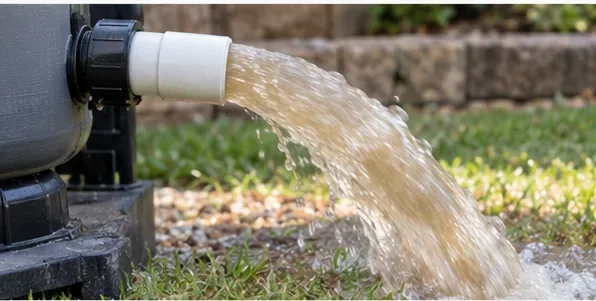
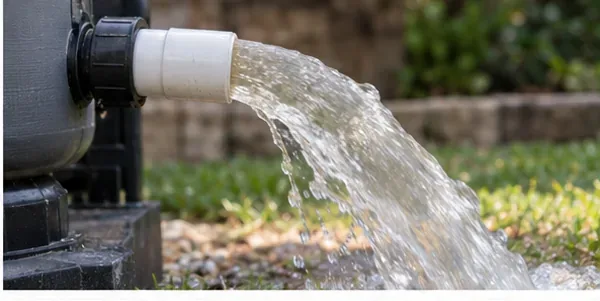
Step 3: Start the pump in BACKWASH and watch the wastewater. Early in the cycle it may look cloudy or dirty as trapped debris is flushed out.
3. Run the Backwash Until the Water Clears
Stand clear of the filter, start the pump, and let the backwash cycle run. If the valve has a sight glass—a small clear window that lets you see the waste water—watch it for the change from dirty to clear. If there is no sight glass, observe the discharge only from a safe location.
Do not treat a timer as the only stopping rule. Pentair's Sand Dollar/Cristal-Flo manual gives about three minutes or until the water is clean, while Jandy's SFSM manual gives roughly three to five minutes or until clear. The right answer for your filter is the one in its manual, with clear discharge as the practical endpoint.
Backwashing can release a substantial volume of chlorinated or treated pool water. Route it where permitted by local rules and where it will not flood the equipment pad, neighboring property, landscaping, or a building foundation.
Use the pressure gauge as a maintenance reference. Record the clean reading after the system returns to normal FILTER operation at the usual pump speed.
4. Stop the Pump and Use RINSE If Your Valve Has It
Turn the pump off again before moving the valve. Set a multiport valve to RINSE. This step sends water through the sand in the normal direction but still out to waste, helping settle the sand bed and flush loose debris from the valve and plumbing before water returns to the pool.
Manufacturer times differ. Pentair specifies about 30 seconds on the cited Sand Dollar/Cristal-Flo system, while Jandy specifies about one minute on the cited SFSM system. Use the duration listed for your filter and valve.
Step 4: Stop the pump before moving to RINSE. The handle position and label arrangement vary by valve model, so use the markings on your own equipment.
5. Return the Valve to FILTER and Restart
Stop the pump after the rinse cycle. Set the multiport valve back to FILTER, make sure the pool return line is open, and restart the pump according to the manufacturer's startup procedure. If your filter has an air-relief valve, follow the manual for bleeding trapped air and close the relief only after a steady stream of water appears.
Check that water is returning normally to the pool and look for leaks around the valve, unions, drain fittings, gauge, and filter tank.
As cleaning finishes, the discharge should look much clearer than it did at the beginning. Stop the pump before changing the valve from RINSE or BACKWASH to FILTER.
6. Check and Record the Clean Pressure
Let the system stabilize at its normal pump speed, then read the pressure gauge. Write down that clean pressure so you have a baseline for the next cleaning decision. Comparing readings is meaningful only when pump speed and valve positions are comparable.
If the pressure remains unusually high after a proper backwash and rinse, do not keep repeating short backwash cycles indefinitely. First check for other causes such as a blocked pump basket, partially closed valve, restricted return line, or incorrect pump speed. If those are normal, consult the filter manual for deep-clean guidance.
Step 6: After the pump is off, return the valve to FILTER, restart the system, and verify normal return flow and a stable clean-pressure reading.
When Does a Sand Filter Need a Deeper Cleaning?
Routine backwashing removes loose debris, but oils, scale, or stubborn deposits can remain in the sand bed. Both Pentair and Jandy manuals describe chemical cleaning when pressure stays elevated after backwashing. This is not a reason to pour household acid, bleach, detergent, or an improvised mixture into the filter.
If your manual calls for a chemical clean, use only a product labeled and approved for pool sand filters and follow its label exactly. Jandy's SFSM procedure, for example, specifies an approved sand-filter cleaner and a controlled soak procedure. Because cleaners differ in chemistry and handling requirements, product-label instructions take priority.
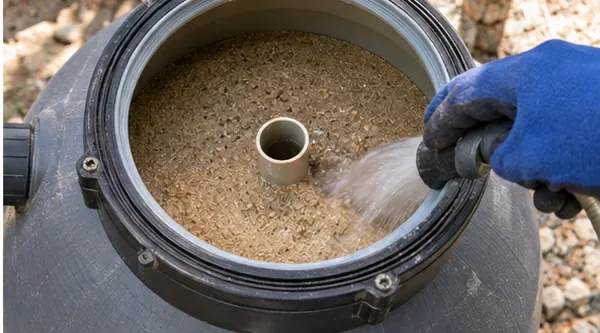
Opening the filter tank for manual flushing is more invasive. Before doing so, shut off power, prevent automatic restart, relieve all pressure, drain the filter as directed, and follow the model-specific instructions for removing the valve or lid. Internal parts called laterals sit near the bottom of many sand filters and collect filtered water; they can be damaged by careless probing or by forcing a hose into the sand.
Optional deep cleaning: only open and flush the sand bed if your filter manufacturer permits it. Depressurize and drain the tank first, protect the center standpipe, and avoid damaging internal laterals.
Common Beginner Mistakes to Avoid
Changing valve positions with the pump running. This can damage the valve or equipment and is specifically warned against in manufacturer instructions.
Backwashing on a fixed weekly or monthly schedule. Pressure rise and reduced flow are better indicators; unnecessary backwashing wastes water and can reduce fine-particle capture.
Skipping RINSE on a multiport valve. If your manual includes a rinse step, skipping it can send unsettled debris back toward the pool.
Leaving the valve on WASTE, RINSE, or BACKWASH. Confirm FILTER before returning to normal operation.
Letting the pump run dry. Backwashing lowers pool water level. Keep the skimmer supplied with water and stop if the pump begins drawing air.
Ignoring wastewater disposal. Backwash water may contain sanitizer, dirt, salt, or other pool-treatment residues. Follow local discharge requirements.
Opening a pressurized tank. Never loosen a clamp, lid, valve assembly, or drain fitting until the pump is off and the system is fully depressurized.
Using unapproved chemicals. Household cleaners can damage equipment, create hazardous reactions, or contaminate the pool.
Quick Troubleshooting After Cleaning
What you notice
What to check first
Pressure is still much higher than the clean baseline
Confirm pump speed, open valves, clean the pump basket, inspect for plumbing restrictions, then consult the manual for deep cleaning.
Return flow is still weak
Check pool water level, pump prime, suction leaks, baskets, and whether a valve is partly closed.
Sand appears in the pool
Stop assuming the filter only needs cleaning. Damaged laterals, a standpipe problem, or an incorrect sand level may require service.
Pool is still cloudy after the filter is clean
Filtration is only one part of water care. Check sanitizer, pH, circulation time, algae, and overall pool chemistry.
No water exits during BACKWASH
Turn the pump off and check that the waste line is open, the valve is actually in BACKWASH, and the line is not blocked.
How to Know You Are Finished
A successful cleaning leaves the valve in FILTER, the waste line no longer discharging, the pump fully primed, and the pool returns flowing normally. The pressure gauge should settle near the filter's established clean baseline rather than staying at the elevated pre-cleaning reading. There should be no leaks at the filter or valve.
Keep that clean-pressure number with your pool-maintenance notes. It turns the next cleaning from guesswork into a simple comparison.