How to Clean a PS5 Fan Without Taking It Apart: A Safe Beginner Guide

Learn how to clean PS5 vents safely without opening the console, using Sony-recommended low-power vacuuming, dry wiping, and proper airflow.
A good leather-jacket cleaning result is not a jacket that looks freshly polished at any cost. It is a jacket that is free of loose dirt and surface grime, has an even finish, feels supple rather than sticky or stiff, and shows no new color loss, water rings, or texture change from the cleaning itself.
That standard matters because “leather” is not one uniform material. A smooth pigmented leather with a protective finish can tolerate different care from porous aniline leather, waxed or oiled leather, suede, or nubuck. Schott NYC explicitly notes that each leather jacket may require a different cleaning and conditioning method depending on its materials, and recommends testing any cleaning or conditioning product on a hidden area and letting that test dry for 24 hours before judging color and texture. Belstaff likewise separates general smooth-leather care from waxed leather and recommends professional leather cleaning periodically.
Before you start, read the garment label and any manufacturer instructions for your exact jacket. Useful original references include Belstaff Product Care and Schott NYC repair and leather-care guidance.
| Check | Good result | Change approach if... |
|---|---|---|
| Color | Even overall, with no fresh pale or dark patch from cleaning | The cloth picks up dye or the spot dries a different shade |
| Surface | Smooth or naturally textured, not sticky or chalky | The finish becomes tacky, rough, cloudy, or shiny in one area |
| Feel | Supple and flexible | The leather stiffens, curls, or feels brittle |
| Residue | No soap film or visible cleaner remains | The surface feels slick or attracts lint |
| Stain | Gone or meaningfully reduced without finish damage | More rubbing removes color faster than the stain |
The key is to stop when the cleaning process begins changing the leather itself. A faint stain may be a better outcome than a permanently lightened or hardened panel.
Start with a clean, dry, soft-bristle brush or a soft lint-free cloth. Brush gently over the jacket to remove dust from the grain, seams, zipper edges, pockets, and collar. Belstaff recommends removing surface dirt with a dry soft-bristle brush before spot cleaning.
This first pass prevents grit from acting like an abrasive once a damp cloth is introduced. Do not scrub hard; the goal is to lift loose particles, not polish the finish.

For smooth leather whose manufacturer permits home spot cleaning, use cold or cool water with a small amount of neutral soap. Belstaff’s current guidance says to dampen a clean cloth or sponge in neutral soap and cold water for stains or ingrained dirt.
Do not automatically substitute dish degreaser, bleach, alcohol, household spray cleaner, or solvent. Belstaff specifically lists soap/detergent, bleach, and solvents among products to avoid for some of its specialist jackets, while its leather section gives a separate neutral-soap spot-cleaning method. That is a reminder that the care instructions for the exact finish take priority over generic recipes.

This is the quality-control step that prevents most avoidable mistakes. Choose an inconspicuous area such as an inside hem, under a lapel, or another hidden leather section. Apply the cleaner exactly as you plan to use it on the visible surface.
Schott recommends letting the test area dry for 24 hours so you can observe any change in color or texture. If the spot becomes darker, lighter, shinier, rougher, sticky, or transfers dye to the cloth, stop. The jacket may be aniline, waxed, oiled, or otherwise sensitive to the product.

If the hidden test dries normally, dampen a clean cloth, wring it out well, and wipe the soiled area gently. Work in small sections rather than soaking a whole panel. Belstaff recommends gently wiping the soiled area and then dabbing away excess moisture.
For ordinary surface grime, several light passes are safer than one aggressive scrub. If the stain stops improving after a few gentle passes, do not keep increasing pressure. Ink, dye transfer, grease, and penetrated water marks can require leather-specific chemistry or professional treatment.

If your cleaning method leaves any soap on the surface, use a second clean cloth that is only slightly damp with plain water, provided the manufacturer’s care method allows it. Then blot with a dry, absorbent cloth. Do not saturate seams, pockets, lining edges, or leather panels.
A good result at this stage feels clean rather than slippery. If the surface remains soapy, use another very lightly damp cloth instead of applying more cleaner.

Hang the jacket on a strong, broad or padded hanger in a well-ventilated area. Belstaff instructs owners to hang its leather garments away from direct heat and sunlight and gives a 24-hour drying period in its care process. Do not use a hair dryer, radiator, tumble dryer, fireplace, or direct sun to speed the process.
Forced heat can stiffen leather, accelerate moisture loss, and distort the finish. Let the jacket return to room-temperature dryness before deciding whether it needs conditioning.

Conditioner is not a universal final step. Belstaff recommends conditioner if smooth leather becomes dry, but specifically excludes waxed leather from that general advice because its finish uses a particular combination of oils and waxes. Schott likewise notes that some leathers can darken or lose their intended pull-up effect when oil or conditioner is applied.
If your jacket’s manufacturer recommends a conditioner, apply a very small amount to a clean cloth and test it first. Use the minimum needed for an even result. The leather should feel supple, not oily or sticky.

Once the jacket is fully dry, inspect it in natural or neutral light. Look across the surface from an angle to catch uneven shine, color changes, sticky residue, or missed soil. Flex a sleeve gently; the leather should move normally and not feel unusually stiff.
For storage, Belstaff recommends hanging leather on a strong wooden or padded hanger in a cool, dry, well-ventilated place away from sunlight. Avoid folding it for long periods, and make sure it is completely dry before putting it away.

Home cleaning reaches its limit when the stain is no longer sitting on the surface. Porous leathers can absorb liquids into the fiber structure, where repeated wiping may spread the mark instead of removing it.
Aniline leather is a good example. Leather-care specialist Geist describes aniline as porous, uncoated leather in which liquids penetrate and can leave difficult stains. Suede and nubuck are also highly sensitive, and ordinary smooth-leather cleaners are not interchangeable with products for those finishes. See Geist’s aniline leather care guidance for the material distinction.
Switch to a specialist when you have:
Do not assume so. Belstaff’s care guidance explicitly tells owners not to machine wash or tumble dry its leather products, and many leather jackets carry similar restrictions. Immersion, detergent, agitation, and heat can shrink or stiffen leather and affect dyes, finishes, adhesives, lining, and hardware.
Follow the sewn-in label. A washable lining does not mean the leather shell is washable.
Ordinary garment dry cleaning is not the same as specialist leather cleaning. Belstaff tells owners to avoid dry cleaning on the products covered by its care guide, while Schott recommends professional leather cleaning and reconditioning for general service. Those positions are not contradictory: the correct process depends on the jacket and the specialist.
If professional cleaning is needed, choose a cleaner that specifically handles leather garments and can identify the hide, finish, dyes, trim, and lining. Bring the jacket’s care label and disclose previous home treatments.
Blot excess water with a clean dry cloth, reshape the jacket on a proper hanger, and let it air-dry slowly away from heat and sun. Do not force-dry it. If water marks remain, Belstaff suggests gently wiping the affected surface with a damp sponge before removing excess moisture again.
If the jacket is aniline, suede, nubuck, or waxed leather, avoid experimenting with general-purpose cleaner afterward. Water can alter these finishes differently.
There is no universal schedule. The right interval depends on leather type, finish, climate, storage, and how often the jacket is worn. Belstaff recommends conditioning when smooth leather becomes dry, while waxed leather requires its own specialist treatment. Schott also warns that certain oils or conditioners can noticeably darken or alter specific leathers.
Judge the leather rather than the calendar: if it remains supple and the finish looks even, more product is not necessarily better.
The best leather-jacket cleaning result is controlled rather than dramatic. Remove what can be removed without changing the leather, preserve the original finish, and recognize when the next step should be a leather specialist instead of a stronger cleaner.
Learn how to clean PS5 vents safely without opening the console, using Sony-recommended low-power vacuuming, dry wiping, and proper airflow.
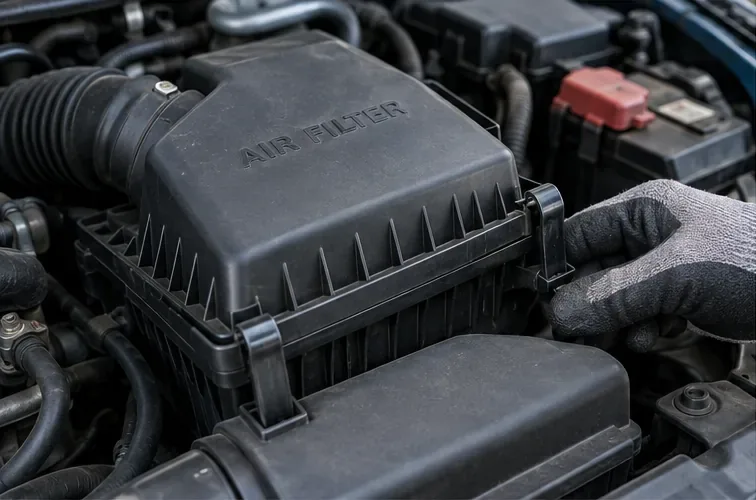
Learn how to clean a car air filter safely, when a paper filter should be replaced instead, and how reusable filters require different care.
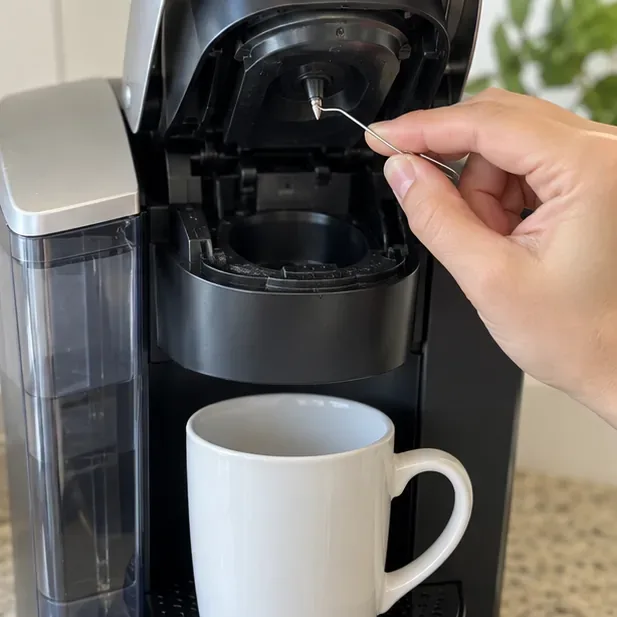
Learn how to clean a Keurig entrance and exit needle safely, clear coffee-ground clogs, rinse the brewer, and know when descaling is the next step.
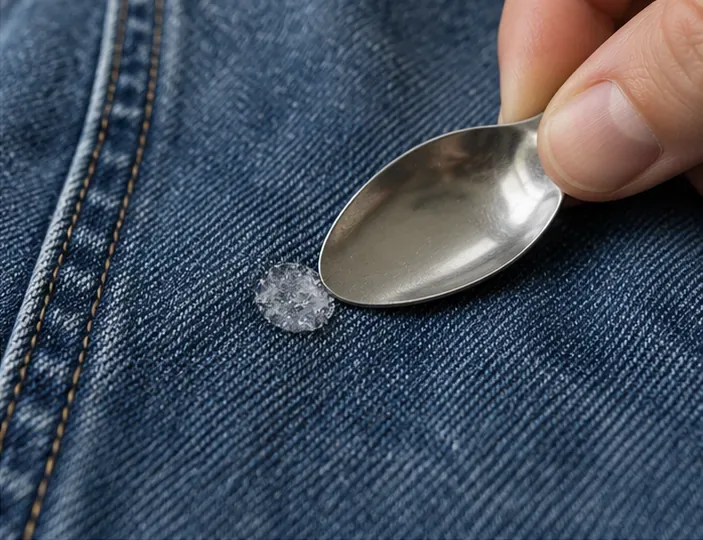
Learn how to remove dried nail glue from clothes safely, when acetone is appropriate, which fabrics need extra care, and when to stop and call a cleaner.
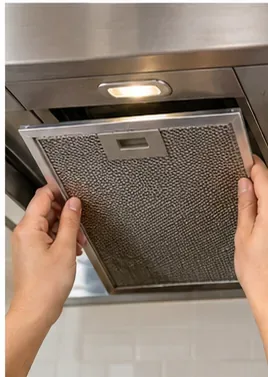
Learn how to clean a metal range hood filter safely, when dishwasher cleaning is okay, and why charcoal filter care depends on your exact model.
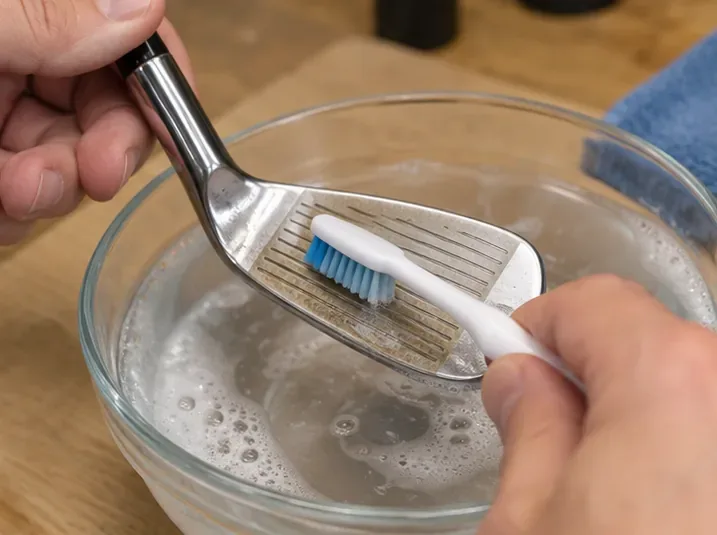
Learn how to remove rust from golf clubs safely, judge the result, protect raw and plated finishes, and know when cleaning should stop.
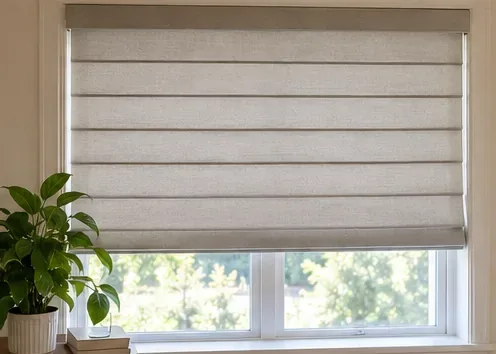
Learn how to clean fabric blinds safely with gentle vacuuming, spot cleaning, rinsing, and drying—plus when water, washing, or DIY deep cleaning can cause damage.
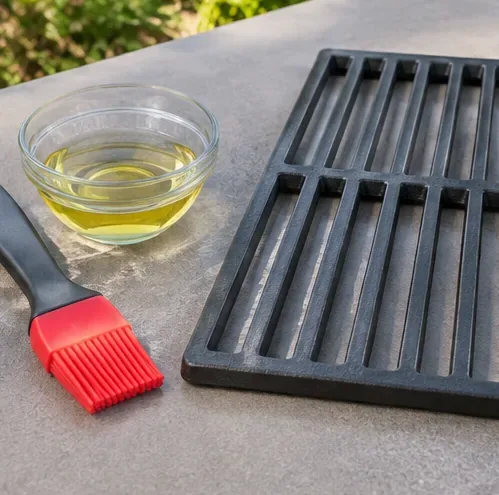
Learn how to season gas grill grates safely, including when cast iron needs seasoning, when porcelain enamel does not, and how to check the result.
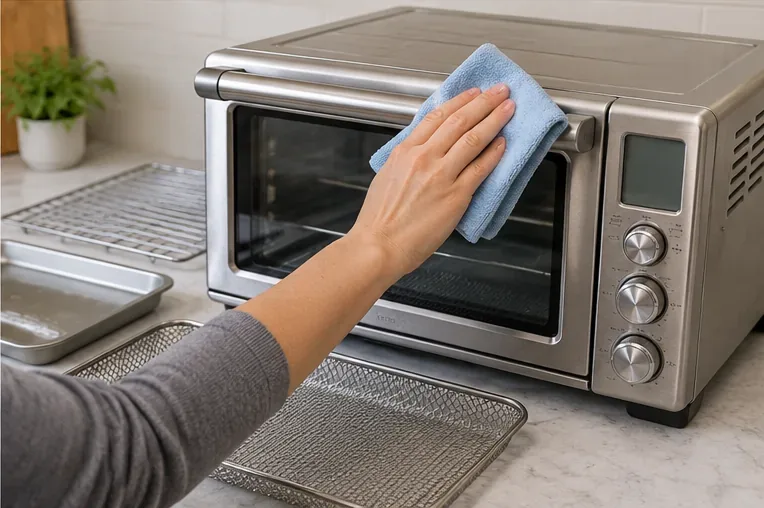
Clean a Breville toaster oven safely with mild soap, soft cloths, and the right sequence. Learn what clean should look like, what to avoid, and when to stop.
Learn how to clean a microwave grease filter, when a dishwasher is appropriate, and why charcoal filters should be replaced instead of washed.