How to Clean a PS5 Fan Without Taking It Apart: A Safe Beginner Guide
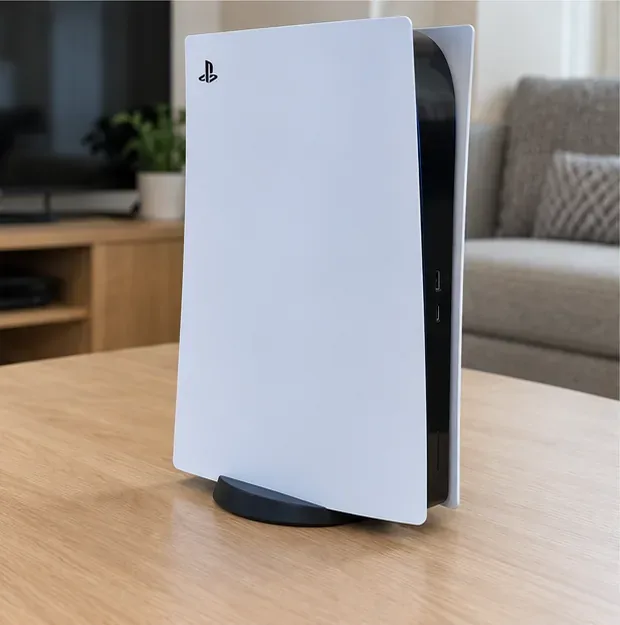
Learn how to clean PS5 vents safely without opening the console, using Sony-recommended low-power vacuuming, dry wiping, and proper airflow.
A washing machine that smells sour or musty, has slimy buildup in the detergent drawer, or dark spots around the door seal, needs cleaning. This is when many people search for how to clean a washing machine with vinegar. Vinegar is cheap, easily accessible, and acidic enough to dissolve certain mineral deposits, but that doesn't mean it's suitable for all washing machines.
The most important thing before pouring anything into the drum is to know what the manufacturer of your specific model allows. Bosch advises against vinegar because the acid can affect rubber parts over time, and Whirlpool similarly warns against vinegar inside the drum due to seals and hoses. At the same time, other manufacturer guidelines and machine programs have different procedures. Therefore, a universal recipe with "so many deciliters of vinegar" is worse than a model-specific method.
This guide goes from the simplest and least risky measures to a deeper cleaning. The goal is to remove the cause of odors and buildup without making maintenance harder than the machine can handle.
Bad odors often don't come from limescale alone. In a front-loading washing machine, water can sit in the folds of the rubber seal. Detergent and fabric softener can build up in the drawer and channels, while lint, hair, and small objects can accumulate in the pump filter. When the machine sits closed and damp between washes, such residues develop good conditions for creating a moldy or sour smell.
LG Norway recommends regular cleaning of the detergent dispenser, door seal, and using the Tub Clean program on models that have the feature. Samsung Norway similarly describes that the drum cleaning program can be run with an empty drum and, on relevant models, without regular detergent. See LG Norway's maintenance guide for washing machines and Samsung Norway's guide for drum and door seal.
Yes, but only when the user manual or the manufacturer's support for your model explicitly allows it. If the manual is silent or advises against acidic cleaning agents, the safer standard is to keep the vinegar out of the drum and use the machine's cleaning program or an approved washing machine cleaner/descaler.
Bosch writes directly that they do not recommend vinegar in the washing machine because it can break down rubber parts over time. Whirlpool also says that acidity can affect rubber seals and hoses and recommends checking the user manual before choosing a cleaning agent. You can check the advice on Bosch's official support page on vinegar in washing machines and Whirlpool's official guide on vinegar and washing machines.
| Method | Advantage | Disadvantage or Risk | Best Suited When |
|---|---|---|---|
| Drum Clean/Tub Clean | The program is designed for the machine and often requires no homemade mixture | Name and procedure vary between models | The machine has its own cleaning program |
| Manufacturer-approved machine cleaner | Developed for residues, grease, or limescale according to specified purpose | Costs more than a household product | The manual recommends a specific cleaner or descaler |
| Vinegar | Can be useful against certain mineral deposits where the manufacturer allows it | Acid can affect certain rubber and hose parts with incorrect or repeated use | The manual states that vinegar is permitted and describes dose and placement |
| Manual cleaning with water and soft brush | Low risk and targets visible dirt directly | Does not necessarily remove buildup deep inside the machine | Drawer, seal, and accessible surfaces are dirty |
Start by finding the model number on the machine and looking up the user manual with the manufacturer. Look for words like "drum clean," "Tub Clean," "Drum Clean," "Machine Clean," "descaling," or "cleaning agent." If vinegar is not mentioned as allowed, you should not assume that a recipe from another machine fits yours.

This step is especially important because "vinegar" can mean different concentrations, and because machines have different materials, seals, automatic dosing systems, and cleaning programs. Do not use the image or a general online guide as a dosing instruction.
Pull out the drawer as described in the manual. Rinse loose parts with lukewarm water and use a soft brush or cloth on hardened detergent and fabric softener. LG and Samsung specifically recommend regular manual cleaning of the dispenser. This is often where the odor problem starts, and you can achieve a big effect without adding anything to the drum.

If a manufacturer explicitly allows vinegar on the removed drawer, it may be a different situation than pouring vinegar into the drum. Whirlpool, for example, mentions that a removable dispenser can be cleaned separately with a diluted vinegar solution. In that case, rinse very well before putting the part back. For other brands, lukewarm water and a soft brush are the simplest starting point.
On front-loaders, you should gently fold the seal back and look for hair, lint, coins, small textile pieces, and water that has remained. Use a damp cloth or a soft brush according to the manufacturer's advice, and dry the area afterwards. Do not scrub hard or use an acid mixture on the rubber just because vinegar works on other surfaces in the home.

If you see extensive mold, cracks, or deformation in the seal, it is better to follow the model's specific cleaning advice or contact service than to increase the strength of the cleaning agent.
A dirty pump filter can hold lint, hair, and small objects. On models with an accessible filter, the machine should be turned off, the water cooled, and the floor protected with towels or a low container before opening the filter. The procedure varies significantly between models, so use the manual. Samsung Norway recommends regular cleaning of the debris filter on relevant front-loaders.
If the machine does not drain water normally, shows an error code, or the filter cannot be opened without force, you should stop and follow the troubleshooting for the model. This is a mechanical/drainage problem that vinegar does not solve.
When the drawer, seal, and filter are clean, you can run the machine's maintenance program with an empty drum. On Samsung models with ECO DRUM CLEAN, the Norwegian support page describes that the program can clean the drum without regular detergent. LG Norway recommends Tub Clean regularly on models that have the feature.
If the manual for your model explicitly says that vinegar can be used, follow the exact amount, concentration, and placement the manufacturer specifies. Do not move the vinegar from the drawer to the drum or vice versa on your own initiative, and do not increase the dose because the smell is strong.
Important safety rule: Never mix vinegar with chlorine bleach. Whirlpool warns that acid and chlorine bleach can form chlorine gas. Do not use vinegar, chlorine, descaler, and other cleaning agents in the same cycle unless the specific manufacturer instruction explicitly says that the combination is safe.
If the manual does not allow vinegar, choose the drum clean program alone or a cleaning agent that the manufacturer recommends. If the problem is primarily related to limescale, use a descaler approved for the machine instead of assuming that more acid is better.
Start with the drawer, door seal, filter, and airing. Then run the machine's own cleaning program. Odors are often due to moisture and detergent residues, not just mineral buildup. Vinegar is therefore not automatically the most targeted solution.
Then descaling may be relevant, but check water hardness, the manual, and the manufacturer's approved descaler. Bosch, for example, distinguishes between machine cleaner for greasy residues and descaler for limescale, and advises against vinegar as a substitute in their machines.
Take it out and clean it mechanically first. It is faster and more precise than hoping that a cycle through the drum cleans all the channels.
Leave the door and drawer slightly open after washing when practical and safe, wipe the seal, remove wet laundry quickly, and run the maintenance program with the frequency the manufacturer recommends. This reduces the need for aggressive cleaning agents.
Do not assess the result while the drum is still warm and damp. Let the machine air dry with the door open, and then check the following:

If bad odors return quickly after cleaning, the cause may lie in the drain hose, water sitting in the machine, hidden mold, or a drainage problem. Then it is more useful to follow the manufacturer's troubleshooting or order service than to repeat a stronger vinegar treatment.
Cleaning a washing machine with vinegar can be correct on certain models and in certain applications, but there is no safe universal dose that fits all machines. The manufacturers do not agree: some guidelines open for vinegar in specific situations, while Bosch and Whirlpool explicitly warn against general use inside the machine. The most robust order is therefore to clean the drawer, seal, and filter first, run the machine's own maintenance program, and only use vinegar internally when the manual for the model says it is allowed.
The manufacturer sources in this article were checked on September 11, 2026. In case of conflict between a general online guide and the user manual for your specific washing machine, the user manual should take precedence.
Learn how to clean PS5 vents safely without opening the console, using Sony-recommended low-power vacuuming, dry wiping, and proper airflow.
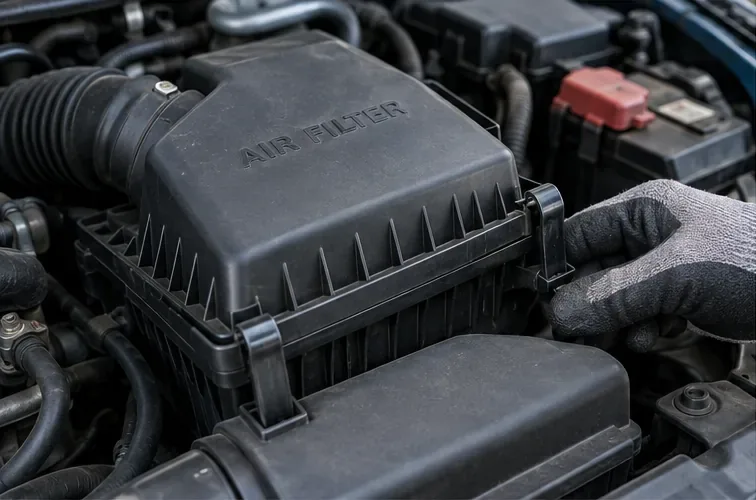
Learn how to clean a car air filter safely, when a paper filter should be replaced instead, and how reusable filters require different care.
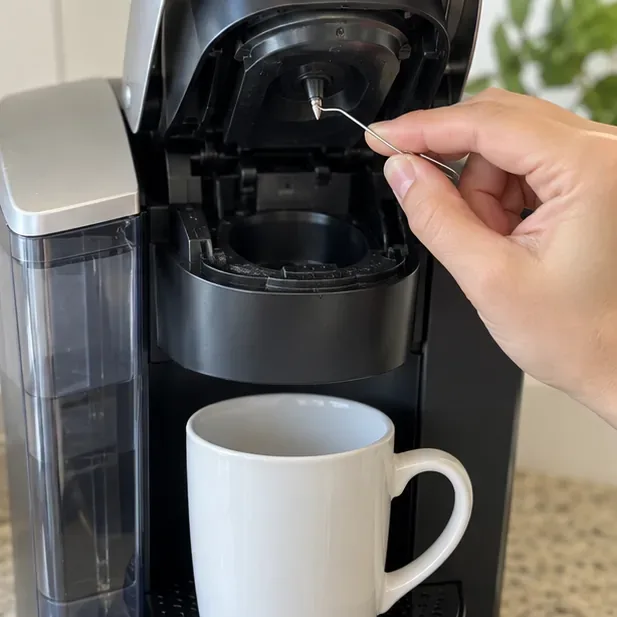
Learn how to clean a Keurig entrance and exit needle safely, clear coffee-ground clogs, rinse the brewer, and know when descaling is the next step.
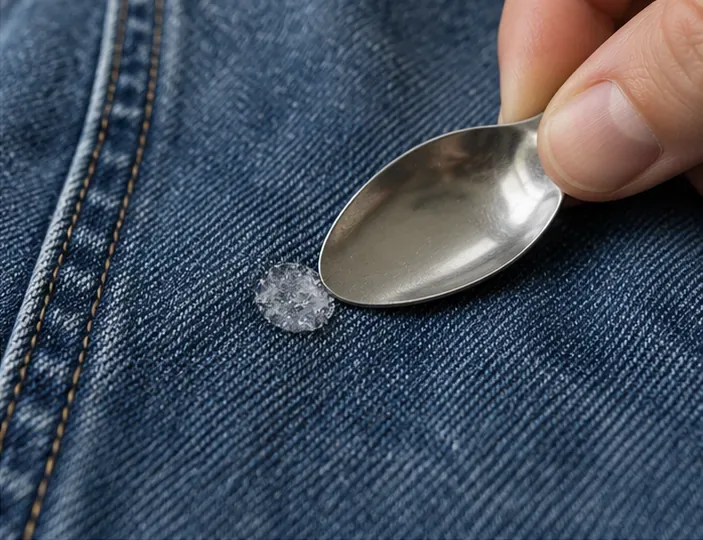
Learn how to remove dried nail glue from clothes safely, when acetone is appropriate, which fabrics need extra care, and when to stop and call a cleaner.
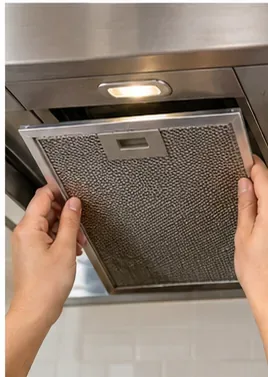
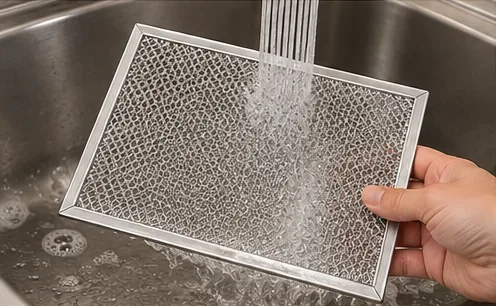
Learn how to clean a metal range hood filter safely, when dishwasher cleaning is okay, and why charcoal filter care depends on your exact model.
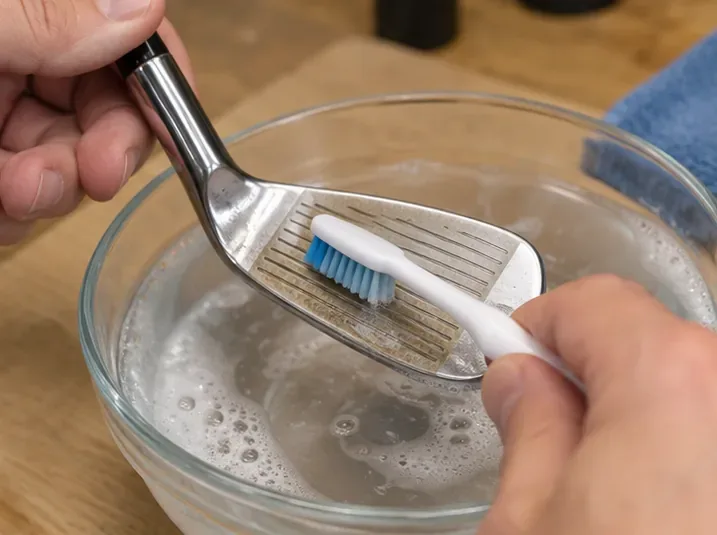
Learn how to remove rust from golf clubs safely, judge the result, protect raw and plated finishes, and know when cleaning should stop.
Learn how to clean fabric blinds safely with gentle vacuuming, spot cleaning, rinsing, and drying—plus when water, washing, or DIY deep cleaning can cause damage.
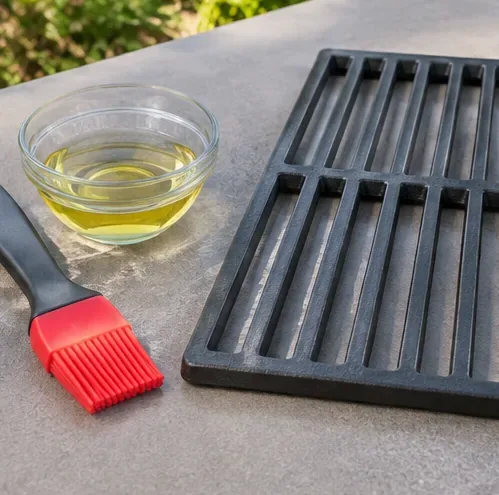
Learn how to season gas grill grates safely, including when cast iron needs seasoning, when porcelain enamel does not, and how to check the result.
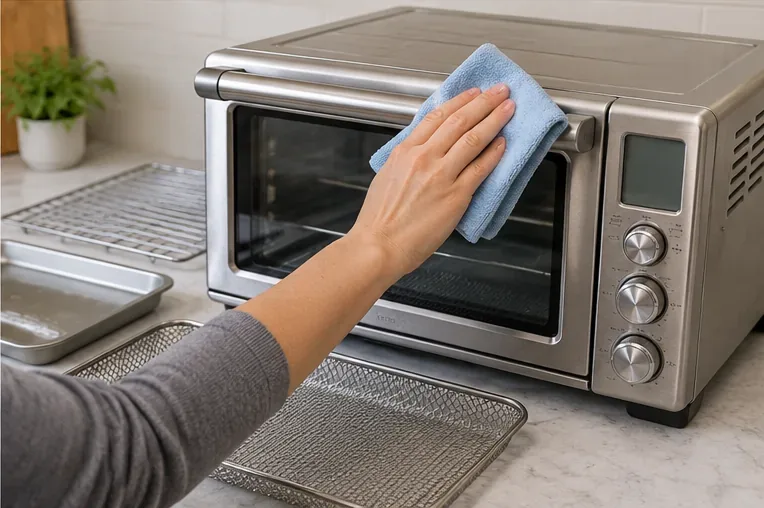
Clean a Breville toaster oven safely with mild soap, soft cloths, and the right sequence. Learn what clean should look like, what to avoid, and when to stop.
Learn how to clean a microwave grease filter, when a dishwasher is appropriate, and why charcoal filters should be replaced instead of washed.