Verified at 3:53 p.m. China Standard Time (UTC+8) on November 27, 2026.
The Shanghai Composite jumped 3.73% on Friday, November 27, to 3,606.49, as investors reacted to a State Council meeting that signaled stronger support for China’s capital markets. The government called for a greater stabilizing role for state-backed investors, including Central Huijin, and said it would consider additional policies. That announcement is the clearest confirmed catalyst for the rally; it does not guarantee further gains.
The move accelerated in the afternoon and was led by technology-related shares. For the next trading session, Monday, November 30, the key question is whether the policy signal brings sustained buying and follow-through across sectors, or whether Friday’s sharp advance gives way to profit-taking. The outcome will depend on trading and any further policy details.
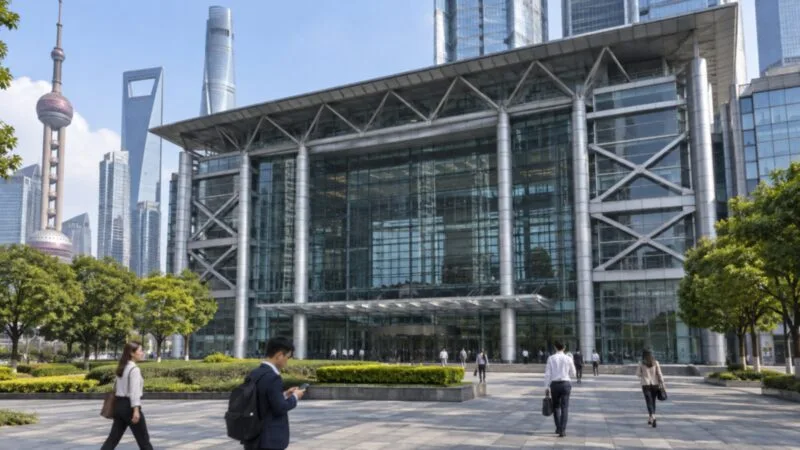
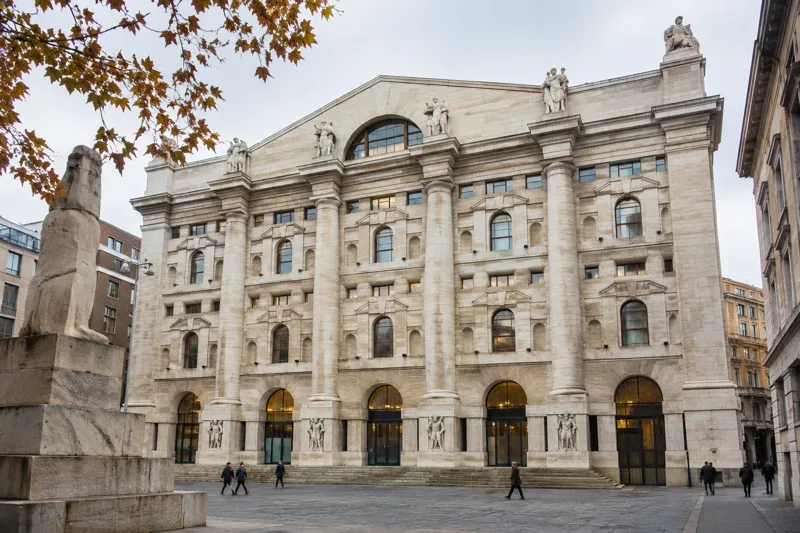
Illustrative image of Shanghai’s financial district.
Highlights
The Shanghai Composite closed at 3,606.49, up 129.60 points, or 3.73%, from the previous close.
A State Council readout called for stronger market-stabilization measures and a larger role for state-backed investors.
Technology shares led the broader rally, while some defensive sectors lagged.
Monday’s direction is uncertain; follow-through in turnover, breadth and policy details will matter.
Why did the Shanghai Composite rise on November 27?
The main catalyst was a policy signal from the State Council, China’s cabinet. In a readout published by the China Securities Regulatory Commission and attributed to Xinhua, the government said it would improve the capital market’s stabilization mechanisms, implement existing policies and plan additional measures. It also called for listed companies to increase dividends and share buybacks, a stronger stabilizing role for the “national team,” and an enhanced quasi-stabilization function for Central Huijin.
The same statement pointed to policies intended to encourage longer-term investment by insurers, corporate annuities and social-security funds. It also emphasized risk monitoring and stronger market oversight. These are stated policy priorities; they are not evidence that a specific amount of new money entered the market on Friday. Read the State Council meeting summary published by the China Securities Regulatory Commission.
Reuters reported that Chinese benchmarks rose after the announcement, describing it as a stronger signal of support amid a recent market decline. The report also noted that the CSI 300 and technology-focused STAR 50 advanced. This wider response suggests investors treated the readout as relevant beyond large Shanghai-listed companies, although each index has a different composition. Read Reuters’ November 27 market report via Investing.com.
Which sectors led the rally, and was the whole market higher?
Technology and semiconductor-related shares were prominent leaders. Sina Finance’s post-close report said the Shanghai Composite gained 3.73%, while the Shenzhen Component rose 7.24% and the ChiNext Index climbed 11.61%. It also reported that banks and coal shares fell, showing that Friday’s advance was broad but not uniform. These figures describe those named indexes and the report’s market coverage; they should not be read as a complete account of every listed stock.
The sector mix matters for interpreting the close. A strong technology-led surge can lift the headline index while leaving investors exposed to sharp reversals in higher-volatility shares. Meanwhile, weakness in some dividend-oriented or defensive stocks suggests capital rotated between groups rather than every sector rising together. See Sina Finance’s November 27 closing report.
What could happen in the next Shanghai trading session?
The next mainland session is Monday, November 30. Friday’s news supports a cautiously constructive scenario if investors continue to buy on the policy signal, trading activity remains strong and gains spread beyond a narrow group of technology shares. Concrete follow-up measures, if announced, could also shape sentiment. The State Council statement described policy intentions; it did not provide a timetable or quantified market-support commitment.
A base case is volatile trading as investors test whether Friday’s rally can hold after a large one-day move. Profit-taking would not by itself disprove the policy signal, but it could show that investors want details before adding exposure. A bearish scenario would become more plausible if leadership narrows, turnover fades, or external risks and concerns about chip supply or trade relations again weigh on risk appetite. Reuters specifically identified overseas-market risks, tariffs and chip supply as factors investors continue to watch.
These are conditional scenarios, not predictions or price targets. Friday’s percentage gain alone cannot establish a durable trend. Traders can assess follow-through by watching the index close, market breadth, sector participation and whether official policy language is followed by concrete actions.
Frequently asked questions
How much did the Shanghai Composite gain on November 27?
It closed at 3,606.49, up 3.73% from the previous close.
What was the main catalyst?
The clearest confirmed catalyst was the State Council’s signal of stronger capital-market stabilization, including a greater role for state-backed investors and support for longer-term investment.
When is the next Shanghai trading session?
The next scheduled mainland trading session after Friday, November 27, is Monday, November 30, 2026. Its direction is uncertain.