Verified: November 27, 2026, 4:40 p.m. Hong Kong time (HKT, UTC+8; 08:40 UTC).
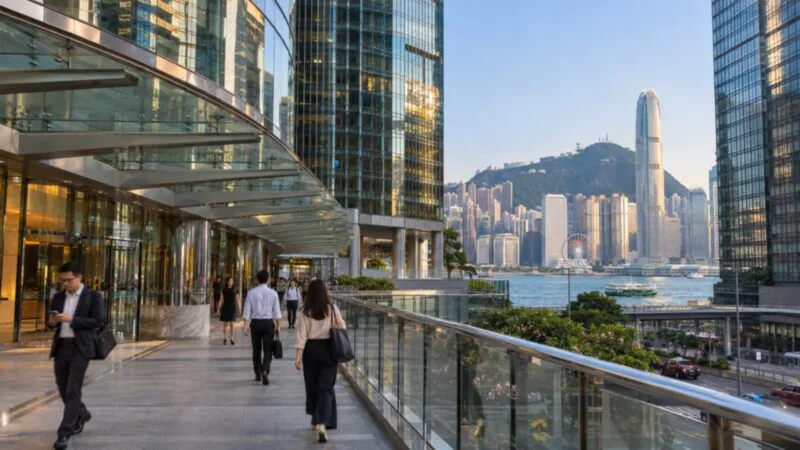
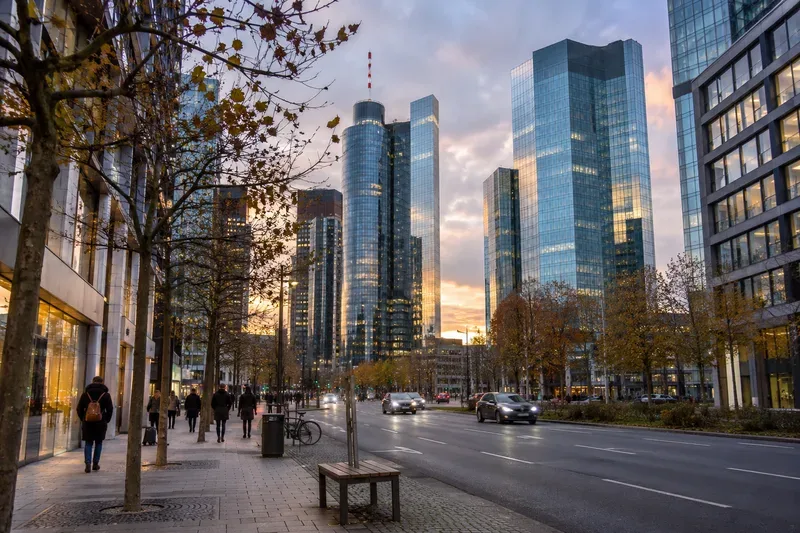
Illustrative image of Hong Kong’s Central district.
Hong Kong shares finished higher on Friday, with the Hang Seng Index at 22,694.77, up about 2.1%. Alibaba’s Hong Kong shares also advanced sharply. A key catalyst was a rare statement from China’s State Council promising to strengthen market-stabilization mechanisms and consider additional measures. The statement gave investors a reason to reassess the risk of further weakness in Chinese equities, though it did not specify the size or timing of any new support.
Alibaba’s move was larger than the index’s. The supplied delayed quote snapshot showed HK$88.30, up 7.03% from the supplied previous close of HK$82.50. However, historical-price pages retrieved during verification showed conflicting figures for Alibaba’s November 27 session, including a lower reported close and a lower intraday high. The percentage and price should therefore be treated as the supplied quote snapshot, not as a cross-verified official closing print. The available evidence supports a strong gain, but does not establish one company-specific announcement as its sole cause.
Destaques
The Hang Seng closed at 22,694.77, up about 2.1%, according to Associated Press reporting.
China’s State Council called for stronger stabilization efforts, a larger role for state-backed funds, and consideration of further market measures.
Alibaba’s supplied delayed quote was up 7.03%, but available historical price records conflict on its exact session close.
For the next session, follow-through depends on whether policy signals become concrete and whether buyers stay active across sectors.
Why did the Hang Seng rise on November 27?
The clearest catalyst was Beijing’s renewed signal that stabilizing the capital market is a policy priority. A State Council executive meeting chaired by Premier Li Qiang called for stronger counter-cyclical adjustments, better use of existing measures, and consideration of new steps to support steady market development. It also called for a greater role for state-backed funds and an optimized quasi-stabilization-fund function for Central Huijin Investment.
The statement matters because it addresses investor concerns about the risk of a prolonged decline. It also discussed encouraging listed companies to increase dividends and share repurchases, and improving support for longer-term investors such as insurers, corporate annuities and social-security funds. These are policy directions, however, rather than a quantified buying commitment. The announcement did not provide an amount, a timetable, or a guarantee that authorities would buy particular shares.
Market reporting connected the announcement with a sharp afternoon upswing in mainland Chinese shares and a late acceleration in Hong Kong. The Hang Seng had already been moving higher earlier in the session, so the policy readout is best understood as a catalyst that reinforced the rally, rather than proof that it explains every part of the day’s gains. Associated Press reported the Hang Seng’s 22,694.77 finish and noted the parallel rise in mainland shares.
Why did Alibaba shares rise more than the index?
Alibaba participated in the improvement in sentiment toward Chinese equities and technology shares. Its strong rise in the supplied quote snapshot suggests investors were willing to take more risk in a large, liquid internet stock as the broader market rallied. But the evidence reviewed does not confirm a new Alibaba-specific announcement on November 27 that directly caused the move.
The company’s latest official results provide context, not a same-day catalyst. In its November 19 results announcement, Alibaba described growth in revenue and earnings alongside its strategic focus on AI and cloud and on sustaining profitability. Those results may inform how investors value the business, but they predate this session. They do not prove why buyers stepped in on Friday.
Price-data caution is especially relevant for Alibaba. The supplied quote lists HK$88.30 and a 7.03% gain, while the historical sources checked did not agree on the session’s closing value. One displayed a lower close and another listed a lower high than the supplied quote. For that reason, this explainer reports the supplied snapshot with a clear qualification rather than presenting HK$88.30 as a confirmed exchange close.
What could move Hong Kong stocks in the next session?
The next regular Hong Kong trading session after Friday is Monday, November 30. A bullish scenario would require investors to see the State Council language as the start of credible follow-through, with continued buying across Chinese and Hong Kong shares. Clearer implementation details, stronger participation beyond a few technology or chip names, and steady market liquidity could help preserve Friday’s improved tone.
In a base case, Friday’s advance could settle into uneven trading. Investors may wait for specifics on new measures before adding exposure, while some traders take profits after a fast rebound. The statement could improve sentiment without changing near-term earnings expectations or the broader economic outlook by itself.
A bearish scenario would emerge if promised support remains vague or risk appetite fades. Renewed pressure on technology stocks, concerns about China’s growth, or a weaker global backdrop could reverse part of the rally. The policy readout itself warned that authorities also need to guard against imported risks; it should not be read as a promise of uninterrupted market gains.
These are conditional scenarios, not price targets or a prediction of Monday’s direction. Investors should watch for official policy details, breadth across sectors, trading activity and any new company disclosures. This is a market explainer, not investment advice.
China’s State Council signaled stronger market stabilization efforts and said it would consider further measures, improving sentiment toward Chinese equities.
Did Alibaba announce a new catalyst that day?
The sources reviewed do not establish a new Alibaba-specific announcement on November 27 as the cause. Its shares rose alongside the broader improvement in market sentiment.
Does Friday’s rally mean Hong Kong stocks will rise next session?
No. Further gains would depend on policy follow-through and sustained buying; vague implementation or renewed risk aversion could instead lead to choppy or weaker trading.