Information checked: November 26, 2026, at 10:08 a.m. Pacific Standard Time (PST, UTC−8) / 18:08 UTC. The session discussed is Thursday, November 26, 2026; the index’s supplied session close is timestamped 16:30 UTC.
The Euro Stoxx 50 rose on November 26 as European shares rebounded broadly after investors judged that proposed U.S. tariffs on the European Union might be less disruptive than feared. Banks and technology shares also recovered from recent selling, while the selection of Pablo Hernández de Cos as the next European Central Bank president was read as a sign of policy continuity. The market move was a relief rally, not proof that trade risks or the recent technology selloff have ended.
The supplied Yahoo Finance delayed quote records the index at 6,014.74, up 120.28 points, or 2.04%, from 5,894.46. This is the vendor’s reported reference value rather than an exchange-certified closing print: public historical feeds show small differences in the November 26 close. The direction and roughly 2% gain are consistent with the broad European rally reported that day.
Highlights
The supplied Yahoo Finance series shows the Euro Stoxx 50 up 2.04% to 6,014.74.
Investors took comfort from U.S. tariff language that appeared to cap proposed EU duties at 15% net of specified existing duties, while recognizing that the measure was still only a proposal.
Bank and technology shares rebounded after leading the previous session’s losses; the broader STOXX 600 finished up 1.8%.
For Friday, November 27, the key test is whether risk appetite holds as European data arrives and U.S. markets reopen for a shortened post-Thanksgiving session.
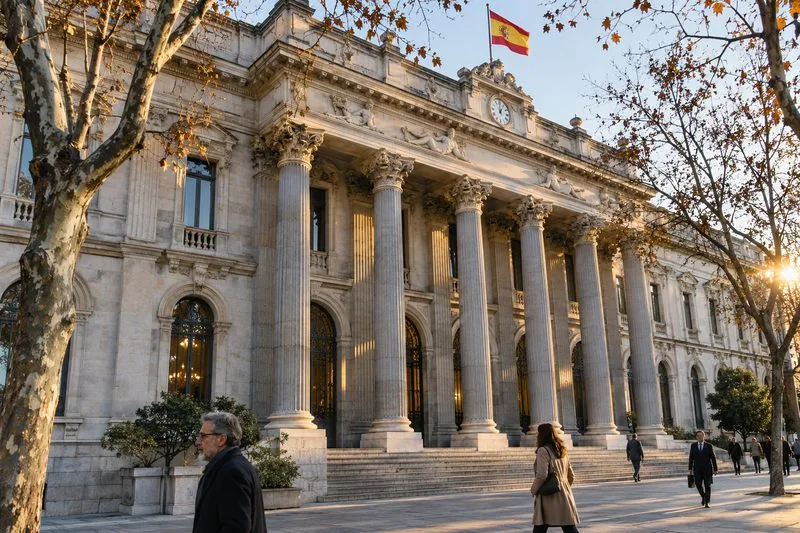
Illustrative image: a market terminal during a stronger European equities session.
What happened to the Euro Stoxx 50 on November 26?
The index’s gain was part of a broad move across regional equities, rather than an isolated jump in one company. Reuters reported that the STOXX 600 closed 1.8% higher at 636.98, while Germany’s DAX, Spain’s IBEX and Italy’s FTSE MIB each advanced by more than 2%. All major STOXX 600 sectors rose; miners, automakers and defense shares gained more than 3%, and technology shares recovered after two days of losses.
The U.S. Thanksgiving holiday kept Wall Street closed on Thursday, which reduced one source of live price discovery and was expected to leave European trading volumes lighter. The next U.S. session was scheduled to be shortened. That matters because a European rally with less U.S. participation can be more sensitive to fresh headlines when American investors return.
Why did European stocks rise?
Did tariff news lift the market?
Trade policy was the clearest immediate catalyst cited by market coverage. On November 25, the Office of the U.S. Trade Representative published proposed actions following Section 301 investigations. For the EU, it proposed considering a 15% tariff rate, net of most-favored-nation rates and existing Section 301 tariffs, with exemptions for certain goods. Reuters said investors took comfort from language indicating that new tariffs could be capped at lower levels agreed in completed or ongoing trade deals; the U.S. and EU had previously agreed on a 15% rate.
That distinction is important: the USTR document describes proposed action and a consultation process, not a newly implemented blanket tariff. The announcement did not eliminate the possibility of duties, exemptions, negotiations or further changes. The rally therefore reflected a more favorable reading of the risk, not certainty that trade friction was resolved.
Did banks and technology shares drive the rebound?
They helped restore the sectors that had weighed on the prior session. Reuters reported that heavyweight banks gave the broad STOXX benchmark its largest sector contribution, while technology stocks rebounded after recent pressure tied to concerns about borrowing to fund AI infrastructure and the returns on large AI investments. This looks partly like investors buying back shares after a selloff. It does not, by itself, demonstrate a lasting improvement in earnings expectations.
Other market-specific developments supported individual names, but they should not be mistaken for the main explanation of the whole Euro Stoxx 50 move. The index’s advance fits the wider European risk-on session and the easing of tariff concerns.
What did the ECB leadership news change?
Euro-area leaders selected Spain’s Pablo Hernández de Cos to succeed Christine Lagarde as ECB president, according to Reuters. Investors viewed the choice as consistent with policy continuity. The selection still requires the formal confirmation process, expected to conclude at the December EU leaders’ summit. It is a medium-term institutional signal, not an announcement of an immediate interest-rate change.
What could shape the next trading session?
Bull case: If U.S.–EU trade language remains reassuring, bank and technology shares hold their recovery, and the next data release does not revive rate concerns, the rebound could attract follow-through buying. This is a conditional scenario, not a directional promise.
Base case: The index may consolidate after a roughly 2% session. Recent volatility, the absence of U.S. cash trading on Thursday and the return of U.S. participants on a shortened Friday session all argue for caution in reading one day’s move as a new trend.
Bear case: A reversal becomes more plausible if tariff proposals are interpreted as more restrictive than markets assumed, trade negotiations deteriorate, or inflation and interest-rate concerns return. Renewed weakness in AI-linked shares could also undo part of the technology rebound.
For Friday, November 27, the European Commission’s calendar lists the November Economic Sentiment Indicator and Business and Consumer Survey results. Investors can compare those readings with the prior survey and watch how European shares respond when U.S. trading resumes. The next session’s reaction to new evidence will matter more than the headline size of Thursday’s gain.
Frequently asked questions
How much did the Euro Stoxx 50 gain on November 26, 2026?
The supplied Yahoo Finance delayed series reports a 2.04% rise to 6,014.74, a gain of 120.28 points. Historical vendors show small differences in the precise close.
What was the main reason the Euro Stoxx 50 rose?
The best-supported explanation is a broad European rebound as investors reassessed U.S. tariff risks, alongside recoveries in bank and technology shares. ECB leadership news added a continuity signal.
Does the November 26 rally mean stocks will rise in the next session?
No. Friday’s direction depends on new trade and economic information, sector momentum and the return of U.S. investors. The scenarios above are conditional, and this article is not investment advice.