Home
» New Trends
»
Where to Study Autonomous Systems Engineering: Best Universities for Robotics, Control, and Autonomy
Where to Study Autonomous Systems Engineering: Best Universities for Robotics, Control, and Autonomy
Updated September 2026. If you want to study autonomous systems engineering, do not search only for a degree with that exact name. The strongest programs are often called Robotics, Robotics Systems and Control, Systems Control and Robotics, Robotics Cognition and Intelligence, or Autonomous Vehicle Dynamics and Control.
The best choice depends on the kind of autonomy you want to build. For research-intensive robotics, Carnegie Mellon is an especially strong fit. For control theory and system-level autonomy, ETH Zurich and KTH stand out. For full-stack robotics across sensing, reasoning, and actuation, the University of Michigan is unusually well structured. If your target is autonomous aircraft and drones, Cranfield is more directly aligned than many higher-profile general engineering schools.
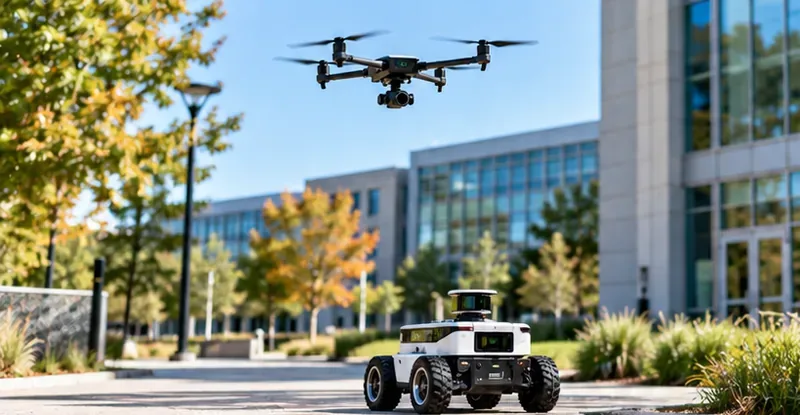
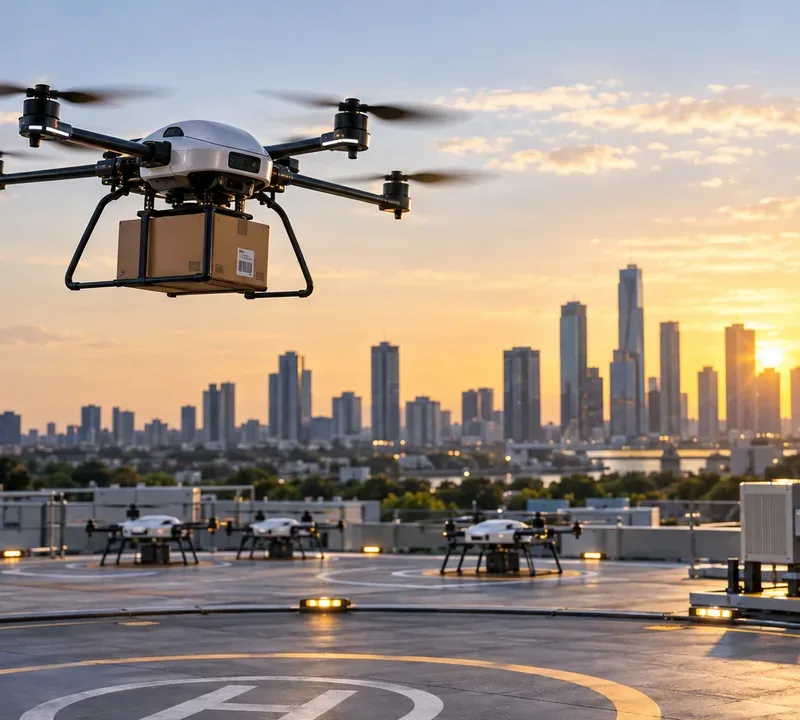
An autonomous ground robot and quadcopter in a university engineering setting illustrate the mix of perception, control, planning, embedded systems, and physical testing that strong autonomy programs should provide.
Quick Answer: Best-Fit Universities for Autonomous Systems
University
Relevant program
Typical length
Best fit
Carnegie Mellon University
MS in Robotics (Research) / MS in Robotic Systems Development
24 months / 21 months
Research robotics or end-to-end robotic product development
University of Michigan
MS in Robotics
Typically 3–4 semesters
Full-stack robotics: sensing, reasoning, and acting
University of Pennsylvania
MSE in Robotics
Planned across 4 semesters
Perception, control, AI, and interdisciplinary robotics
Georgia Institute of Technology
MS in Robotics
4 semesters
Industry-oriented robotics with internship and capstone
ETH Zurich
MSc Robotics, Systems and Control
1.5 years / 90 ECTS
Control, systems, perception, planning, and rigorous engineering
KTH Royal Institute of Technology
MSc Systems, Control and Robotics
2 years / 120 ECTS
Autonomous mobile systems, control, AI, and decision making
Technical University of Munich
MSc Robotics, Cognition, Intelligence
4 semesters / 120 ECTS
Interdisciplinary robotics spanning CS, electrical, and mechanical engineering
Broad robotics with access to Bristol Robotics Laboratory
This is a best-fit shortlist, not a universal ranking. A student who wants nonlinear control for autonomous aircraft should not choose the same program as someone focused on robot manipulation, reinforcement learning, or perception for self-driving systems.
What Should an Autonomous Systems Degree Actually Teach?
A strong program should cover more than machine learning. Autonomous systems must perceive the world, estimate their own state, decide what to do, control physical hardware, and behave safely when sensors or models are imperfect.
When comparing curricula, look for substantial coursework or research opportunities in these areas:
Control and dynamics: feedback control, nonlinear control, model predictive control, vehicle or robot dynamics.
State estimation and sensor fusion: Kalman filtering, localization, mapping, inertial sensing, GPS, lidar, radar, or vision.
Perception: computer vision, machine perception, 3D sensing, scene understanding.
Planning and decision making: motion planning, search, optimization, multi-agent coordination, decision under uncertainty.
Embedded and real-time systems: software and hardware that run reliably on actual robots and vehicles.
Systems integration: the ability to make sensing, planning, control, communication, and mechanical systems work together.
Verification, safety, and human interaction: essential when autonomous systems operate around people or in safety-critical environments.
A program that is excellent in AI but weak in dynamics, estimation, and real hardware may suit autonomous software research but be less ideal for engineering complete robots, drones, or vehicles.
1. Carnegie Mellon University: Best for Research-Intensive Robotics
Carnegie Mellon’s Robotics Institute offers several distinct master’s paths, which is one reason it is a particularly strong option for students who already know what kind of autonomy career they want.
The MS in Robotics Research is a 24-month, thesis-based program. Its curriculum combines core robotics areas with supervised research and is intentionally structured to resemble the first two years of a PhD. The program is a strong fit if you want to work on advanced perception, planning, field robotics, human-robot interaction, robot learning, or related R&D topics.
If your goal is instead to build deployable robotic products, Carnegie Mellon’s MS in Robotic Systems Development is more industry-oriented. Its current curriculum includes systems engineering, robot autonomy, mobility across air, land, and sea, perception, manipulation, estimation, control, a multi-semester project, business coursework, and a summer internship.
Choose CMU if: you want deep robotics specialization and either a research-heavy or product-development route.
Think twice if: you mainly want a short, coursework-only credential; the research MS in particular requires a significant thesis commitment.
2. University of Michigan: Best for Full-Stack Robotics
The University of Michigan describes its graduate Robotics program as training students in autonomous systems across both hardware and software. Its curriculum is organized around three core functions: sensing, reasoning, and acting.
The current Robotics MS requirements call for 30 graduate credits, including breadth across all three areas plus directed study. The program says the MS typically takes three to four fall/winter semesters.
This structure is especially useful if you do not want to become narrowly specialized too early. You can combine computer vision and mapping with planning, machine learning, controls, kinematics, dynamics, manipulation, and real-time systems.
Choose Michigan if: you want to become a “full-stack roboticist” who understands the complete autonomy pipeline.
Good fit for: autonomous vehicles, mobile robots, manipulation, legged robotics, and research that crosses hardware/software boundaries.
3. University of Pennsylvania: Best for Perception, Control, and Flexible Robotics Coursework
Penn’s Robotics MSE is administered through the GRASP Laboratory and jointly supported by computer science, electrical and systems engineering, and mechanical engineering.
The 2026–27 curriculum requires 10 course units. Students take foundational work across three of four areas: artificial intelligence, robot design, control, and perception, then add technical and general electives. The published plan of study spreads the degree across four semesters.
This is a good setup for students who want flexibility without abandoning engineering depth. For example, one student can emphasize computer vision and machine learning while another builds a program around model predictive control, mechatronics, and advanced robotics.
Choose Penn if: your interests sit at the intersection of AI, perception, controls, and robotics, and you want substantial elective freedom.
4. Georgia Tech: Best for an Industry-Focused Robotics Master’s
Georgia Tech’s MS in Robotics is a 36-credit, four-semester interdisciplinary program offered across six participating schools. The curriculum spans AI, mechanics and controls, perception and sensing, human-robot interaction, and other robotics areas.
A key difference is its professional structure: students complete a summer internship with an industrial robotics partner and a capstone project. A thesis route is also available after matriculation, but the standard design is practitioner-oriented.
Choose Georgia Tech if: you want strong technical breadth plus a built-in bridge to industry.
Especially useful for: students who learn best through applied projects rather than a thesis-dominated degree.
5. ETH Zurich: Best for Rigorous Robotics, Systems, and Control
ETH Zurich’s MSc in Robotics, Systems and Control is a 90-ECTS, 1.5-year program taught in English. It brings together mechanical engineering, electrical engineering, and computer science.
The program explicitly covers robot design, modeling and control, systems engineering, optimization, perception, navigation and path planning, embedded and distributed computing, and AI. Students also complete a semester project and a master’s thesis within the broader curriculum.
Choose ETH if: you want mathematically rigorous systems and control training without giving up perception, planning, or AI.
Particularly strong fit for: autonomous robots, drones, advanced control, and research-oriented engineering.
6. KTH Royal Institute of Technology: Best for Autonomous Mobile Systems and Control
Its Robotics and Autonomous Systems track is directly aligned with autonomous mobile machines such as robots, drones, and autonomous vehicles. The program also offers a Learning, Decision and Control Systems track that emphasizes both model-based and data-driven approaches.
The curriculum includes systems, control, robotics, AI, machine learning, dynamical systems, project work, and a degree project. For the 2026 intake, KTH reported admitting 53 of 713 applicants who met the requirements, an acceptance rate of 7%, so applicants should treat it as selective.
Choose KTH if: you want a direct autonomous-systems track with strong control, perception, decision-making, and mobile robotics content.
7. Technical University of Munich: Best for Interdisciplinary Robotics in Germany
TUM’s MSc in Robotics, Cognition, Intelligence combines computer science, mechanical engineering, and electrical engineering across four semesters and 120 ECTS.
The flexibility is attractive if you want to combine intelligent robotics with engineering fundamentals. However, this program has an important condition for international applicants: instruction is in both German and English, and applicants need to demonstrate both language requirements.
As of the 2026 program information, TUM lists tuition of €6,000 per semester for international students from non-EU countries, in addition to the semester contribution, though waivers and scholarships may apply.
Choose TUM if: you want interdisciplinary robotics and are comfortable studying in both German and English.
Do not choose it solely for the name: the bilingual requirement and international tuition can materially change whether it is the right fit.
8. Cranfield University: Best for Drones and Aerospace Autonomy
If your definition of autonomous systems means UAVs, uncrewed aircraft, guidance and navigation, or aerospace control, Cranfield’s specialized degree may fit better than a general robotics program.
The Autonomous Vehicle Dynamics and Control MSc is a one-year program centered on dynamics and control, guidance and navigation, sensor fusion, decision making, networking, and AI for autonomous systems. Cranfield also highlights hands-on work through its drone laboratory, a major group project, and an individual research project.
The course is accredited by the Royal Aeronautical Society on behalf of the Engineering Council for further learning toward Chartered Engineer registration, subject to the relevant educational pathway.
Choose Cranfield if: your target is aerospace autonomy, UAVs, guidance-navigation-control, or sensor fusion.
9. University of Bristol: Best for Broad Robotics and Autonomous Robot Systems
The University of Bristol’s MSc Robotics is jointly delivered with the University of the West of England and draws on the Bristol Robotics Laboratory.
The laboratory’s stated mission includes autonomous robot systems that can behave intelligently with minimal human supervision. The one-year MSc combines advanced engineering and computer science with a substantial research project that can be carried out with Bristol Robotics Laboratory researchers or industrial partners.
Choose Bristol if: you want broad robotics exposure and access to a large dedicated robotics research environment without committing to a two-year program.
What About MIT, Stanford, Oxford, or UC Berkeley?
These universities conduct major research in robotics, AI, control, and autonomous systems, but prospective students should distinguish research reputation from a directly packaged degree. You may find excellent autonomy work through aerospace engineering, electrical engineering, computer science, mechanical engineering, AI laboratories, or individual faculty groups rather than through a master’s degree explicitly labeled “Autonomous Systems.”
If you already know the professor or research group you want to work with, that can be an excellent route—especially for a PhD. If you are choosing a taught master’s and need a coherent curriculum, the programs above are easier to compare because the autonomy content is built into the degree structure itself.
If You Are Applying for a Bachelor’s Degree
Direct undergraduate robotics degrees are still less common than graduate programs, but there are notable options. Carnegie Mellon now offers a Bachelor of Science in Robotics covering mathematics, sensing, mechanisms, planning, control, and robotic systems. The University of Michigan also offers a Robotics BSE.
However, you do not need an undergraduate degree titled Robotics to enter autonomous systems. Electrical engineering, mechanical engineering, aerospace engineering, computer science, mechatronics, and applied mathematics are all strong foundations if you deliberately add courses in control, probability, programming, embedded systems, and robotics.
How to Choose the Right University
Choose the application domain first
If you want autonomous cars, prioritize perception, localization, planning, control, real-time systems, and vehicle research. If you want drones, guidance, navigation, nonlinear control, state estimation, and aerospace dynamics matter more. If you want manipulation, look for robot dynamics, grasping, vision, tactile sensing, and learning. If you want autonomy research, faculty fit and thesis opportunities matter more than a generic “AI” label.
Inspect the required courses, not just electives
A university may advertise robotics while requiring very little control or systems engineering. Check what every student must learn. Electives are useful, but required courses reveal the intellectual core of the degree.
Check whether you will work on real hardware
Simulation is essential, but autonomous systems eventually interact with the physical world. Look for robot platforms, drone labs, autonomous vehicle facilities, manufacturing cells, field robotics, or capstone projects where code must survive real sensors, latency, calibration errors, and mechanical constraints.
Match the degree format to your career
Research or PhD: favor thesis-heavy programs such as CMU MSR or programs with substantial research projects and advisor access.
Industry engineering: favor capstones, internships, systems integration, and applied projects such as Georgia Tech’s MS Robotics or CMU MRSD.
Controls and theory: ETH, KTH, and Cranfield are especially attractive depending on application domain.
Broad interdisciplinary robotics: Michigan, Penn, TUM, and Bristol provide strong cross-disciplinary structures.
Verify cost, language, and admissions before applying
Tuition, visa rules, deadlines, language requirements, and course offerings can change annually. The examples above reflect official university information available in September 2026. Always confirm the current intake on the program’s own admissions page before paying an application fee.
A Practical Application Checklist
Can you identify at least three courses directly relevant to your autonomy specialization?
Is there a lab or faculty group working on the exact kind of system you want to build?
Will you get hands-on access to robots, vehicles, drones, or embedded hardware?
Does the degree include enough control, estimation, and systems engineering—not only AI?
Is the program thesis-based, project-based, or coursework-based, and does that match your career goal?
Are language requirements realistic for you?
Can you afford the full tuition and living costs for the entire program?
Does the location provide relevant internships or industry connections?
If you want a PhD, can you identify potential research supervisors before applying?
Bottom Line
There is no single “best university” for autonomous systems engineering because autonomy is a stack of disciplines rather than one narrow subject. The better question is: which program gives you the right combination of perception, estimation, planning, control, embedded systems, AI, and real hardware for the autonomous systems you want to build?
For research-heavy robotics, start with Carnegie Mellon. For full-stack hardware/software robotics, compare Michigan and Penn. For industry-oriented project work, look closely at Georgia Tech and CMU’s MRSD. For rigorous control and systems engineering, ETH Zurich and KTH are excellent fits. For bilingual interdisciplinary robotics in Germany, TUM is compelling. For UAV and aerospace autonomy, Cranfield is unusually direct. For a broad one-year robotics degree with a major dedicated robotics laboratory, Bristol deserves a place on the shortlist.
That approach is more reliable than choosing from a generic university ranking—and much more likely to put you in the lab, coursework, and industry ecosystem that matches the autonomous systems career you actually want.