Why Is ASML Down Today? MATCH Act Fears Weigh on Shares — November 25, 2026
ASML fell 5.8% to €1,131.60 on November 25 as concern over proposed U.S. chip-equipment export controls revived China-sales risks. Here’s what may matter next.
Updated: Nov. 20, 2026, 10:30 p.m. UTC (5:30 p.m. EST).
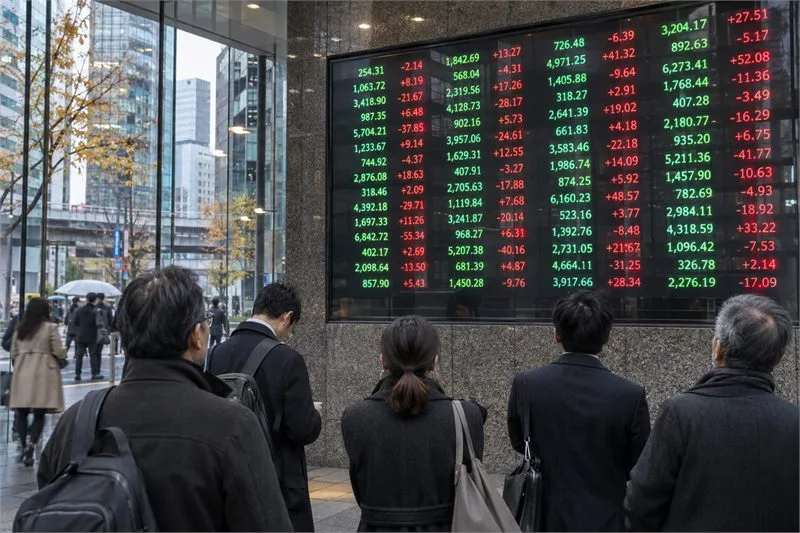
U.S. stocks ended sharply lower on Friday, Nov. 20, as investors extended a selloff in artificial-intelligence and semiconductor shares. The S&P 500 fell 3.7% to 6,910.39, the Nasdaq Composite lost 1,261.47 points to 22,617.73, and the Russell 2000 declined 2.8% to 2,581.79. The VIX also jumped, signaling increased demand for protection against further swings. The Nasdaq’s reported close puts it about 5.3% below Thursday’s 23,879.20 finish.
The main pressure was concentrated in technology: concern about the scale and payoff of AI investment spread beyond individual companies, while the disappointing market response to Anthropic’s recent debut added to doubts about the trade. These are reported market catalysts, not proof that one event alone caused every index move. AP’s session report and Reuters’ report carried by StreetInsider described the AI-led decline and the S&P 500’s correction.
The four measures show a broad risk-off session, though they track different things. The S&P 500, Nasdaq Composite and Russell 2000 are equity indexes; the VIX is an options-based measure associated with expected near-term volatility in the S&P 500. A higher VIX alongside falling stocks is consistent with investors seeking more protection, but it does not predict the direction of the next session.
AP reported the S&P close at 6,910.39, down 265.44 points, and the Nasdaq close at 22,617.73, down 1,261.47 points. The Russell 2000 finished at 2,581.79 after losing 73.32 points. The supplied delayed quote set listed a VIX close of 35.89, up 26.2% from its prior close. Because delayed market feeds can differ, treat that VIX figure as the supplied observation, not an independently confirmed Cboe settlement. Likewise, the cross-checked Nasdaq close and the supplied feed’s percentage change do not align exactly; the close and point decline above match AP’s published session figures.
Investors had been questioning whether heavy AI-related spending will produce returns quickly enough to justify elevated expectations. Reuters characterized Friday’s move as an extension of the technology rout and linked the pressure to worries about the AI trade. When a heavily weighted growth sector sells off, the Nasdaq can feel a larger effect than more diversified indexes. Weakness can also spread to suppliers and other companies whose valuations or sales outlooks depend on continued AI infrastructure investment.
Anthropic’s debut became part of the market narrative, but it should not be treated as a single proven cause. The company priced its initial public offering at $83 per share, as documented in its SEC-filed pricing notice. Reuters reported that the debut’s market reception fell short of what some investors had hoped, reinforcing concerns around AI-linked valuations. The filing confirms the offering price; the interpretation that the debut affected sentiment is a reported market explanation, not a causal finding established by the filing.
The Bureau of Labor Statistics calendar listed two releases for 10:00 a.m. Eastern on Nov. 20: state employment and unemployment for October, and annual 2025 total factor productivity for major industries. The calendar establishes their timing, but the sources reviewed do not establish either release as the main driver of the selloff. Avoid attributing the sharp move to an economic surprise without evidence tying the market reaction to specific data.
The next regular U.S. equity session is Monday, Nov. 23. Friday’s close cannot establish Monday’s direction, and trading can change as investors digest weekend news. A conditional base case is continued volatility while investors test whether the selling remains concentrated in AI-related shares or spreads further across sectors.
Investors will also be watching the next scheduled data and company updates for evidence on growth, financing conditions and AI spending. The BLS calendar shows Thanksgiving Day on Thursday, Nov. 26; investors should check the official exchange schedule for any holiday-week changes to trading hours. These scenarios describe conditions to monitor, not price targets or predictions. This explainer is informational and is not investment advice.
The Nasdaq Composite has greater exposure to large technology and growth companies, the sector at the center of the reported selloff. The Russell 2000 tracks smaller companies and fell too, but less on the day.
It indicates higher options-implied expectations for near-term S&P 500 volatility. It is not a forecast that stocks must fall.
The next regular session is Monday, Nov. 23, 2026. Check the exchange calendar for the official schedule, particularly during the Thanksgiving week.
ASML fell 5.8% to €1,131.60 on November 25 as concern over proposed U.S. chip-equipment export controls revived China-sales risks. Here’s what may matter next.
The Nikkei 225 fell 2.78% to 57,011.62 on November 25 as global AI and semiconductor stocks sold off. Here are the verified drivers and conditional scenarios for the next Tokyo session.
Why did China markets fall on November 25, 2026? Analysis of the Shenzhen Component's 3.24% drop and Shanghai Composite's 2.03% slide, key catalysts, and next-session outlook.
KOSPI plummeted 6.16% and Samsung Electronics dropped 9.87% on November 25, 2026. Explore verified catalysts, global semiconductor downgrades, and next-session outlook.
Natural gas rebounded while silver slid on Nov. 24. See the verified contract moves, weather and rate drivers, rollover caveat, and next-session catalysts.
Nvidia (NVDA) dropped 5.86% to $155.38 on November 24, 2026. Explore the primary catalysts behind the pullback, fundamental valuation, and next-session outlook.
Sanofi rose 9.76% on Nov. 24 after announcing a $41 billion Insmed acquisition. Here are the confirmed deal terms, risks and conditional outlook for the next session.
ASML.AS closed lower on Nov. 24 as the chip rally faded and export-control risks lingered. See the verified close, confirmed catalysts, and conditional outlook for Nov. 25.
Why is Nvidia up today? Analysis of NVDA's 31.48% surge on November 23, 2026, examining core catalysts, verified market data, and the next-session outlook.
The KOSPI jumped 6.32% and Samsung Electronics gained 6.70% on Nov. 24 as a Wall Street technology rally lifted Korean chip stocks. Here are the confirmed drivers and conditional scenarios for the next session.