Why Is ASML Down Today? MATCH Act Fears Weigh on Shares — November 25, 2026
ASML fell 5.8% to €1,131.60 on November 25 as concern over proposed U.S. chip-equipment export controls revived China-sales risks. Here’s what may matter next.
Last Updated: November 25, 2026, 15:35 KST (06:35 UTC)
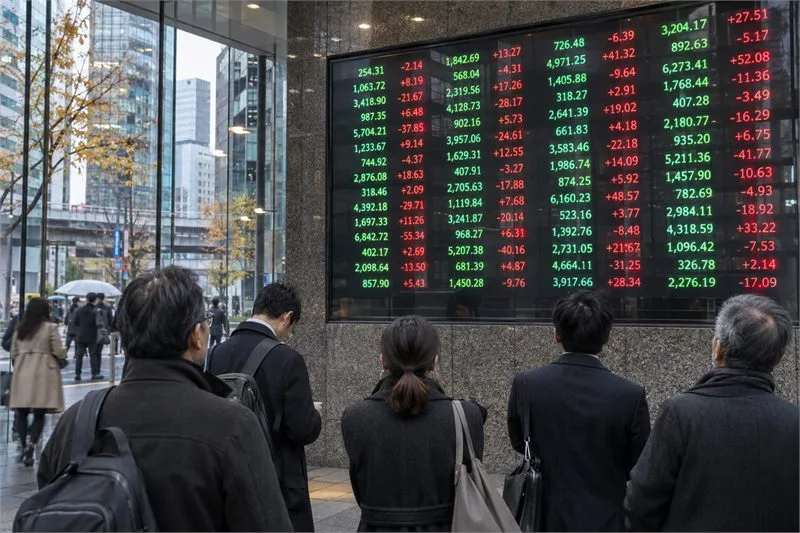
South Korean financial markets suffered one of their sharpest pullbacks of the year on Wednesday, November 25, 2026, as the benchmark KOSPI slumped 6.16% to finish at 4,697.51. The plunge completely reversed a 6% rally recorded in the preceding session, pulling the index back below the key 4,700 psychological threshold. Heavyweight bellwether Samsung Electronics (005930.KS) led the bloodbath, tumbling 9.87% to close at 170,700 KRW and briefly threatening the 170,000 KRW mark as its market capitalization dropped below 1,000 trillion KRW.
The Korea Exchange saw immediate, aggressive selling pressure right from the opening bell on November 25, 2026. After closing at 5,006.03 KRW in the prior session, the benchmark KOSPI index suffered broad-based liquidation, closing down 308.52 points (-6.16%) at 4,697.51. Trading curbs, specifically program trading sell "sidecars", were initiated on the bourse to contain runaway volatility as automated sell programs accelerated.
The damage was heavily concentrated in the semiconductor and electronics supply chains. Samsung Electronics shed 18,700 KRW (-9.87%) to conclude at 170,700 KRW, near its intraday trough of 170,000 KRW. Peer memory chipmaker SK Hynix suffered an even steeper drop of over 11%, demonstrating that the rout was driven by sectoral re-pricing rather than idiosyncratic corporate misconduct.
The primary catalyst for Wednesday's dramatic drop originated in overseas semiconductor markets overnight. A combination of fundamental concerns and institutional profit-taking triggered the downturn:
Market participants should approach the upcoming trading session with measured risk controls. Forward price action will depend heavily on overseas semiconductor stability and foreign capital movements:
No. While Samsung dropped 9.87%, the decline coincided with parallel plunges across global chipmakers, including SK Hynix (-11.05%) and Micron Technology (-11%), following analyst warnings over memory pricing cycles and AI data center investment pacing.
A sidecar is an automated market stability mechanism triggered when stock index futures fluctuate significantly (typically 5% or more) from the previous day's close. It temporarily halts program trading sell orders for five minutes to allow human order books to recalibrate and prevent panic-driven algorithmic spirals.
Market participants should closely monitor overnight trading in the Philadelphia Semiconductor Index (SOX), upcoming shipment guidance from major memory makers, and foreign exchange movements in the USD/KRW currency pair, which heavily influences foreign capital flows.
ASML fell 5.8% to €1,131.60 on November 25 as concern over proposed U.S. chip-equipment export controls revived China-sales risks. Here’s what may matter next.
The Nikkei 225 fell 2.78% to 57,011.62 on November 25 as global AI and semiconductor stocks sold off. Here are the verified drivers and conditional scenarios for the next Tokyo session.
Why did China markets fall on November 25, 2026? Analysis of the Shenzhen Component's 3.24% drop and Shanghai Composite's 2.03% slide, key catalysts, and next-session outlook.
KOSPI plummeted 6.16% and Samsung Electronics dropped 9.87% on November 25, 2026. Explore verified catalysts, global semiconductor downgrades, and next-session outlook.
Natural gas rebounded while silver slid on Nov. 24. See the verified contract moves, weather and rate drivers, rollover caveat, and next-session catalysts.
Nvidia (NVDA) dropped 5.86% to $155.38 on November 24, 2026. Explore the primary catalysts behind the pullback, fundamental valuation, and next-session outlook.
Sanofi rose 9.76% on Nov. 24 after announcing a $41 billion Insmed acquisition. Here are the confirmed deal terms, risks and conditional outlook for the next session.
ASML.AS closed lower on Nov. 24 as the chip rally faded and export-control risks lingered. See the verified close, confirmed catalysts, and conditional outlook for Nov. 25.
Why is Nvidia up today? Analysis of NVDA's 31.48% surge on November 23, 2026, examining core catalysts, verified market data, and the next-session outlook.
The KOSPI jumped 6.32% and Samsung Electronics gained 6.70% on Nov. 24 as a Wall Street technology rally lifted Korean chip stocks. Here are the confirmed drivers and conditional scenarios for the next session.