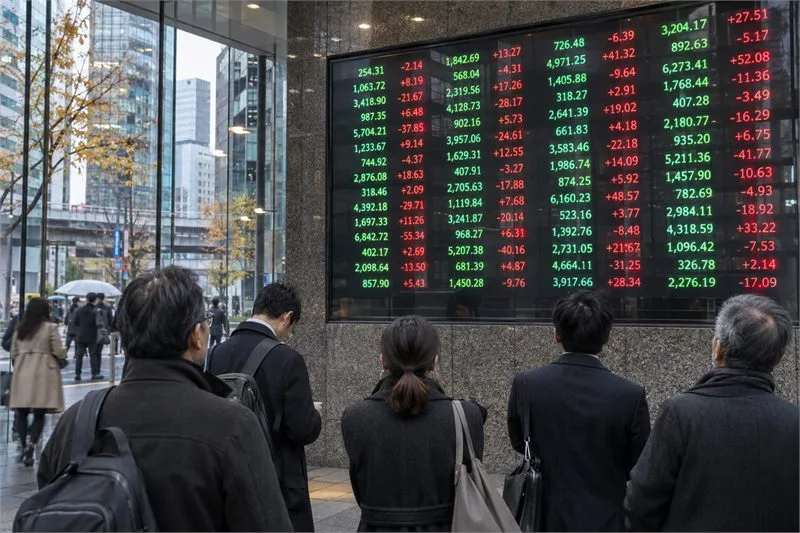
Why Is ASML Down Today? MATCH Act Fears Weigh on Shares — November 25, 2026
ASML fell 5.8% to €1,131.60 on November 25 as concern over proposed U.S. chip-equipment export controls revived China-sales risks. Here’s what may matter next.
Information checked: November 24, 2026, 8:58 a.m. Pacific Standard Time (UTC−08:00) / 4:58 p.m. UTC.
ASML Holding fell on Tuesday as a broader retreat in European technology and semiconductor shares erased part of the previous session’s AI-linked rebound. Yahoo Finance’s currently accessible ASML.AS daily history lists a November 24 close of €1,224.00, compared with €1,272.20 on November 23, a decline of about 3.79%. The Amsterdam session ended at 5:30 p.m. Central European Time (UTC+01:00), or 4:30 p.m. UTC. The share-price move is verified; no same-day ASML earnings release or company announcement was identified as a direct trigger.
The clearest documented backdrop was a reversal in chip-sector sentiment after Nvidia’s dramatic Monday rally. At the same time, renewed U.S. political pressure for tighter semiconductor export controls kept ASML’s China exposure in view. The evidence supports these as market context, not proof that one headline caused the full decline. For Wednesday, November 25, the key question is whether chip stocks stabilize and whether export-policy concerns intensify; no direction or price target is certain.
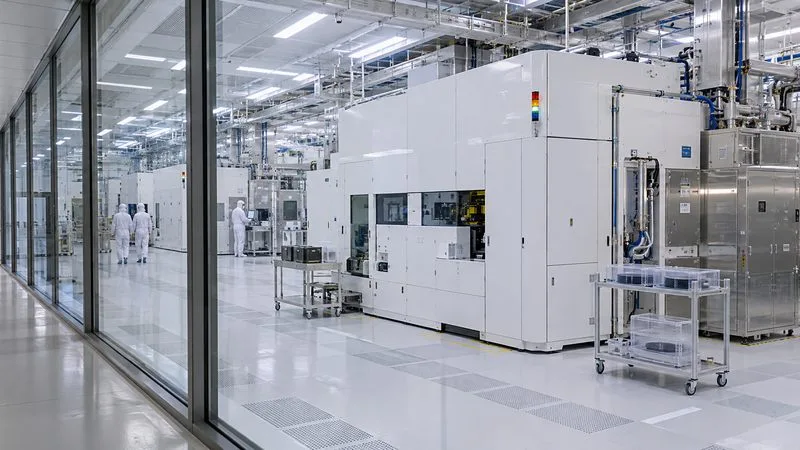
ASML’s Amsterdam-listed ordinary shares, ticker ASML.AS and quoted in euros, closed at €1,224.00 in Yahoo Finance’s latest daily history for Tuesday. The prior close was €1,272.20. That is a €48.20 decline, or approximately 3.79%. This is the November 24 Amsterdam session close, not the U.S.-listed ADR price, an intraday low, or a forecast.
The supplied delayed quote snapshot and the currently available daily history do not match: the history now displays €1,224.00 rather than €1,201.20. This article uses the latest accessible historical close and prior close from Yahoo Finance. Delayed vendor records can be revised or temporarily inconsistent, so readers comparing broker screens should check the venue, timestamp, and instrument before treating small differences as meaningful.
That is the most visible session-wide explanation. Nvidia shares had surged on Monday after the company reinstated Jensen Huang as president, CEO, and director. Reuters reported on Tuesday that the relief rally was fading: Nvidia was lower in premarket trading, U.S. futures and European shares were under pressure, and investors were cautious about whether AI-related gains could be sustained. A Dow Jones market briefing likewise described European semiconductor names moving lower as Monday’s optimism failed to carry into Tuesday.
ASML is an essential supplier to chipmakers, so investors often trade it alongside broader semiconductor and AI infrastructure expectations. That relationship can amplify market moves even when the company has not issued new financial guidance. It does not mean ASML’s order book or long-term demand outlook changed during Tuesday’s session.
Export policy remains a company-specific risk investors monitor. On November 23, Reuters reported that U.S. lawmakers were urging tougher restrictions on China’s access to advanced chips and that Senator Pete Ricketts was pushing the MATCH Act, a proposal that could pressure allied countries to restrict sales and servicing of advanced chipmaking equipment. Reuters specifically identified ASML as a potential affected supplier.
The House version of the MATCH Act was introduced in April and referred to the House Foreign Affairs Committee, according to the official bill text. It is not law. No newly enacted rule targeting ASML was verified for November 24, and no source establishes that the policy debate alone caused the day’s decline. The risk is about possible future sales, service, and licensing limits—not a confirmed change to current ASML operations.
No new earnings warning was identified in ASML’s investor-relations releases checked for this update. The company’s latest published results were its October 14 third-quarter report: net sales were €11.7 billion, and management projected full-year 2026 sales of €44 billion to €45 billion. ASML also described strong customer demand visibility and said planned supply for 2027 and 2028 would not fully meet demand under its current plans. Those figures provide context, but they do not explain a one-day share move on their own.
The next regular Amsterdam trading session is Wednesday, November 25. The scenarios below are conditional, not predictions:
Reuters also identified U.S. inflation data due Wednesday as a market focus ahead of the Federal Reserve’s December meeting. A hotter-than-expected reading could weigh on rate-sensitive growth shares; a softer reading could help risk appetite. That macro channel is conditional and does not determine ASML’s individual result.
Separate company fundamentals from the daily tape. Watch ASML’s investor-relations releases for changes to sales guidance, order commentary, or customer demand; follow official U.S. legislative records for the MATCH Act’s status; and compare ASML’s move with semiconductor peers and the broader market. Tuesday’s decline coincided with sector weakness and policy uncertainty, but the public evidence reviewed here does not establish a single definitive cause.
This is a market explainer, not investment advice. A one-session move does not establish the next trend, and the scenarios above contain no promised outcome or price target.
Yahoo Finance’s latest accessible ASML.AS daily history lists €1,224.00, down about 3.79% from the prior close of €1,272.20.
No. The House bill was introduced and referred to committee; it remains a proposal in the sources checked.
It is uncertain. A sector rebound could support shares, while renewed chip selling or export-control escalation could weigh on them. No direction is assured.
ASML fell 5.8% to €1,131.60 on November 25 as concern over proposed U.S. chip-equipment export controls revived China-sales risks. Here’s what may matter next.
The Nikkei 225 fell 2.78% to 57,011.62 on November 25 as global AI and semiconductor stocks sold off. Here are the verified drivers and conditional scenarios for the next Tokyo session.
Why did China markets fall on November 25, 2026? Analysis of the Shenzhen Component's 3.24% drop and Shanghai Composite's 2.03% slide, key catalysts, and next-session outlook.
KOSPI plummeted 6.16% and Samsung Electronics dropped 9.87% on November 25, 2026. Explore verified catalysts, global semiconductor downgrades, and next-session outlook.
Natural gas rebounded while silver slid on Nov. 24. See the verified contract moves, weather and rate drivers, rollover caveat, and next-session catalysts.
Nvidia (NVDA) dropped 5.86% to $155.38 on November 24, 2026. Explore the primary catalysts behind the pullback, fundamental valuation, and next-session outlook.
Sanofi rose 9.76% on Nov. 24 after announcing a $41 billion Insmed acquisition. Here are the confirmed deal terms, risks and conditional outlook for the next session.
ASML.AS closed lower on Nov. 24 as the chip rally faded and export-control risks lingered. See the verified close, confirmed catalysts, and conditional outlook for Nov. 25.
Why is Nvidia up today? Analysis of NVDA's 31.48% surge on November 23, 2026, examining core catalysts, verified market data, and the next-session outlook.
The KOSPI jumped 6.32% and Samsung Electronics gained 6.70% on Nov. 24 as a Wall Street technology rally lifted Korean chip stocks. Here are the confirmed drivers and conditional scenarios for the next session.