The Rise of Machines: Real World Applications of AI

Kunstig intelligens er ikke i fremtiden, det er her lige i nuet I denne blog Læs, hvordan kunstig intelligens-applikationer har påvirket forskellige sektorer.
This article contains information about the Mediawiki application that can be deployed on Vultr.
Mediawiki runs on the Ubuntu Server LTS operating system. You can log into this system with an SSH client using the root login found on your Vultr control panel. Installations prior to April 2018 were built on the CentOS 6 operating system.
Initially, you will need to access https://[SERVER_IP]/mw-config/ in your web-browser. Substitute the [SERVER_IP] with the IP address of your VPS. The certificate warning can be safely ignored. Login credentials are sent to you in an email, and can also be found in your Vultr control panel. Your will also need the "upgrade key" provided in your Vultr control panel to complete the initial Mediawiki web-based setup process. At the end of the setup wizard, Mediawiki will instruct you to download your LocalSettings.php file. That instruction is handled automatically and can be ignored.
Once you have completed the Mediawiki setup, you can access your Mediawiki site at http://[SERVER_IP]/ or https://[SERVER_IP]/.
You may also want to point the DNS "A record" of your website to your [SERVER_IP]. This will allow you to access Mediawiki by navigating to your website (www.example.com).
There is a MySQL database server running on the VPS. You can connect to the database by executing the following:
mysql -u root
The MySQL root password is saved on the VPS in /root/.my.cnf.
By default, uploads are disabled in Mediawiki. To enable them, do the following:
ssh as root.LocalSettings.php file: vim /var/www/html/LocalSettings.php.$wgEnableUploads to true.If your instance was deployed after December 1st 2019 we have included a script for your convenience to reset your your Nginx config files back to the default for you.
ssh as root./opt/vultr/fix-vhost.shYour Mediawiki server can be accessed with both http:// and https:// URLs. By default, the https:// URL uses a self-signed certificate, which displays a security warning. This can be safely ignored.
To disable https:// support (after initial configuration), do the following:
ssh as root.mv /etc/nginx/conf.d/mediawiki_https.conf /root/systemctl restart nginx.service && systemctl restart php7.2-fpm.service ( PHP version may vary )Depending on your plans for your Mediawiki site, you may want to update the certificate to one provided by an actual certificate authority. This will remove the security warning error. To install a new certificate, do the following:
ssh as root.server.crt and server.key files in /etc/nginx/ssl/ with the updated certificate. Details on converting certificate formats are outside of the scope of this article.systemctl restart nginx.service && systemctl restart php7.2-fpm.service ( PHP version may vary )Certbot, the software used to obtain, install, and renew Let's Encrypt certificates is included with this One-Click by default. To use it simply login via SSH and run the following command
certbot
Vultr applications use modern releases of software packages. Applications are configured to be deployed with specific versions of software. Over time, the Vultr team will update the application offerings to include newer operating systems, package versions, etc. This document only provides up-to-date information about the latest version of this application. Vultr applications are updated without notice. If you plan to build a project or infrastructure based on our application templates, we recommend taking a snapshot of the application used in your initial deployment.
Kunstig intelligens er ikke i fremtiden, det er her lige i nuet I denne blog Læs, hvordan kunstig intelligens-applikationer har påvirket forskellige sektorer.
Er du også et offer for DDOS-angreb og forvirret over forebyggelsesmetoderne? Læs denne artikel for at løse dine spørgsmål.
Du har måske hørt, at hackere tjener mange penge, men har du nogensinde spekuleret på, hvordan tjener de den slags penge? lad os diskutere.
Vil du se revolutionerende opfindelser fra Google, og hvordan disse opfindelser ændrede livet for ethvert menneske i dag? Læs derefter til bloggen for at se opfindelser fra Google.
Konceptet med selvkørende biler til at køre på vejene ved hjælp af kunstig intelligens er en drøm, vi har haft i et stykke tid nu. Men på trods af flere løfter er de ingen steder at se. Læs denne blog for at lære mere...
Efterhånden som videnskaben udvikler sig i et hurtigt tempo og overtager en stor del af vores indsats, stiger risikoen for at udsætte os selv for en uforklarlig Singularitet. Læs, hvad singularitet kunne betyde for os.
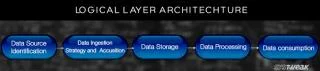
Læs bloggen for at kende forskellige lag i Big Data-arkitekturen og deres funktionaliteter på den enkleste måde.
Opbevaringsmetoderne for dataene har været under udvikling, kan være siden fødslen af dataene. Denne blog dækker udviklingen af datalagring på basis af en infografik.
I denne digitalt drevne verden er smarte hjemmeenheder blevet en afgørende del af livet. Her er et par fantastiske fordele ved smarte hjemmeenheder om, hvordan de gør vores liv værd at leve og enklere.
For nylig udgav Apple macOS Catalina 10.15.4 en supplerende opdatering for at løse problemer, men det ser ud til, at opdateringen forårsager flere problemer, hvilket fører til mursten af mac-maskiner. Læs denne artikel for at lære mere