Mašīnu pieaugums: AI reālās pasaules lietojumi

Mākslīgais intelekts nav nākotnē, tas ir šeit, tagadnē. Šajā emuārā lasiet, kā mākslīgā intelekta lietojumprogrammas ir ietekmējušas dažādas nozares.
NodeBB is a Node.js based forum software. It utilizes web sockets for instant interactions and real-time notifications. The NodeBB source code is publicly hosted on Github. This guide will walk you through NodeBB installation process on a fresh FreeBSD 12 Vultr instance, by using Node.js, MongoDB as a database, Nginx as a reverse proxy, and Acme.sh for SSL certificates.
NodeBB requires the following software to be installed:
A/AAAA records set upCheck the FreeBSD version.
uname -ro
# FreeBSD 12.0-RELEASE
Ensure that your FreeBSD system is up to date.
freebsd-update fetch install
pkg update && pkg upgrade -y
Install necessary packages if they are not present on your system.
pkg install -y sudo vim unzip wget git bash socat gcc8 pkgconf vips
Create a new user account with your preferred username (we will use johndoe).
adduser

# Username: johndoe
# Full name: John Doe
# Uid (Leave empty for default): <Enter>
# Login group [johndoe]: <Enter>
# Login group is johndoe. Invite johndoe into other groups? []: wheel
# Login class [default]: <Enter>
# Shell (sh csh tcsh nologin) [sh]: bash
# Home directory [/home/johndoe]: <Enter>
# Home directory permissions (Leave empty for default): <Enter>
# Use password-based authentication? [yes]: <Enter>
# Use an empty password? (yes/no) [no]: <Enter>
# Use a random password? (yes/no) [no]: <Enter>
# Enter password: your_secure_password
# Enter password again: your_secure_password
# Lock out the account after creation? [no]: <Enter>
# OK? (yes/no): yes
# Add another user? (yes/no): no
# Goodbye!
Run the visudo command and uncomment the %wheel ALL=(ALL) ALL line, to allow members of the wheel group to execute any command.
visudo

# Uncomment by removing hash (#) sign
# %wheel ALL=(ALL) ALL
Now, switch to your newly created user with su.
su - johndoe
NOTE: Replace johndoe with your username.
Set up the timezone.
sudo tzsetup
NodeBB is driven by Node.js, and so it needs to be installed. The installation of the current LTS version of Node.js is recommended.
Install Node.js and npm.
sudo pkg install -y node10 npm-node10
Check the versions.
node -v && npm -v
# v10.15.3
# 6.9.0
MongoDB is the default database for NodeBB.
Install MongoDB.
sudo pkg install -y mongodb40
Check the version.
mongo --version | head -n 1 && mongod --version | head -n 1
# MongoDB shell version v4.0.6
# db version v4.0.6
Enable and start MongoDB.
sudo sysrc mongod_enable=yes
sudo service mongod start
Create a database and user for NodeBB.
Connect to MongoDB first.
mongo
Switch to the built-in admin database.
> use admin
Create an administrative user.
> db.createUser( { user: "admin", pwd: "<Enter a secure password>", roles: [ { role: "readWriteAnyDatabase", db: "admin" }, { role: "userAdminAnyDatabase", db: "admin" } ] } )
NOTE: Replace the placeholder <Enter a secure password> with your own selected password.
Add a new database called nodebb.
> use nodebb
The database will be created and context switched to nodebb. Next create the nodebb user with the appropriate privileges.
> db.createUser( { user: "nodebb", pwd: "<Enter a secure password>", roles: [ { role: "readWrite", db: "nodebb" }, { role: "clusterMonitor", db: "admin" } ] } )
NOTE: Again, replace the placeholder <Enter a secure password> with your own selected password.
Exit the Mongo shell.
> quit()
Restart MongoDB and ensure that the administrative user created earlier can connect.
sudo service mongod restart
mongo -u admin -p your_password --authenticationDatabase=admin
Install Nginx.
sudo pkg install -y nginx
Check the version.
nginx -v
# nginx version: nginx/1.14.2
Enable and start Nginx.
sudo sysrc nginx_enable=yes
sudo service nginx start
NodeBB by default runs on port 4567. To avoid typing http://example.com:4567, we will configure Nginx as a reverse proxy for the NodeBB application. Every request on port 80 or 443, if SSL is used, will be forwarded to port 4567.
Run sudo vim /usr/local/etc/nginx/nodebb.conf and populate it with the basic reverse proxy configuration below.
server {

  listen [::]:80;
  listen 80;

  server_name forum.example.com;

  root /usr/share/nginx/html;

  client_max_body_size 50M;

  location /.well-known/acme-challenge/ {
    allow all;
  }

  location / {
    proxy_set_header X-Real-IP $remote_addr;
    proxy_set_header X-Forwarded-For $proxy_add_x_forwarded_for;
    proxy_set_header X-Forwarded-Proto $scheme;
    proxy_set_header Host $http_host;
    proxy_hide_header X-Powered-By;
    proxy_set_header X-Nginx-Proxy true;

    proxy_pass http://127.0.0.1:4567;
    proxy_redirect off;

    # Socket.IO Support
    proxy_http_version 1.1;
    proxy_set_header Upgrade $http_upgrade;
    proxy_set_header Connection "upgrade";
  }

}
In the above config, update the server_name directive with your domain/hostname.
Save the file and exit with :+W+Q.
Now we need to include nodebb.conf in the main nginx.conf file.
Run sudo vim /usr/local/etc/nginx/nginx.conf and add the following line to the http {} block.
include nodebb.conf;
Check the configuration.
sudo nginx -t
Reload Nginx.
sudo service nginx reload
Securing your forum with HTTPS is not necessary, but it will secure your site's traffic. Acme.sh is a pure unix shell software for obtaining SSL certificates from Let's Encrypt with zero dependencies.
Download and install Acme.sh.
sudo mkdir /etc/letsencrypt
git clone https://github.com/Neilpang/acme.sh.git
cd acme.sh
sudo ./acme.sh --install --home /etc/letsencrypt --accountemail your_email@example.com
cd ~
Check the version.
/etc/letsencrypt/acme.sh --version
# v2.8.1
Obtain RSA and ECDSA certificates for forum.example.com.
# RSA 2048
sudo /etc/letsencrypt/acme.sh --issue --home /etc/letsencrypt -d forum.example.com --webroot /usr/share/nginx/html --reloadcmd "sudo service nginx reload" --keylength 2048
# ECDSA/ECC P-256
sudo /etc/letsencrypt/acme.sh --issue --home /etc/letsencrypt -d forum.example.com --webroot /usr/share/nginx/html --reloadcmd "sudo service nginx reload"  --keylength ec-256
After running the above commands, your certificates and keys will be in:
/etc/letsencrypt/forum.example.com./etc/letsencrypt/forum.example.com_ecc.After obtaining certificates from Let's Encrypt, we need to configure Nginx to use them.
Run sudo vim /usr/local/etc/nginx/nodebb.conf again and configure Nginx as an HTTPS reverse proxy.
server {

  listen [::]:443 ssl http2;
  listen 443 ssl http2;
  listen [::]:80;
  listen 80;

  server_name forum.example.com;

  root /usr/share/nginx/html;

  client_max_body_size 50M;

  location /.well-known/acme-challenge/ {
    allow all;
  }

  # RSA
  ssl_certificate /etc/letsencrypt/forum.example.com/fullchain.cer;
  ssl_certificate_key /etc/letsencrypt/forum.example.com/forum.example.com.key;
  # ECDSA
  ssl_certificate /etc/letsencrypt/forum.example.com_ecc/fullchain.cer;
  ssl_certificate_key /etc/letsencrypt/forum.example.com_ecc/forum.example.com.key;

  location / {
    proxy_set_header X-Real-IP $remote_addr;
    proxy_set_header X-Forwarded-For $proxy_add_x_forwarded_for;
    proxy_set_header X-Forwarded-Proto $scheme;
    proxy_set_header Host $http_host;
    proxy_set_header X-NginX-Proxy true;

    proxy_pass http://127.0.0.1:4567;
    proxy_redirect off;

    # Socket.IO Support
    proxy_http_version 1.1;
    proxy_set_header Upgrade $http_upgrade;
    proxy_set_header Connection "upgrade";
  }

}
Check the configuration.
sudo nginx -t
Reload Nginx.
sudo service nginx reload
Create a document root directory.
sudo mkdir -p /usr/local/www/nodebb
Change ownership of the /usr/local/www/nodebb directory to johndoe.
sudo chown -R johndoe:johndoe /usr/local/www/nodebb
Navigate to the document root folder.
cd /usr/local/www/nodebb
Clone the latest NodeBB into the document root folder.
git clone -b v1.11.x https://github.com/NodeBB/NodeBB.git .
Run the NodeBB setup command and answer each question when prompted.
./nodebb setup
After NodeBB setup is completed, run ./nodebb start to manually start your NodeBB server.
./nodebb start
After this command, you will be able to access your NodeBB forum instance in a web browser.
When started via ./nodebb start, NodeBB will not automatically start up again when the system reboots. To avoid that, we will need to setup NodeBB as a system service.
If running, stop NodeBB.
./nodebb stop
Install PM2 globally.
sudo npm install pm2 -g
Check the version.
pm2 -v
# 3.5.0
Navigate to the NodeBB document root.
cd /usr/local/www/nodebb
Start NodeBB via PM2.
pm2 start app.js
List the NodeBB process.
pm2 ls
Detect the available init system.
pm2 startup
Copy and paste the ouput of this command in the CLI to set up your startup hook.
Save your process list.
pm2 save
That's it. Your NodeBB instance is now up and running.
Mākslīgais intelekts nav nākotnē, tas ir šeit, tagadnē. Šajā emuārā lasiet, kā mākslīgā intelekta lietojumprogrammas ir ietekmējušas dažādas nozares.
Vai arī jūs esat DDOS uzbrukumu upuris un esat neizpratnē par profilakses metodēm? Izlasiet šo rakstu, lai atrisinātu savus jautājumus.
Iespējams, esat dzirdējuši, ka hakeri pelna daudz naudas, bet vai esat kādreiz domājuši, kā viņi nopelna šādu naudu? pārrunāsim.
Vai vēlaties redzēt revolucionārus Google izgudrojumus un to, kā šie izgudrojumi mainīja katra cilvēka dzīvi mūsdienās? Pēc tam lasiet emuārā, lai redzētu Google izgudrojumus.
Pašpiedziņas automobiļu koncepcija izbraukt uz ceļiem ar mākslīgā intelekta palīdzību ir mūsu sapnis jau kādu laiku. Bet, neskatoties uz vairākiem solījumiem, tie nekur nav redzami. Lasiet šo emuāru, lai uzzinātu vairāk…
Zinātnei strauji attīstoties, pārņemot lielu daļu mūsu pūļu, palielinās arī risks pakļaut sevi neizskaidrojamai singularitātei. Izlasiet, ko singularitāte varētu nozīmēt mums.
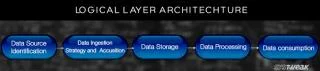
Lasiet emuāru, lai vienkāršākā veidā uzzinātu dažādus lielo datu arhitektūras slāņus un to funkcijas.
Datu uzglabāšanas metodes ir attīstījušās kopš datu dzimšanas. Šajā emuārā ir aprakstīta datu uzglabāšanas attīstība, pamatojoties uz infografiku.
Šajā digitālajā pasaulē viedās mājas ierīces ir kļuvušas par būtisku dzīves sastāvdaļu. Šeit ir daži pārsteidzoši viedo mājas ierīču ieguvumi, lai padarītu mūsu dzīvi dzīves vērtu un vienkāršāku.
Nesen Apple izlaida macOS Catalina 10.15.4 papildinājuma atjauninājumu, lai novērstu problēmas, taču šķiet, ka atjauninājums rada vairāk problēmu, kas izraisa Mac datoru bloķēšanu. Izlasiet šo rakstu, lai uzzinātu vairāk