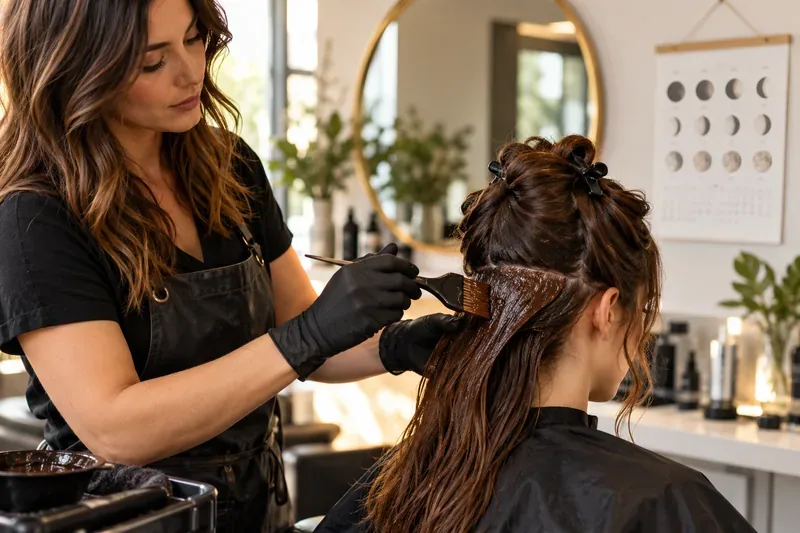
If you want to use the Moon as a planning cue for a color appointment, the most straightforward October 2026 window is October 11–25, when the Moon is waxing from new to full. Treat that as a traditional preference, not a proven way to make dye last longer, deepen a shade, or change hair growth. The clearest dates to skip, if you prefer not to book on a primary phase, are October 10 and October 26—the new and full Moons in Universal Time (UTC). Neither date is medically or cosmetically “bad.”
For a practical appointment, hair condition, a colorist’s availability, a strand test, and the product’s allergy-test instructions matter more than the lunar date. The calendar below gives you both: the verified phase dates and a simple way to apply the folklore without mistaking it for evidence.
Which October 2026 dates are favorable for hair color?
For a symbolic “fresh start” or a noticeable color change, choose a convenient day during the waxing Moon, from after the new Moon until just before the full Moon. That makes October 11–25 the broad lunar-calendar window. If you want a date near a quarter phase, October 18 is the first quarter; it can work as a planning marker, although there is no evidence that it improves a dye result.
Some lunar beauty calendars associate the waxing period with growth or building, and the waning period with reducing or maintaining. Those are customary interpretations. Hair color changes the visible hair shaft; the Moon’s phase does not select a shade or determine how evenly color deposits. Pick a day when you can follow the colorist’s aftercare guidance and avoid rushing the service.
October 2026 moon phases at a glance
The U.S. Naval Observatory lists the primary phases below in UTC. The exact moment is global, but the calendar date can differ by time zone. For example, the October full Moon at 04:12 UTC on October 26 occurs on the evening of October 25 in U.S. Pacific Time. Check a local phase calendar if you want the phase date in your city.
| Phase | Date and time (UTC) | Calendar use |
|---|---|---|
| Last quarter | Saturday, October 3, 13:25 | Optional “waning” maintenance window begins after this phase. |
| New Moon | Saturday, October 10, 15:50 | Skip only if you prefer not to book on a phase-change date. |
| First quarter | Sunday, October 18, 16:12 | A convenient midpoint marker in the waxing window. |
| Full Moon | Monday, October 26, 04:12 | Skip only if your personal tradition avoids the exact full Moon. |
These are astronomical phase times, not salon recommendations. The Naval Observatory defines the primary phases from the Moon’s and Sun’s positions; it does not evaluate hair-color outcomes. Read its 2026 primary-phase table for the source data and its explanation of Moon phases.
Which days should you skip?
There are no October dates that everyone needs to avoid because of the Moon. If you follow a tradition that avoids the exact new and full Moon, put October 10 and October 26 (UTC) on your personal skip list. If you also prefer to avoid the quarter transitions, skip October 3 and October 18. These are preference-based choices, not evidence-based warnings.
If your tradition favors the waning Moon for a restrained refresh or maintenance, consider October 4–9 or October 27–31 in UTC. The dates immediately around a phase can be interpreted differently across calendars, so treat those ranges as approximate. In the United States, phase times can fall on the prior local date in western time zones; the exact phase instant is more reliable than a generic “lucky day” list.
Does the Moon affect hair dye or color longevity?
No reliable conclusion in the sources checked for this article shows that choosing a lunar phase makes hair color brighter, longer-lasting, or safer. The Moon’s phase is an astronomical description of how much of its sunlit side we see. It does not tell you whether a dye formula suits your hair history, whether lightener will lift evenly, or whether your scalp will react.
There is a useful distinction between hair growth and hair color. Roots grow from follicles, while color services change the visible hair fiber. Even if someone uses a lunar calendar as a personal ritual, the calendar cannot replace a consultation about previous color, box dye, bleach, texture, porosity, or the result you want. If your goal is a low-maintenance look, ask the colorist about root contrast, glossing, and upkeep intervals rather than relying on a phase date.
How should you choose a safe, useful appointment?
- Decide the result first. Bring a reference photo and say whether you want gray coverage, a subtle gloss, a darker shade, highlights, or a major lightening service. Be honest about prior color and chemical treatments.
- Choose the date second. Use October 11–25 if a waxing-Moon date makes the appointment feel meaningful. If only availability matters, any date can work; book enough time for a consultation and the planned service.
- Follow the product’s allergy-test directions. The American Academy of Dermatology advises testing store-bought hair color before use and following the manufacturer’s instructions. If you develop rash, redness, swelling, burning, or itching, do not apply the dye; consult a dermatologist. See the AAD’s hair coloring and perming guidance.
- Discuss damage and upkeep. The AAD recommends staying within three shades of your natural color when possible; going lighter by more than three shades generally requires stronger peroxide and can cause more damage. Ask a professional before a large color change, especially if your hair is already processed.
A quick way to use this calendar
- Want a date that follows waxing-Moon lore? Choose October 11–25, with October 18 as a simple midpoint marker.
- Prefer to avoid major phase days? Skip October 10 and 26; optionally avoid October 3 and 18 too.
- Need maintenance or gray coverage? Choose the salon date that fits your hair and schedule. Lunar timing has not been shown to improve the color result.
- Using at-home dye? Follow the label’s allergy-test and application instructions, and do not proceed if the test or your skin raises a concern.
The useful takeaway is simple: October’s lunar calendar can help you choose a date that feels intentional, but it cannot predict the chemistry of a color service. Pick a convenient day, make the shade and hair condition the center of the consultation, and treat “favorable” or “skip” dates as optional folklore rather than a promise or a safety rule.