South Korea's KOSPI closed sharply lower on Friday, October 30, 2026, leaving investors with a practical question: was the 3.48% drop an isolated reaction to weak technology sentiment, or evidence of broader selling across Korean stocks? The confirmed answer is that the decline was led by heavyweight semiconductor shares and substantial foreign-investor selling, while weakness spread beyond the chip sector. Concerns about returns on artificial intelligence spending by major U.S. technology companies were an important market explanation, not a single, independently proven cause of every trade.
KOSPI October 30, 2026: the closing numbers
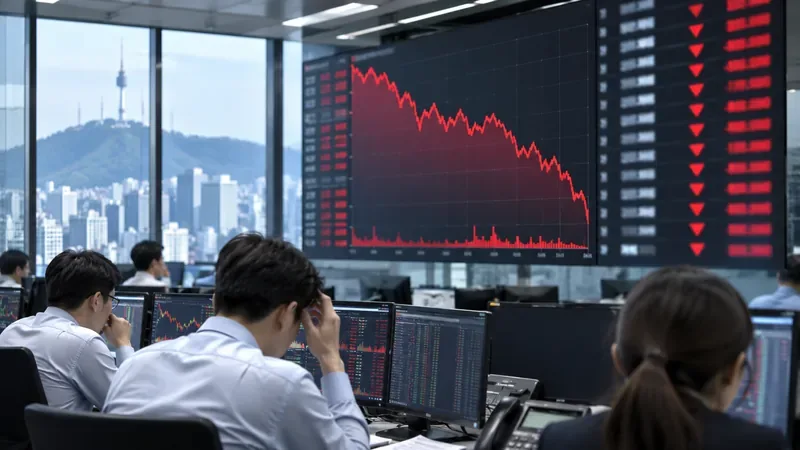
The Korea Composite Stock Price Index (KOSPI) finished at 5,730.74 points, down 206.92 points, or 3.48%, from Thursday's 5,937.66 close. These are index points, not Korean won: the KOSPI measures market performance rather than a directly tradable share price. The comparable KOSDAQ index ended at 724.38, down 3.83%, showing the retreat was not confined to the main board.
| Measure | October 30, 2026 |
|---|
| KOSPI previous close | 5,937.66 points |
| KOSPI regular-session close | 5,730.74 points |
| Daily change | −206.92 points (−3.48%) |
| KOSPI intraday low | 5,599.42 points |
| KOSDAQ regular-session close | 724.38 points (−3.83%) |
The regular session on the Korea Exchange ended at 3:30 p.m. in Seoul, Korea Standard Time (KST, UTC+09:00), on October 30, corresponding to 06:30 UTC on October 30. South Korea does not observe daylight saving time. A delayed quote timestamp of 06:33 UTC should not be confused with the actual market-close time. The figures here describe that historical session, not a live market quote. The Korea Exchange's published trading hours establish the regular-session closing time; Aju Press's October 30 close report gives the day's index and participant figures.
Why Korean stocks sold off
1. U.S. AI-spending concerns weighed on Korean chipmakers
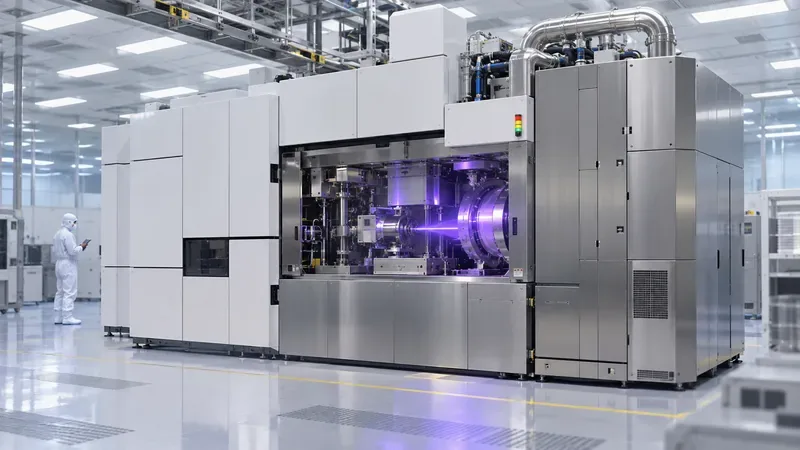
South Korea's biggest listed semiconductor businesses are closely exposed to global demand for memory chips and the investment cycle surrounding AI data centers. Weakness in U.S. technology stocks during the October 29 U.S. trading session, especially the sharp fall in Alphabet shares, contributed to doubts about how quickly heavy AI infrastructure spending can translate into sustainable cash generation. Earnings and outlook developments from other U.S. technology companies available before the Korean trading session added to the unsettled backdrop.
That connection is economically plausible: if investors expect large cloud and AI customers to moderate future infrastructure spending, they may reassess growth expectations and valuations for suppliers. But a market narrative is not proof that projected chip orders had already been canceled or that Korean semiconductor companies had reported an equivalent deterioration in their businesses. October 30 was a repricing of risk and expectations as well as a day of actual net share sales.
2. Samsung Electronics and SK hynix pulled the benchmark lower
The most visible pressure came from two companies carrying substantial weight in Korean equities. Samsung Electronics fell 3.02% to ₩225,000, and SK hynix dropped 7.08% to ₩1,418,000 at the regular-session close. Their moves were especially consequential because an index weighted toward large companies is sensitive to price changes in its biggest constituents.
It would be misleading to treat the KOSPI's 3.48% fall as the average loss of every Korean stock. Some shares rose, while the largest semiconductor stocks accounted for an outsized share of the index's weakness. The KOSDAQ's 3.83% decline and selling in other sectors nevertheless indicate that risk aversion extended beyond these two names.
3. Foreign-investor selling reinforced the decline
According to the October 30 Korea Exchange figures reported by Aju Press, foreign investors sold a net ₩1.6173 trillion of shares on the KOSPI market. Individual investors bought a net ₩621 billion and institutions bought a net ₩742.6 billion. These participant totals were reported around the close and may vary slightly across publications because of rounding or different data cutoffs.
Net selling describes the balance of one investor group's purchases and sales; every completed transaction still has a buyer and a seller. It is useful evidence of where selling pressure was concentrated, but it does not by itself identify each investor's motive. In this case, the heavy foreign outflow coincided with weakness in the benchmark's large, globally exposed chip companies.
What happened during the trading session?
The KOSPI opened lower at 5,760.35, roughly 2.99% below the previous close, and dropped to an intraday low of 5,599.42—about 5.7% below Thursday's close—before recovering part of its losses. Around 10:04 a.m. Seoul time (KST, UTC+09:00), a sell-side sidecar temporarily suspended the effectiveness of program sell quotations for five minutes after the specified futures-market trigger was met. That timestamp corresponds to approximately 01:04 UTC on October 30. The mechanism is a market-stability measure, not evidence that trading in all Korean shares stopped.
The afternoon rebound from the low mattered, but it did not erase the session's decline. The benchmark remained below the previous closing level at 3:30 p.m. KST. A contemporaneous NewsPim market report documents the intraday low and the sell-side sidecar.
How to interpret the close without overstating the evidence
Three distinctions help explain what investors actually learned on October 30. First, a confirmed price decline is different from a confirmed fundamental deterioration: the closing index and individual share prices are observable, while the longer-term earnings consequences of AI spending concerns remain uncertain. Second, Korea's trading session occurred before the later October 30 U.S. regular-market close; subsequent U.S. price moves cannot be used as causes of Seoul's earlier close. Third, the index's partial intraday recovery does not establish that selling pressure had ended.
For a clearer reading of subsequent sessions, market observers can compare three observable conditions: whether SK hynix and Samsung Electronics stabilize, whether foreign investors' KOSPI cash-equity flows turn less negative, and whether gains broaden beyond a few large stocks. Those are diagnostic checks, not guaranteed signals. A rebound in one chipmaker without improvement in broader participation would tell a different story from simultaneous strength across sectors and a reversal in foreign flows.
What comes next?
The next scheduled regular Korean equity session after Friday, October 30, was Monday, November 2, 2026, subject to the exchange's calendar. Any assessment of a recovery would need that session's actual data rather than a forecast inferred from Friday's closing level. Investors should also keep separate the trading hours of Korean and U.S. exchanges when comparing overnight news; the U.S. daylight saving time change on November 1 does not change South Korea's KST offset.
Bottom line: The KOSPI's October 30, 2026 decline was a verified 3.48% drop to 5,730.74 points, led by semiconductor weakness and large foreign net sales amid renewed concern over AI investment returns. The market evidence supports a combination of pressures, not a claim that one earnings announcement or one investor group caused the entire decline.