Home
» Today
»
Why Hong Kong Stocks Rose Today — November 5, 2026: Hang Seng, Alibaba and Tencent
Why Hong Kong Stocks Rose Today — November 5, 2026: Hang Seng, Alibaba and Tencent
Information checked: November 5, 2026, 4:41 p.m. Hong Kong Time (HKT, UTC+08:00; 08:41 UTC). The session discussed is Thursday, November 5, 2026, not a later publication date.
Hong Kong stocks rallied sharply on November 5, 2026, with the Hang Seng Index, Alibaba Group's Hong Kong shares (9988.HK), and Tencent Holdings (0700.HK) all gaining. A supplied Yahoo Finance delayed-feed snapshot around 4:08 p.m. HKT put the Hang Seng at 24,796.98 (+3.67%), Alibaba at HK$109.10 (+8.45%), and Tencent at HK$430.40 (+7.17%), each compared with the preceding valid daily close. These observations indicate a powerful technology-led advance, but their precise values have not been independently confirmed as final official exchange closing levels.
The clearest supported explanation is a broad improvement in risk appetite alongside substantial buying in large-cap technology shares, rather than one proven corporate announcement. Hang Seng Indexes' own intraday page separately reported the benchmark at 24,738.35 (+3.42%) at 3:36 p.m. HKT, corroborating the direction and scale of the rise. Market commentary connected the rebound to a stronger overnight U.S. equity session and easing political uncertainty; those are plausible influences, not a demonstrated cause-and-effect calculation for either stock.
Destaques: Key takeaways
The November 5 delayed-feed observations showed the Hang Seng up approximately 3.67%, Alibaba HK up 8.45%, and Tencent up 7.17% versus November 4.
The index provider independently showed a sizable broad-market rise before the close; the exact final official figures still require reconciliation with the closing auction and final index files.
Improved global sentiment and technology-sector demand offer plausible context, but no single verified Alibaba or Tencent disclosure fully explains the daily moves.
The next regular Hong Kong trading session is Friday, November 6, 2026; confirmation depends on overnight developments, flows and whether the gains hold at the open.
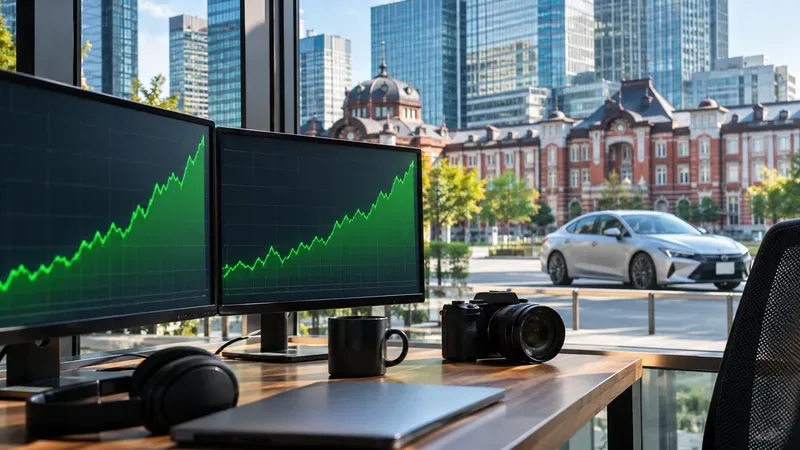
Illustration of Hong Kong market trading; the chart is conceptual, not an actual November 5 price record.
How much did the Hang Seng, Alibaba HK and Tencent rise on November 5?
The table reproduces the supplied delayed Yahoo Finance observations rather than presenting them as certified closing prices. All stock prices are in Hong Kong dollars (HKD); index points are not a currency-denominated share price. Changes are measured against the previous valid session's close.
Instrument
Nov. 4 close
Nov. 5 delayed snapshot
Change
Hang Seng Index (^HSI)
23,919.50 points
24,796.98 points
+3.67%
Alibaba Group (9988.HK)
HK$100.60
HK$109.10
+8.45%
Tencent Holdings (0700.HK)
HK$401.60
HK$430.40
+7.17%
Price-verification note: The supplied timestamps correspond to approximately 4:08 p.m. on November 5 in Hong Kong (08:08 UTC), during or near the closing auction. According to HKEX's official securities trading schedule, continuous trading ends at 4:00 p.m. HKT and the closing auction ends randomly between 4:08 and 4:10 p.m. HKT. A delayed provider snapshot should not automatically be equated with an official closing-auction print. Readers can cross-check the Hang Seng Index provider's index details and the delayed Hang Seng, Alibaba and Tencent quote pages.
Why was Hong Kong's market higher today?
1. Did a stronger global risk mood support the rebound?
Hong Kong's advance followed a strong U.S. equity session, and contemporary market coverage cited improving risk appetite after the U.S. midterm elections. Such international moves can affect the valuation and demand for Hong Kong-listed growth companies. However, correlation does not prove that the U.S. election news generated a particular percentage gain in Alibaba or Tencent. A genuine causal attribution would require more evidence than closing prices and same-day headlines.
Interest-rate expectations also matter to highly valued growth shares, but there was no new Federal Reserve rate cut on November 5 in the official material reviewed. The Federal Reserve's October 28 statement maintained the federal funds target range at 3.75%–4.00%. Any claim that a November 5 rate-cut decision caused this rally would therefore misstate the verified policy backdrop.
2. Were large technology shares the main visible beneficiaries?
Yes, within the three instruments tracked here. Alibaba and Tencent rose by substantially more than the Hang Seng in the supplied price feed. This pattern is consistent with investors shifting toward large-cap internet, cloud, advertising and digital-platform exposure. It does not, by itself, prove that new AI revenue, a product launch or better earnings forecasts caused the jump. The Hang Seng Index provider also showed gains in its finance, property and commerce-and-industry sector measures, so the advance was not limited to the two technology stocks.
Sector leadership can amplify an index rebound when widely owned constituents attract simultaneous buying. But broad market performance and individual company fundamentals should be analyzed separately: a one-day increase in share prices is not evidence of a corresponding improvement in reported earnings.
3. Was there new Alibaba or Tencent company news?
The official investor information reviewed did not establish a November 5 earnings surprise as the trigger for either stock. Alibaba's investor-relations announcements listed its June-quarter 2026 results released on August 20 and other prior corporate updates, not a verified new earnings report on November 5. Tencent's investor calendar identifies its next third-quarter 2026 results announcement for November 18. Expectations about AI, advertising, cloud or games may influence valuations, but they should be labeled investor hypotheses until a corresponding disclosure or fresh operating data is available.
4. Could China policy expectations and energy prices have helped?
Some market commentary pointed to confidence in mainland market-support efforts and lower crude oil prices as additional background factors. Lower energy costs can ease inflation fears and potentially improve the interest-rate outlook, while supportive policy expectations can encourage equity buying. The materials checked here do not independently establish the size or same-day execution of a particular state-backed purchase program, nor prove that either factor explains a measurable fraction of the Hang Seng's advance. Treat those as possible supporting narratives, not confirmed one-for-one causes.
What matters for the next Hong Kong trading session on November 6?
The next regular session is Friday, November 6, 2026. HKEX's usual continuous trading begins at 9:30 a.m. HKT (UTC+08:00), equivalent to 01:30 UTC; the afternoon continuous session ends at 4:00 p.m. HKT (08:00 UTC), followed by the closing auction until approximately 4:08–4:10 p.m. HKT (08:08–08:10 UTC). These are exchange operating hours, not a forecast of when an individual share must trade at a certain price.
Scenario
What could support it
What would challenge it
Bull case
Overnight global sentiment remains constructive, and buying extends beyond the largest internet companies.
Early profit-taking, weaker regional markets or new geopolitical stress.
Base case
Prices consolidate after a sharp rally while traders assess turnover, sector breadth and final November 5 closing data.
A decisive shift in overnight risk appetite or unexpected company disclosures.
Bear case
Some of the November 5 gains reverse if the rally was mainly positioning-driven and buyers step back.
Persistent broad demand and fresh verified fundamental support.
Before the November 6 open, the practical checks are the exchange-confirmed November 5 close, overnight U.S. and China-related headlines, the first-session gap, market breadth, and whether Alibaba and Tencent's moves are supported by trading activity across other major constituents. Watch official corporate notices rather than extrapolating a price target from a one-day gain. Tencent's scheduled November 18 results are a later event to monitor, not a November 6 release.
Which sources should readers use to verify the move?
For the index, consult Hang Seng Indexes. For trading sessions and closing-auction rules, use HKEX. For potential company-specific developments, read Alibaba investor announcements and Tencent investor disclosures. The delayed Yahoo figures in the table are a useful snapshot, but a final exchange record takes precedence when values differ.
FAQ: Hang Seng, Alibaba and Tencent on November 5, 2026
Why did the Hang Seng rise on November 5?
The confirmed observation is a large increase led visibly by technology stocks, with broader sector strength. Improved global risk appetite is a plausible contributing backdrop, but no single cause or precise causal weight has been proven.
Did Alibaba and Tencent release earnings on November 5?
No November 5 earnings release was identified in the official investor pages checked. Tencent's next third-quarter announcement is scheduled for November 18, 2026. That schedule does not explain a specific November 5 price change.
Will Hong Kong stocks rise again on November 6?
That cannot be known from the November 5 rally alone. A continuation depends on overnight news, demand at the open, liquidity, breadth and company-specific developments; a pause or reversal is also possible.
This article is a dated market explainer, not personalized investment advice. All time references use Hong Kong Time (HKT, UTC+08:00) unless otherwise stated.