Analysis date: October 31, 2026. Forecast window: November 2–30, 2026. ASML Holding N.V.'s Euronext Amsterdam ordinary shares (ASML.AS, quoted in euros) closed Friday, October 30 at €1,412.80, down 6.11% or €92.00 from Thursday's €1,504.80 close. That is the latest completed Amsterdam regular-session close available as of this analysis, not a live November quotation. The closing figures are shown in Amsterdam historical price data.
November's central question is whether investors reward ASML's improving lithography-equipment demand and ambitious production plans, or focus on valuation, delivery constraints and global policy risks after the sharp October 30 decline. The three cases below are conditional scenarios, not predictions, analyst targets or assigned probabilities.
ASML's starting point: October results versus November expectations
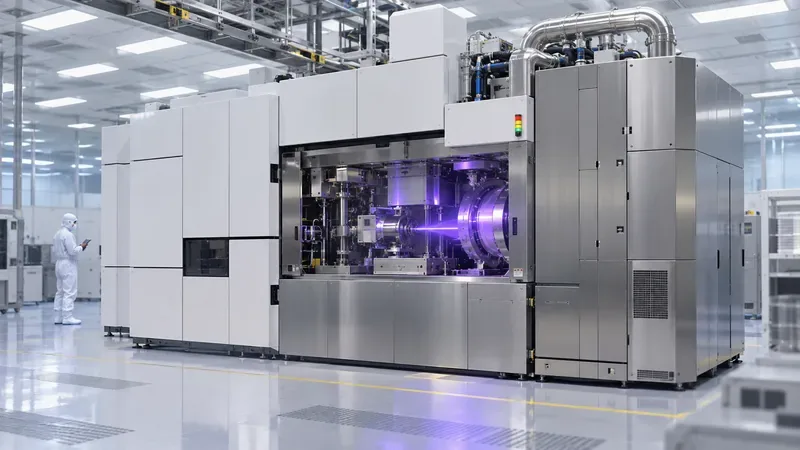
ASML supplies semiconductor manufacturing equipment, especially extreme ultraviolet (EUV) and deep ultraviolet (DUV) lithography systems, plus related services and upgrades. It does not manufacture chips; chipmakers buy and use its equipment. Its shares trade in euros in Amsterdam, while its separately quoted Nasdaq shares under ASML trade in US dollars. Do not compare their quoted prices without accounting for the listing and currency.
In its October 14 release, ASML reported Q3 2026 net sales of €11.662 billion, 57.5% gross margin and €4.960 billion net income. Installed Base Management, representing services and field-option sales, contributed €3.289 billion. The company sold 113 new lithography systems and eight used systems during the quarter. These are reported historical results, not estimates for November.
Management guided to Q4 2026 sales of €14.2 billion–€15.2 billion and a gross margin around 57%. It expected full-year 2026 sales of €44 billion–€45 billion and a gross margin around 56%. These are ASML's own forward-looking expectations as of October 14, not achieved results. See the official Q3 2026 earnings release and company investor presentation filed with the SEC.
Management also described rising customer demand forecasts, interest from some customers in machines for 2029 or 2030, and order-book momentum improving quarter over quarter. It warned that planned 2027 and 2028 supply may not fully cover customer demand and said it was investigating additional 2028 capacity. That is encouraging demand commentary, but an expression of interest is not a firm booked order, and backlog is not the same as revenue. The headline Q3 release does not provide a new numerical bookings or backlog figure for use here; no such figure is inferred.
November 2026 bull, base and bear scenarios
For readers who want a transparent price sensitivity rather than an unsupported target, the table applies illustrative month-end percentage changes to the verified October 30 Amsterdam closing price of €1,412.80. Formula: illustrative price = €1,412.80 × (1 + hypothetical change). The percentage bands are a simple scenario grid selected for comparison, not estimated volatility, a statistical forecast or expected returns. Actual trading may fall outside every band.
| Case | Hypothetical November change | Illustrative Amsterdam price band | Main condition |
|---|
| Bull | +5% to +15% | €1,483.44–€1,624.72 | Customer expansion plans and delivery confidence strengthen |
| Base | −5% to +5% | €1,342.16–€1,483.44 | Strong demand outlook persists, but new evidence is limited |
| Bear | −15% to −5% | €1,200.88–€1,342.16 | Capex concerns, export friction or risk-off sentiment dominate |
Band edges are shared by adjacent cases for readability; these ranges indicate illustrative end-of-month levels, not continuous trading ranges or support and resistance guarantees.
Bull case: stronger equipment demand becomes more credible
Assumptions: Advanced logic and memory chipmakers reaffirm planned fab investments, AI-related capacity requirements remain durable, and ASML or its customers provide credible indications that EUV and DUV tools can be built, shipped and installed on schedule. Evidence that service and productivity upgrades are helping customers add wafer capacity would reinforce the thesis.
Observable triggers in November: Specific customer capital-expenditure announcements that sustain or raise lithography spending; material, verifiable capacity or supplier milestones; and no new export-license setback affecting expected deliveries. A calmer interest-rate backdrop after US economic releases could help valuations, although it would not itself prove stronger ASML fundamentals.
Invalidation: Customers defer fab construction, ASML signals a shipment or supplier bottleneck, or export licensing impairs planned orders. A price rebound without corroborating customer or company evidence is a weaker form of bullish confirmation.
Base case: strong orders narrative, limited fresh proof
Assumptions: October's Q3 results and Q4 guidance remain the principal company evidence, with no verified change to the outlook during November. Customer spending plans broadly hold, while investors weigh the premium placed on long-term EUV demand against the risk that machines are delivered or recognized as revenue later than anticipated.
Observable triggers: Customer updates largely consistent with prior capex budgets, routine ASML operational commentary without a material guidance change, and a market response to employment and inflation figures that does not create a sustained shift in semiconductor valuations.
Invalidation: Clear evidence of a new upward acceleration in lithography investment moves the analysis toward bull; credible order cancellations, extended delivery delays or licensing disruptions move it toward bear. The base case does not assume that October 30's selloff automatically reverses.
Bear case: delivery, policy and valuation risks outweigh demand
Assumptions: Major customers temper fab capex, a supply-chain constraint slows tool deliveries or installations, or export controls restrict shipments or servicing. A rise in bond yields or broad retreat from high-multiple technology stocks amplifies the downside even if ASML's October guidance has not changed.
Observable triggers: Specific customer budget cuts, changed construction timelines, ASML disclosures about order push-outs, new licensing decisions or official trade-policy changes, and persistent weakness in the broader semiconductor equipment sector.
Invalidation: Confirmed customer commitments, demonstrated shipment progress and a stable licensing environment weaken this case. A one-day decline by itself does not establish deteriorating bookings or profitability.
What actually changes the thesis?
Orders, backlog, capacity and reported revenue measure different stages of ASML's business. A planned fab expansion may increase expected future lithography demand; a signed order may enter the order book; production slots and qualified components govern the shipment schedule; and customer acceptance and contractual terms affect the timing of revenue recognition. A strong backlog therefore can coexist with near-term delivery constraints or delayed sales.
- Customer capex: Prioritize official guidance from major logic and memory manufacturers over commentary about the AI theme alone. Look for both the amount of spending and its timing.
- ASML execution: Watch for confirmed EUV/DUV capacity improvements, critical-part availability, installation progress and the mix of new systems versus upgrades and services.
- Order quality: Distinguish binding orders and formally reported backlog from nonbinding customer interest in future years. Do not manufacture a numerical Q3 booking figure that has not been verified.
- Export exposure: Check actual licensing rules and company disclosures. The Dutch government requires authorizations for specified advanced semiconductor equipment exported to destinations outside the EU; the measure is not a blanket ban on all equipment or all destinations. See the Dutch export-control rules.
- Valuation and currencies: Consider euro-denominated earnings, dollar-linked global semiconductor pricing and the market's sensitivity to interest rates. A weaker or stronger euro can change financial translation and investors' perception of returns, but does not automatically set the Amsterdam stock price.
November calendar: known dates, unknown outcomes
| Date | Scheduled item | Why it matters |
|---|
| November 4, 2026 | ASML's planned €1.88 interim dividend payment | Cash-return event, not a new earnings announcement; Amsterdam ex-dividend date was October 26 |
| November 6, 2026 | US October Employment Situation, 8:30 a.m. New York EST (UTC−05:00); 13:30 UTC / 2:30 p.m. Amsterdam CET (UTC+01:00) | May affect yield expectations and technology-sector valuations |
| November 10, 2026 | US October Consumer Price Index, 8:30 a.m. New York EST (UTC−05:00); 13:30 UTC / 2:30 p.m. Amsterdam CET (UTC+01:00) | Inflation surprise could move rates and growth-stock multiples |
The two US releases remain scheduled events, not published outcomes as of October 31. Times reflect the November switch to US Eastern Standard Time and Amsterdam Central European Time. Check the official 2026 US Bureau of Labor Statistics release calendar again before the date, as schedules can change. The Federal Reserve FOMC calendar lists regular meetings on October 27–28 and December 8–9, not a regular November policy decision; investors should not invent a November FOMC rate announcement.
ASML's official dividend schedule confirms the November 4 payment. Its investor calendar lists Q4/full-year 2026 results for January 27, 2027, rather than a November quarterly earnings release. That means much of November's potential price action may come from customers, policy and macroeconomic data rather than a scheduled ASML earnings report.
Practical November monitoring checklist
- Record the date and exchange of every price observation; compare Amsterdam euros with Amsterdam euros, not Nasdaq dollars.
- After each major customer announcement, note whether lithography-related capex increased, decreased or merely shifted between quarters.
- Separate confirmed equipment orders from long-dated discussions and commentary about potential demand.
- Look for concrete delivery and licensing facts before changing the Q4 revenue-risk assessment.
- After November 6 and November 10, distinguish a broad macro-driven share move from ASML-specific news.
- Reassess which scenario's assumptions remain intact at November month-end; do not treat the hypothetical price bands as investment instructions.
Bottom line: ASML entered November with unusually strong reported Q3 performance and optimistic company commentary about lithography demand, but also with a steep October 30 share-price decline and material execution, policy and valuation risks. The bullish interpretation requires new evidence that capacity expansion and customer spending can turn demand into delivered systems. The base case needs no major revision to October guidance; the bear case needs substantiated deterioration rather than price action alone. This is general market analysis, not personalized investment advice.