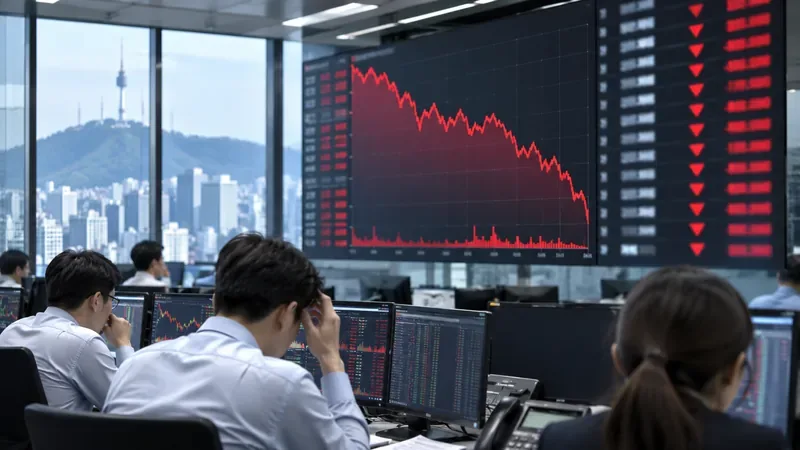
Analysis dated October 31, 2026; outlook period: December 1–31, 2026. ASML's Amsterdam-listed ordinary shares (ASML.AS) closed Friday, October 30 at €1,412.80, compared with €1,504.80 on October 29—a decline of €92.00, or 6.11%. Those are historical Euronext Amsterdam regular-session prices in euros, not a live quote or a forecast. The October 30 session took place in Amsterdam, Central European Time (CET, UTC+01:00). This article considers what could move the stock in December, using information available by October 31. The Euronext ASML transaction record provides an exchange-level reference for the closing price.
The most useful question is not whether a one-day decline guarantees a rebound. It is whether ASML's strong equipment demand can translate into shipments, revenue and cash generation without significant delays or new trade restrictions. A bull case, a base case and a bear case give three ways to evaluate that question without pretending to know December's share price.
What are you forecasting when you look at ASML.AS?
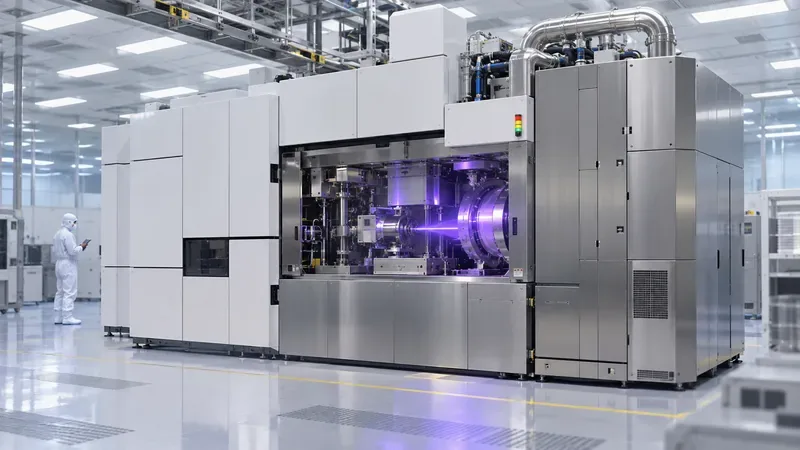
ASML designs and manufactures lithography systems used by semiconductor manufacturers to pattern silicon wafers. It does not make the chips itself. Its customers use extreme ultraviolet (EUV) and deep ultraviolet (DUV) lithography equipment in different parts of semiconductor production. High-NA EUV refers to a newer EUV platform designed for more advanced patterning requirements. Customer demand for advanced logic and memory chips, including chips used in artificial intelligence infrastructure, can therefore influence demand for ASML's systems.
The security in this analysis is ASML Holding N.V. on Euronext Amsterdam, quoted in euros as ASML.AS. ASML also has a Nasdaq-listed US-dollar security under ASML. The two quotations are not interchangeable: exchange hours, currency movements and market microstructure can lead to different displayed prices. Do not compare an Amsterdam euro close with a US-dollar quote without accounting for currency and trading date.
Three distinctions are especially important for beginners. Bookings are incoming orders, subject to terms and possible timing changes. An order backlog is business contracted but not yet recognized as revenue. Revenue is recognized under the applicable accounting rules when the relevant performance obligations are met. A large order may support future production but does not automatically turn into a December sale.
What do ASML's latest reported results actually show?
ASML published its third-quarter 2026 results on October 14. The company's original results release and SEC-filed copy of the release report the following figures. All financial amounts below are in euros.
| Measure | Q3 2026 reported | Why it matters for December |
|---|
| Total net sales | €11.662 billion | Shows the scale of system deliveries and services already recognized, not future December orders. |
| Gross margin | 57.5% | Highlights profitability, but future product mix and execution could change it. |
| Net income | €4.960 billion | A reported quarterly result; it is not equivalent to cash flow or an earnings forecast. |
| Installed Base Management sales | €3.289 billion | Service and field-option revenue offers a separate signal from new equipment sales. |
| New lithography systems sold | 113 units | Provides delivery context, although individual systems differ substantially in price and complexity. |
ASML's management expected fourth-quarter 2026 total net sales of €14.2 billion to €15.2 billion, with gross margin around 57%, and full-year sales of €44 billion to €45 billion, with gross margin around 56%. These are company guidance as of October 14, not audited Q4 outcomes or an independent analyst consensus. The release also described rising order-book momentum and management's view that planned supply capacity for 2027 and 2028 would not fully satisfy the demand its customers were signaling. It said ASML was investigating additional capacity for 2028; a possible capacity increase is not the same as completed production.
That combination makes the outlook two-sided. Strong sales and management demand commentary support the long-term investment narrative, but equipment complexity, delivery schedules, valuation and trade policy can still pressure the shares over a single month. The October 30 price decline should be treated as a market observation; it does not, by itself, establish a single verified cause.
How to build the December 2026 scenarios
Use the October 30 Amsterdam close of €1,412.80 as a dated reference point only. No numerical December price target is presented, because current information cannot support a defensible one-month point estimate. The cases below describe possible directions and the evidence required to keep each thesis alive. They are not assigned invented probabilities.
| Case | Key assumption | December evidence to monitor | What would weaken the case |
|---|
| Bull | Customer chip-capital spending remains firm and ASML's delivery plans appear credible. | Customers sustain equipment budgets; ASML disclosures reinforce shipment and capacity plans; semiconductor sentiment stabilizes. | Material customer spending cuts, a new export restriction, or signs of postponed system acceptance. |
| Base | Q4 guidance remains the working reference, but orders, conversion timing and valuations stay uncertain. | No material guidance revision; mixed customer commentary; macro releases produce volatility without changing ASML fundamentals. | A decisive positive or negative change in demand, shipments or regulatory access. |
| Bear | Demand expectations cool or execution/trade barriers become more restrictive while the stock remains sensitive to valuation. | Customer capex retrenchment; delays or restrictions affecting EUV/DUV sales; worsening margin or delivery signals. | Verified resilient orders, firm shipment execution and improving demand visibility. |
Bull case: strong orders remain convertible into equipment sales
Assumptions: Advanced logic and memory customers continue supporting their expansion plans, with AI-related capacity demand translating into meaningful lithography requirements. ASML's supply-chain and manufacturing work progresses sufficiently to underpin planned shipments. Investors also become more willing to pay for long-duration semiconductor growth.
Observable triggers in December: Public customer capital-expenditure updates or supplier disclosures confirm sustained demand, ASML provides credible delivery or upgrade updates, and no new material restriction is announced for key destinations or systems. A stronger reaction in the Amsterdam shares relative to the broader semiconductor sector could be consistent with this thesis, but price strength alone is not proof of higher orders.
Invalidation: Documented customer order deferrals, a meaningful downward revision to ASML's guidance, or credible evidence that planned 2027–2028 capacity cannot be executed on the discussed timetable would weaken the bullish interpretation. The case also deserves reconsideration if better company performance fails to support the valuation investors are assigning.
Base case: strong business, limited new evidence before year-end
Assumptions: Management's October Q4 outlook remains the most relevant company benchmark, but there is no verified December event that decisively changes expected order conversion. Some semiconductor customers invest aggressively while others are more cautious. ASML may remain volatile as investors debate growth already reflected in the share price.
Observable triggers in December: The company does not materially change its public outlook, major chipmakers describe broadly unchanged capacity plans, and the economic calendar causes shifts in discount rates and technology-sector risk appetite rather than a direct revision of ASML demand. This is a neutral monitoring framework, not a prediction of a flat stock price.
Invalidation: Substantial new customer commitments paired with firm shipment evidence would move the analysis toward the bull case. A clear order shortfall, delivery postponement, more restrictive export conditions or guidance cut would push it toward the bear case. Remember that the absence of a new ASML press release is not evidence that shipments are proceeding perfectly.
Bear case: timing, restrictions or valuation expectations disappoint
Assumptions: Customers slow some fab spending or change project schedules; export licensing limits addressable demand; or ASML cannot ramp certain system deliveries as quickly as the market expects. Even without a collapse in revenue, an expensive growth stock can weaken if investors demand a lower valuation multiple.
Observable triggers in December: Verified cuts to major customers' semiconductor-equipment budgets, official restrictions relevant to specific equipment or destinations, or a company statement signaling more difficult delivery timing. Weakness in chip-equipment peers and higher market interest rates would provide context but should not be mistaken for ASML-specific evidence.
Invalidation: Fresh confirmation of resilient orders, workable licensing conditions, stable margins and on-track customer installations would undercut the bearish assumptions. One bad trading day, without evidence about ASML's operations, is insufficient to establish this scenario.
Which December dates belong on the watchlist?
Although ASML trades in the Netherlands, US monetary policy and inflation reports can influence worldwide semiconductor valuations. The US Bureau of Labor Statistics December 2026 calendar and Federal Reserve meeting calendar list these scheduled events as of October 31, 2026:
| Date | Scheduled event | Time reference | Why it may matter |
|---|
| Friday, Dec. 4, 2026 | US November employment report | 8:30 a.m. New York, EST (UTC−05:00); 13:30 UTC; 2:30 p.m. Amsterdam, CET (UTC+01:00) | Could change expectations for rates and growth stocks. |
| Tuesday–Wednesday, Dec. 8–9, 2026 | Scheduled Federal Reserve FOMC meeting | Washington, DC, EST (UTC−05:00); decision time not specified here | Policy communication and projections may affect discount rates and risk appetite. |
| Thursday, Dec. 10, 2026 | US November Consumer Price Index | 8:30 a.m. New York, EST (UTC−05:00); 13:30 UTC; 2:30 p.m. Amsterdam, CET (UTC+01:00) | Could reshape inflation and monetary-policy expectations. |
New York observes Eastern Standard Time in December, and Amsterdam observes Central European Time; both have already ended daylight saving time by these dates. The listed outcomes are unknown as of this October 31 analysis. These are macro catalysts, not ASML earnings announcements. No December ASML earnings-release date has been assumed or invented.
What should a reader check before drawing a conclusion?
- Confirm the instrument and quote. Check the date, exchange and euro currency for ASML.AS. Do not substitute the Nasdaq US-dollar ASML quote or an intraday figure for an Amsterdam regular-session close.
- Read the company's own guidance. Compare any new communication against the October 14 Q4 guidance of €14.2–€15.2 billion in sales and approximately 57% gross margin. Do not present guidance as achieved results.
- Separate orders from deliveries. Check whether apparent demand refers to booked tools, capacity plans, equipment shipped, customer acceptance, or already recognized revenue.
- Watch customers and trade rules. Read original chipmaker capital-spending disclosures and official policy updates. Be specific about which system category and sales destination might be affected.
- Update the scenario, not just the narrative. A confirmed spending acceleration favors the bull case; unchanged but uncertain execution favors the base case; a verified postponement or restriction favors the bear case. Identify which assumption changed and cite the document supporting it.
What are the mistakes to avoid?
First, do not interpret ASML's €5.0 billion Q3 net income as evidence of a guaranteed December stock gain. Second, do not assume management's comment about unmet 2027–2028 demand means all expected tools will ship on time: supply ramping and customer acceptance matter. Third, do not describe ASML as a chip manufacturer; its revenue comes from lithography equipment and related services. Fourth, do not treat all export controls as applying equally to all EUV and DUV systems. Finally, do not infer an earnings result, Federal Reserve decision, or inflation print before the relevant official release.
Bottom line: The December 2026 ASML.AS outlook is a test of demand quality, equipment delivery credibility, trade-policy exposure and valuation. The bull case requires evidence that orders and investment plans remain executable; the base case allows for a healthy business amid uncertainty; the bear case requires credible deterioration in demand, timing or market access. As of October 31, these remain conditional scenarios—not investment advice, analyst price targets, or forecasts of known future events.